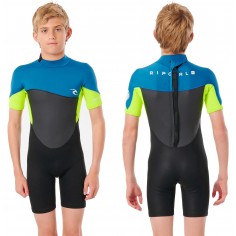
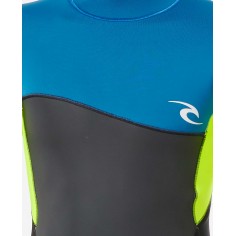
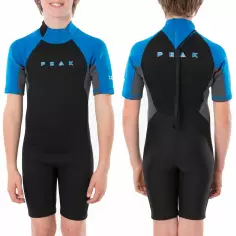
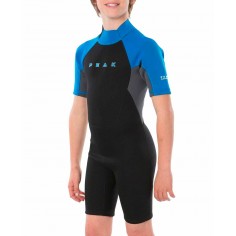
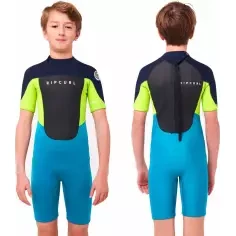
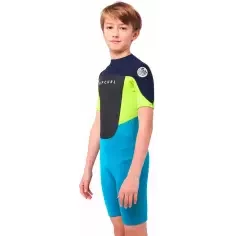
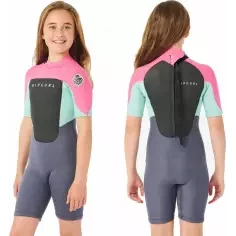
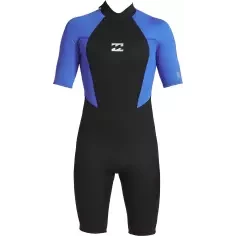
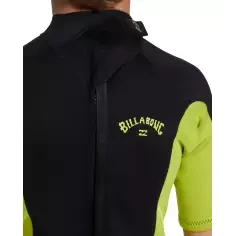
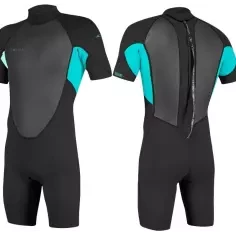
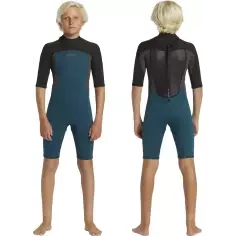
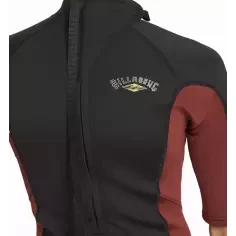
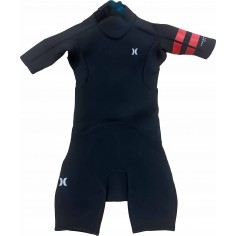
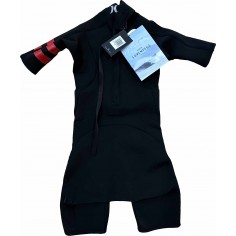
Short neoprene wetsuits for kids: shorty and junior models
Here you will find short wetsuits for children and teenagers, usually between 6 and 16 years old. The key factor when choosing is not the brand but the real use: water temperature, session length and the child’s level of independence. For kids’ neoprene, thicknesses of 2 mm or less are the standard when you want comfort and freedom of movement in mild waters.
Shorty vs junior short wetsuit: which is better for your needs
The difference here comes down to coverage. A shorty leaves the arms and legs short and usually works better in summer, in beginner courses or in sessions where mobility is the priority. A junior short wetsuit can provide a bit more protection on the torso and exposed areas without becoming cumbersome.
In practice, both formats work well for surfing, bodyboarding and playing in the shorebreak when the water does not require high insulation. If there’s only one point to remember, it’s this: the easier the suit is to put on and take off, the more useful it is for younger children or for short sessions.
2 mm thickness: what water temperature it is suitable for
The deciding factor is water temperature rather than air temperature. A 2/2 mm short wetsuit usually makes sense from around 20 °C up to 24 °C, especially in late spring, summer and early autumn on many Spanish coasts. Below that range, the thermal protection may fall short if the session runs long.
The kind of differences that separate one surfboard from another don’t apply here; with neoprene, what matters is that the child doesn’t get cold or overheat. A 2 mm suit offers basic warmth and preserves the mobility needed to paddle, pop up or swim without feeling stiff. This is more noticeable for beginners than for advanced users.
Comfort, chafing and freedom of movement
Key points when choosing a kids’ wetsuit: comfort matters as much as protection. A short wetsuit reduces rubbing against the board on the chest, abdomen and thighs, and helps prevent irritation from continuous exposure to sun and water. It also makes it easier to get in and out of the water quickly.
In practice, a wetsuit that is too thick or too tight is more limiting than helpful in summer. If there’s only one point to remember, it’s worth prioritising a snug fit without excessive compression on the shoulders, neck and crotch.
Fit and sizing: how to get it right from 6 to 16 years
The real difference here is the actual fit on the body, not just the age indicated on the label. Between 6 and 16, height and weight vary widely depending on build, so it’s advisable to check both measurements before deciding. A proper wetsuit should be close-fitting, without water pockets in the lower back, armpits or behind the knees.
On models specifically for girls or boys, the pattern may vary at the hips, torso and shoulders. This improves comfort and reduces unnecessary tight spots. One thing to keep in mind when hesitating between two sizes: if the child is between measurements and will use the suit often, it’s usually better to choose the size that fits best now rather than the one bought “to grow into”.
What to check on a 2/2 mm short wetsuit
The 2/2 mm specs indicate a uniform or very similar thickness in the main areas of the suit. This promotes overall flexibility and works well for summer sessions, surf schools and recreational use. The difference here is not just thickness: the elasticity of the material, the quality of the seams and the closure also matter.
Flatlock seams are usually sufficient in mild waters, while a more elastic neoprene makes paddling and repeated movements easier. A back zip makes changing simpler, which is helpful for children who still need assistance. Pay special attention to the neck: if it rubs when dry, it will usually rub more in the water.
When it makes sense to choose a kids’ short wetsuit
A kids’ short wetsuit works well for beginners, regular summer practice and medium-length sessions. It’s also useful for camps, surf schools and beaches where the water stays between 20 and 24 °C. In that context, it provides basic thermal protection without causing overheating.
If sessions often go beyond two hours, there is constant wind or the child feels the cold easily, it may be worth increasing coverage even if it’s still summer. The same logic that applies to adults applies here: the best wetsuit is not the thickest one, but the one that matches real time in the water and the child’s sensitivity to cold.
Size availability and usage profile
Mundo-Surf offers this type of kids’ wetsuit in standard sizes from 6 to 16 years and in gender-specific versions where the pattern requires it. What really matters for choosing is not the breadth of the range, but placing each model according to age, build and water temperature. That way you avoid choosing by looks alone and get a better match in real use.