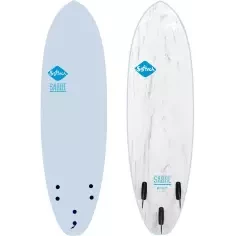
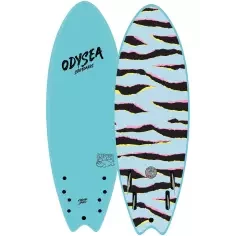
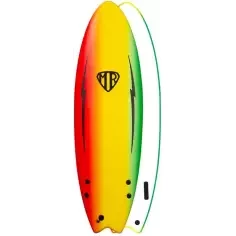
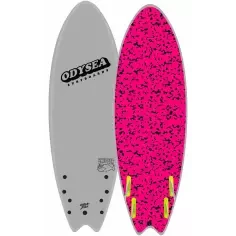
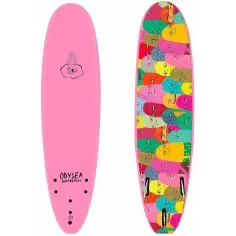
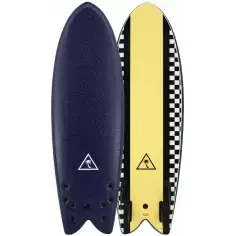
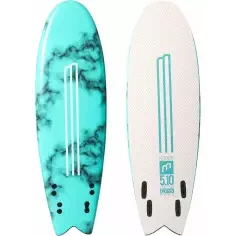
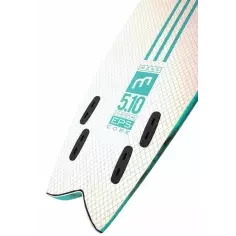
Surfboards for kids: safe and fun foam softboards
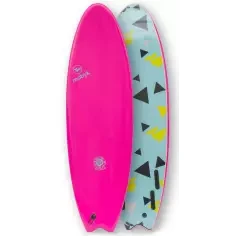
This section brings together surfboards for kids, from foam beginner softboards to evolution softboards and progression boards. What makes the difference here is the balance between safety, flotation and ease of use according to the child’s weight and level. In practice, a foam board with good volume makes it easier to learn and reduces the risk of knocks during the first sessions.
The key factor in choosing a board is not just age: weight, independence in the water and the usual type of wave also matter. Mundo-Surf guides this choice based on concrete parameters, so it’s easier to decide between a beginner board, an evolution board or a progression model.
Things to consider before buying a surfboard for a boy or girl
If there’s one single point to remember, it is this: the board must help paddling, popping up and staying stable without sacrificing control. When comparing one model to another, take into account: length, width, thickness, volume in liters, type of fins and overall construction stiffness.
For beginner use, it’s best to prioritize stability and usable surface. Once there is some technique in place, what sets one board apart from another under these conditions is its ability to turn with less effort and respond better on the wave face.
Choose their board according to the child’s surfing experience
Kids’ surfboards can be grouped into three main usage levels. This hierarchy helps avoid common mistakes, such as choosing a model that is too short or too reactive for a surfer who is still learning to paddle and stand up.
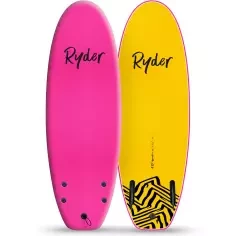
- Beginner boards: wider, thicker and more stable. They’re usually the right reference for first sessions in whitewater or small waves, with a clear focus on balance and safety.
- Evolution boards: they maintain good flotation but with more maneuverability. They’re a better fit when the child is already catching waves on their own and starting to work on basic turns.
- Progression boards: thinner and more reactive. They’re designed for kids with solid technique, able to generate speed and link maneuvers.
EPS foam boards and softboards: safe materials and construction
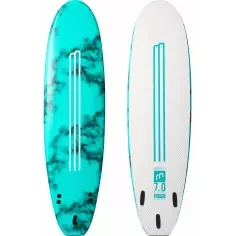
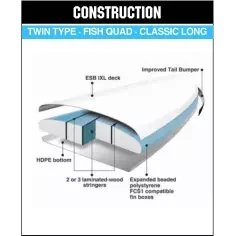
Children’s surfboards in softboard construction are usually based on a light, buoyant core with a soft coating on the surface. In practice, this combination reduces the impact of hits and makes it easier to carry the board out of the water.
What makes the difference here is not only the core material, but also the balance between stiffness, weight and resistance to repeated use. A well-designed kids’ softboard should stay stable underfoot and still be light enough for the child to handle it with reasonable independence.
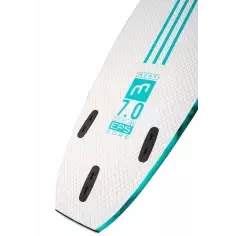
- EPS foam (expanded polystyrene): offers a lot of flotation with little weight. It’s useful in kids’ boards where easy paddling and building confidence from the start is important.
- Polyethylene foam cores: provide a strong, lightweight alternative. Depending on the construction, they can offer a slightly more solid feel in the water.
- Soft coating: helps reduce scrapes and bumps while learning. This is an important point when sessions are in whitewater, with frequent falls and boards sharing space.
Correct size and volume: how to choose the board
Choosing the right size is essential for the child to learn safely and comfortably. The main selection criterion is usually body weight rather than height alone: two children of the same age may need different volumes.
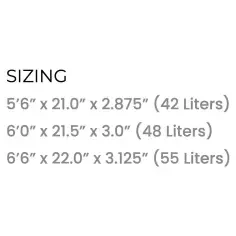
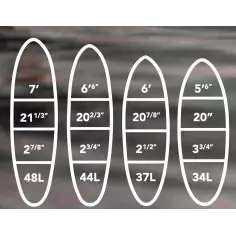
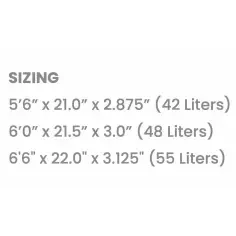
As a general reference, many kids’ boards are between 5'6" and 6'4" (170 to 195 cm). For beginners, a useful guideline can be between 35 and 50 liters depending on weight and level; for lighter, experienced kids, that volume can be reduced if they already generate speed and control their pop-up.
- Children from 20 to 30 kg: they usually adapt better to shorter boards with good width and generous volume for their size.
- Children from 30 to 45 kg: they usually benefit from boards between 5'8" and 6'2", with enough volume to paddle without excessive fatigue.
- Children over 45 kg: they may need sizes close to 6'0" or 6'4" if they are starting out, especially in soft waves.
Fins on kids’ surfboards: setup by level and progress
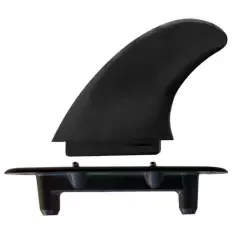
The fin setup affects stability, grip and ease of turning. When assessing a kids’ board, keep in mind that a simpler setup may be enough at the beginning, while a more complete one provides control as the level increases.
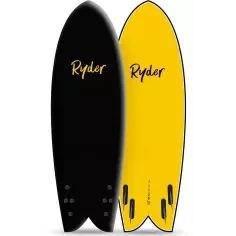
- Twin (two fins): simple, loose option, suitable for some beginner models. It can provide a pleasant feel in small waves, although it doesn’t always offer the most control.
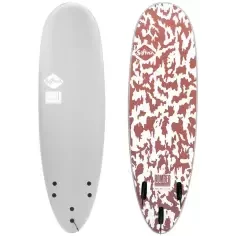
- Thruster (three fins): the most versatile setup. In practice, it’s usually the most balanced reference for progressing from beginner to more technical surfing.
- Quad (four fins): provides speed and grip in certain conditions. It makes more sense when the child is already surfing regularly and looking for a livelier response.
Safety in the water: why choose foam boards for kids
Foam boards are the most logical option at learning stages. What distinguishes one board from another in these conditions is not only the softness of the outer layer: it also has to float well, not be too heavy and maintain clear stability when paddling.
- Protection against impacts: the soft coating reduces impact in falls and in contact with the board itself.
- Learning with more confidence: a stable, buoyant board helps kids focus on technique instead of trying to avoid every mistake.
- More forgiveness in shared sessions: a major advantage when several kids are in the whitewater or in surf lessons with instructors.
- Useful flotation: allows better paddling and makes it easier to rest between attempts.
How to choose the right board: criteria by age, weight and level
Selecting the right board depends on several combined factors. If you only remember one point, prioritize real skill level and weight over looks or an overly performance-oriented size.
- By level: if they’re just starting, choose a wide, stable board with generous volume. If they already link waves and basic turns, an evolution board is the logical next step.
- By weight: the lower the weight, the fewer liters are needed, but without going too low. Pushing this point too far usually slows progression.
- By type of wave: at soft beach breaks, higher flotation is best; in more defined waves, a slightly more reactive board can be suitable.
- By independence out of the water: an oversized board may be stable, but hard to carry and position correctly at the shoreline.
Maintenance and care of a softboard’s soft coating
Maintenance affects durability and safety in use. In practice, the most common damage on kids’ softboards comes from prolonged exposure to the sun, rubbing on the ground or small openings in the coating that aren’t checked in time.
- Rinsing with fresh water after each session helps remove salt and sand.
- Storing the board in the shade or in a ventilated place slows down coating deterioration.
- Checking fins, leash and surface helps detect cuts or delaminated areas early.
- Avoiding pressure on sharp rails or abrasive surfaces extends the useful life of the foam.