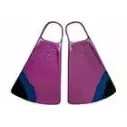
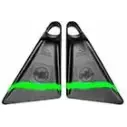
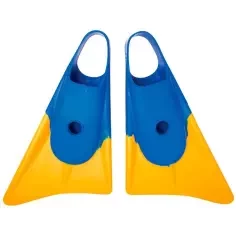
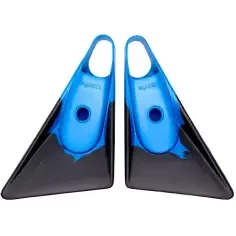
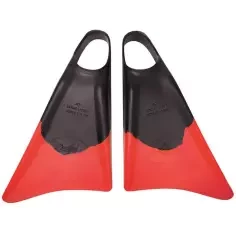
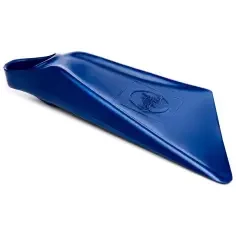
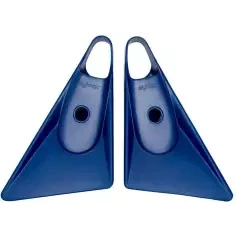
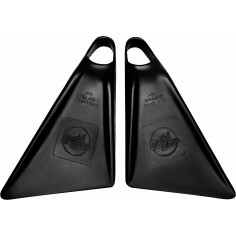
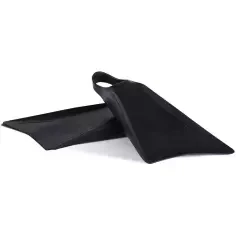
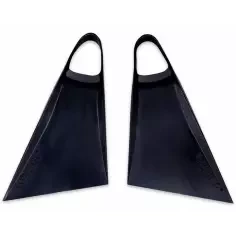
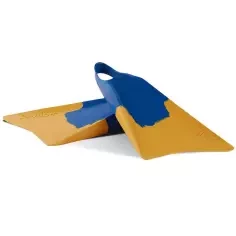
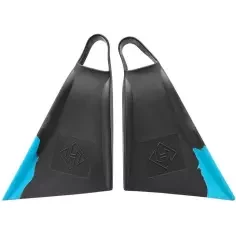
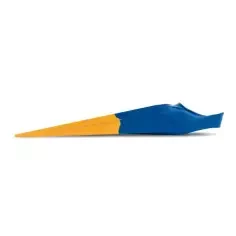
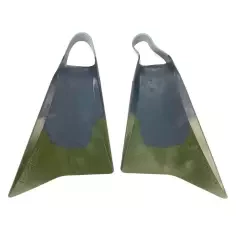
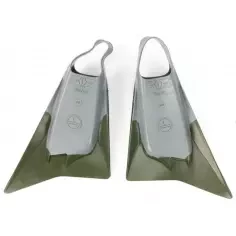
Bodyboard fins are a key part of your equipment. They allow you to generate bursts of speed to catch waves, cover the distance to the peak, and maintain control and propulsion on the board. What really makes the difference here is stiffness: softer fins prioritize comfort, while stiffer fins offer a more direct response and more kicking power. If you are unsure which to choose, you can check this guide on how to choose your bodyboard fins. When the fit is not perfect, keep in mind that fin tethers help prevent losing them in a wipeout or in a lateral current.
Frequently asked questions about bodyboard fins and accessories
What are bodyboard fins? Symmetrical and asymmetrical models
Bodyboard fins are designed specifically for this sport. They are shorter and more reactive than diving or pool fins, because they are made for immediate acceleration and control over short distances. There are two main outlines: symmetrical, with both fins identical, and asymmetrical, which is the most common.
In practice, the asymmetrical outline encourages a more natural kick and better foot alignment. The kind of difference you notice from one board to another in these conditions doesn’t apply here as much as the shape of the blade and the lateral support of the fin. If you only take away one point, the asymmetrical model is usually the safest reference for most bodyboarders.
How to choose bodyboard fins according to stiffness, size and comfort?
The key criteria for choosing are, in this order: fit, stiffness and actual use. A fin must hold the foot securely without excessive pressure, because in a 45 to 90 minute session, pressure points become obvious very quickly. If it rubs on the instep or the sides when dry, it will usually be more uncomfortable in the water.
Then comes stiffness. A beginner or recreational level generally does better with soft or medium flex; an intermediate–advanced level, with a strong kick and sessions in powerful waves, can benefit from a medium-stiff or stiff fin. As mentioned before, comfort is not a minor detail: it affects both efficiency and session length.
What bodyboard fin sizes are available?
Sizes vary by brand, but a common reference guide is: S (38–39.5), M (40.5–42), ML (42–43), L (43–45) and XL (45–47). When comparing brands, keep in mind that foot volume and whether you use booties or not can shift your choice by half a size or even a full size range.
In temperate water, many riders use the fin directly on the bare foot. In cold water, with 2–3 mm booties, you may need more internal space. What really makes the difference here is not just your shoe size, but the combination of foot width, neoprene thickness and the internal shape of the foot pocket.
What exact size of bodyboard fins do you need?
The correct size is the one that keeps the fin secure without pain or numbness. There should be support at the heel, sides and instep, but without cutting off circulation or causing chafing when you kick. In practice, fins that are too loose can come off; fins that are too tight reduce control and cause earlier fatigue.
If you are between two sizes, the deciding factor is usually your intended use. Without booties, you want a precise fit; with thin booties, it is best to leave just enough extra room to avoid deforming the foot. Fin tethers are still recommended even with a correct fit.
What are fins used for in bodyboarding?
Bodyboard fins allow you to reach the speed needed to enter the wave and position yourself precisely. They also help you paddle against the current, get out of the whitewater and maintain grip and direction on the wave face. Without that propulsion, bodyboarding loses much of its practical effectiveness.
What makes the difference here is the ability to accelerate in a few seconds. That short, powerful response is what a bodyboarder is looking for when launching the kick before take-off. Same logic as with other technical accessories: useful performance is most noticeable in real conditions, not just on the spec sheet.
What fin stiffness and flex should you choose according to your level?
Soft fins: these are geared towards comfort and easy adaptation. They usually work well for beginners, recreational users or long sessions in small to medium waves. They offer less explosive response, but reduce calf and ankle fatigue. Soft fins.
Medium-stiff fins: this is the most common balance point. They combine good propulsion, control and physical forgiveness, which is why they work well for a wide range of levels and conditions. If you only take away one point, this stiffness is usually the most versatile option for waves between 0.5 m and 1.5 m. Medium-stiff fins.
Stiff fins: these are designed for riders with good technique, trained legs and a need for maximum response. They work best in more powerful waves, demanding take-offs or conditions where every acceleration counts. When choosing them, keep in mind that they place more demand on the ankle and calf, especially in long sessions. Stiff fins.
What rubber are bodyboard fins made from?
Most are made from natural rubber or rubber blends with different densities. This material allows for a combination of flexibility, shape memory and resistance to use in salt water. What really makes the difference here is not just the origin of the rubber, but how stiffness is distributed between the blade, rails and foot pocket.
In practice, softer rubber in the foot pocket improves comfort, while a firmer blade improves power transfer. That combination explains why two fins can feel very different even though they fall into the same stiffness category. The deciding factor is still how you actually use them, not only the stated composition.
Complementary accessories for your bodyboarding session
The most useful accessories depend mainly on water temperature and session length. In water between 18 and 22 °C, many people ride without booties; below 17 °C, thin 2–3 mm booties can clearly improve comfort. In cold water, they also reduce chafing inside the foot pocket.
Fin tethers are the most logical accessory if there is current, hollow waves, or if a wipeout could rip the fin off your foot. A wetsuit suitable for the season also has an indirect impact: if your body maintains its temperature, your kick will hold up better throughout the session. If you only take away one point, the priority accessory for most users is fin tethers.
Are bodyboard fins suitable for bodysurfing?
Yes, bodyboard fins are also commonly used for bodysurfing. The needs are very similar: short acceleration, directional control and good response in the kick. For that reason, the criteria for size, comfort and stiffness are practically the same.
If the primary use is bodysurfing, keep in mind that some riders prefer a slightly more direct feel and a very firm fit. On the other hand, for mixed bodyboard–bodysurf use, medium stiffness usually offers the easiest balance to manage. What makes one board stand out over another in these conditions may change, but for fins the criteria remain stable.