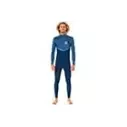
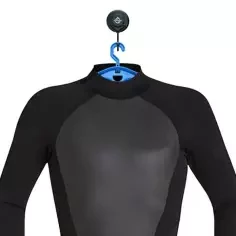
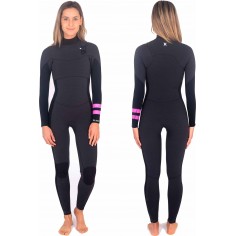
Having a good wetsuit is essential for practicing surfing and bodyboarding: it protects you from the cold, lets you spend more time in the water and becomes even more important in winter, when many of the best conditions usually occur in Europe and on the Iberian Peninsula. For summer, or for those travelling to warm waters, there are also options such as lycra and rashguards: they protect you from the sun and chafing without the thermal insulation of a winter wetsuit.
Complete wetsuit guide for surfing and bodyboarding
What is neoprene and why is it essential for surfing?
Neoprene is the commercial name commonly used for chloroprene rubber, a member of the synthetic rubber family. It is a flexible material, resistant to solar degradation and various chemical agents, and able to withstand the bending and twisting typical of intense movement in the water.
How do you correctly put on a wetsuit?
To put on a wetsuit more easily, you can use a plastic bag on your feet and hands so that your limbs slide better through the openings. Lycra socks are also a useful option to make it easier to get into the suit.
Choosing the right size is very important: the suit should feel very snug when you put it on, and it will fit even a bit tighter when wet, creating an effective seal that improves the wetsuit’s thermal performance. A poorly fitted suit loses insulation. At Mundo-Surf, the decisive factor when choosing is always the actual fit on the body.
Where can you buy quality wetsuits for surfing and bodyboarding?
At Mundo-Surf you can find a selection of wetsuits for surfing and bodyboarding, as well as technical garments for different levels of use. When comparing one suit with another, keep in mind: the important thing is not just the brand or the price, but the thickness, entry system, elasticity and fit in relation to the water temperature.
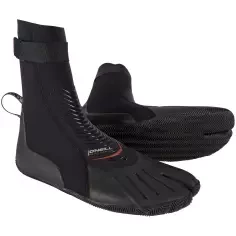
There are also specific options for men’s wetsuits, women’s and kids’, as well as common thicknesses such as 3/2 mm, 4/3 mm and 5/4 mm. As a practical reference: 3/2 mm usually works in mild waters of around 17 to 22 °C; 4/3 mm, between 12 and 17 °C; 5/4 mm, below 12 °C, often together with neoprene accessories such as boots, gloves or a hood.
How do you choose the right size for a surfing wetsuit?
The suit should fit very close to the body without restricting your breathing or creating excessive pressure points. In practice, what really makes the difference here is that there are no water pockets, pronounced wrinkles or loose areas in the lower back, armpits or behind the knees.
A good fit guarantees thermal insulation and comfort during your session. If there is just one thing to remember, it’s this: a suit that is slightly hard to put on when dry usually works better in the water than one that is easy to put on but loose.
Why do wetsuit sizes vary between brands?
Sizes are not universal, because each brand works with a different pattern. That’s why a size S in an O'Neill wetsuit can, in practice, be equivalent to an MS in a Rip Curl wetsuit.
What distinguishes one size from another in these conditions is not just the label, but the combination of height, weight, chest circumference and body type. It’s always worth checking the specific size guide of each wetsuit before deciding.
Should you wear clothing under a wetsuit?
Generally, no. Neoprene works best in direct contact with the skin, and wearing a T-shirt or a rashguard under the suit can create a persistent feeling of dampness and reduce thermal efficiency.
The usual exception is a neoprene top, because it adds thickness without breaking that insulation logic. If you want more warmth in cold water, that extra layer can make sense, especially in long or windy sessions.
What are the advantages of a back zip in surfing wetsuits?
The back zip or rear zipper offers a wide opening on the back, which makes it much easier to get in and out of the suit. It is usually a suitable option for beginners, older people or users with a solid build who prioritise ease of use.
The deciding factor here is simple: if you value ease of getting into the suit above all, the back zip remains a clear reference. In return, it normally offers slightly less stretch and watertightness than more closed systems.
What are the advantages of a front zip in wetsuits?
The front zip or chest zipper reduces restriction on the back and improves freedom of movement while paddling. It also tends to offer better sealing than back zip systems, which helps retain heat more effectively.
Getting in is a bit more technical, because the opening is smaller. In practice, it pays off for intermediate and advanced riders, or for those who surf frequently and want a solid balance between stretch, thermal performance and in-water comfort.
Why choose a zip-free wetsuit?
The zip-free model, also called zipless or entry-less, maximises stretch and uninterrupted paneling. What makes the difference here is the absence of a zipper that would interrupt the suit’s flex, something you notice especially in the shoulders and back.
The trade-off is a more demanding entry, so it’s not always the best option for everyone. If there is just one thing to remember, it’s this: it usually suits users who already know exactly how a wetsuit should fit them and who prioritise mobility over ease of entry.
The choice between entry systems —back zip, front zip or zip-free— depends on actual use and each person’s profile. If you prioritise ease of entry, the back zip is usually the most logical option; if you want better sealing and more freedom of movement, the front zip or zip-free system usually offer a clear advantage.