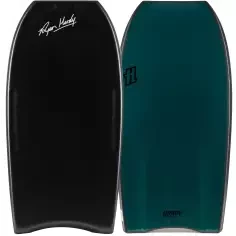
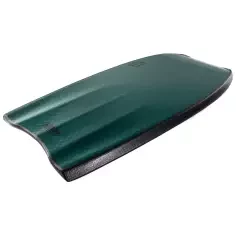
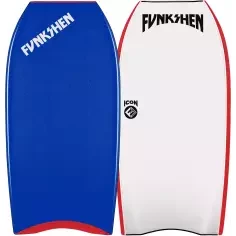
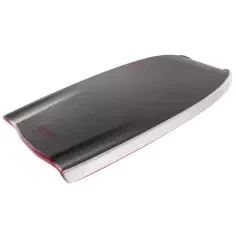
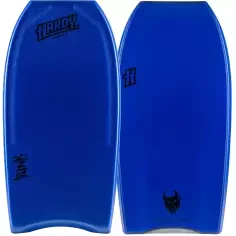
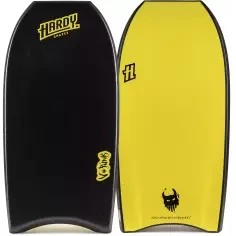
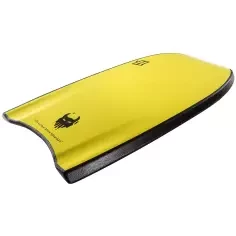
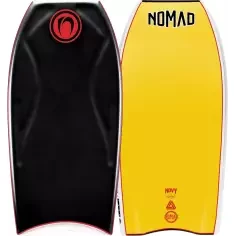
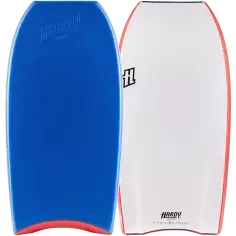
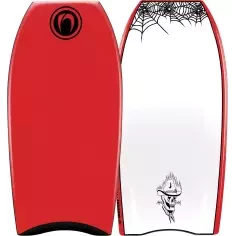
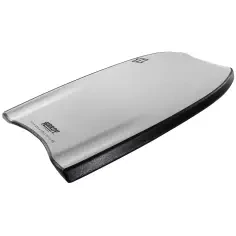
Bodyboards with polypropylene (PP) cores stand out for their stiff construction, with a common density of 1.9 pcf that delivers control and responsiveness in warm and temperate waters. What makes the difference here is the material’s stability: while other cores can lose some of their flex when the water is around 18–20 ºC, polypropylene maintains a more consistent performance. That’s why it’s associated with riders who prioritise consistent performance and long-term durability.
Polypropylene bodyboards: stiffness and control in warm waters
What is a polypropylene bodyboard and how does it perform?
Polypropylene (PP) is a material used as the core in bodyboards. Its usual density of 1.9 pcf gives it greater stiffness compared with softer options. In practice, that stiffness translates into a more responsive board, with better rail engagement and greater precision when you demand speed or quick changes of direction.
One thing to keep in mind when comparing it with other cores: PP performs especially well in temperate and warm waters, where other materials can soften. What sets one board apart from another in these conditions is its ability to retain its structure without marked changes during the session. This directly affects control and how clearly you can read the wave’s movement.
What type of bodyboarder and water conditions is a PP board ideal for?
The most logical use of PP starts from around 18 ºC water temperature and upwards. In that range, the deciding factor is usually the need to maintain stiffness and responsiveness without the board becoming too soft. If you’re looking for consistency between take-off, trimming along the line and manoeuvres, PP is a good fit.
It’s also worth placing it in terms of rider level. An intermediate or advanced bodyboarder usually gets more out of this construction, because they can load more pressure onto the board and make the most of its quick response. For riders who prioritise precise control, speed and structural support, PP makes sense as a core choice.
How to choose your bodyboard according to height, weight and level
The choice is easier to fine-tune with three criteria: height, weight and actual skill level. The usual size range for a bodyboard goes from 35" to 47", and the board will typically reach around your navel when it’s standing vertically in front of you. That’s a useful starting point, not an absolute rule.
Body weight matters as much as height. A stiffer construction like PP tends to work better for riders who have enough body mass and technique to flex it effectively. In practice, a light rider may prefer a board that’s easier to flex, whereas a heavier or more powerful rider will make better use of PP’s firmness.
Your level is what ultimately refines the decision. A beginner usually needs more forgiveness, buoyancy and a less demanding response; an advanced rider, on the other hand, will typically prioritise precision, drive and control in fast manoeuvres. If you have to keep just one idea in mind: the more technical the riding, the more sense a stiff PP board makes.
PP bodyboards: durability and construction
Polypropylene is one of the strongest options when you’re looking at core longevity. Its 1.9 pcf density helps maintain a stable response over time, even with frequent use. What makes the difference here is not just the initial stiffness, but its ability to stay more consistent session after session.
It’s worth clarifying one point: overall durability doesn’t depend only on the core, but also on the stringer, the deck, the slick and how well the board is cared for. Even so, with equal use and construction quality, PP stands out for holding its performance better under demanding conditions of salt water, temperature and continuous exposure. That stability is, for many riders, the most useful criterion in the medium and long term.