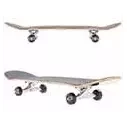
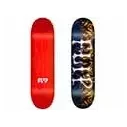
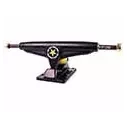
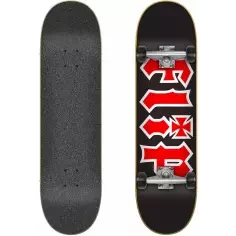
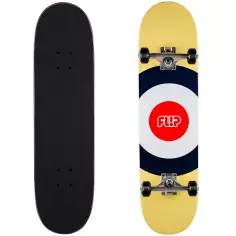
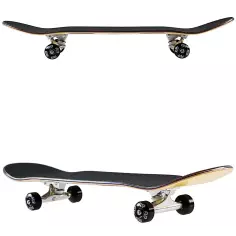
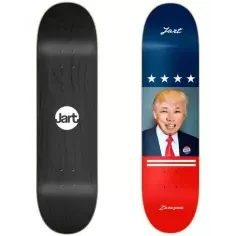
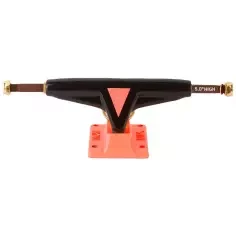
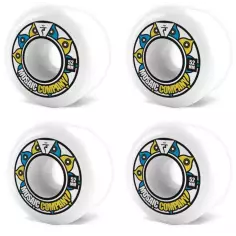
This category brings together the essentials to assemble, tune or upgrade a skateboard: pre-assembled complete skateboards, skateboard trucks in different heights, wheels in various diameters, grip tape, bearings, protective gear and accessories for your skateboard. What makes the difference here is not piling up parts, but choosing a consistent setup according to level, terrain and type of use.
How to choose: complete skateboard, components and accessories
The first criterion that guides the choice is simple: go for a complete skateboard or build a setup from separate parts. A pre-assembled complete usually works better for beginners, because it avoids compatibility errors between deck, trucks, wheels and bearings. In contrast, building from components makes more sense once you know what kind of performance you want for street, park or commuting.
Things to keep in mind when comparing both options: a complete setup prioritizes balance and ease of use, while a custom build lets you fine-tune dimensions and feel with greater precision. In practice, that difference is most noticeable in turning, stability and the board’s responsiveness.
Criteria for choosing a skateboard by level and style
If you’re starting from scratch, the most reasonable option is usually a complete deck between 7.75” and 8.25” wide. That range offers a good compromise between stability and maneuverability. If you have to focus on one point, it’s better to prioritize a size that’s easy to control rather than an overly specific setup.
For street and technical tricks, wheels from 51 mm to 53 mm usually work best: they accelerate fast and keep the board closer to the ground. For park or mixed use, 54 mm to 55 mm provide a bit more inertia and cushioning. What sets one board apart from another in these conditions is not just wheel diameter, but the combination of wheel–truck–deck width.
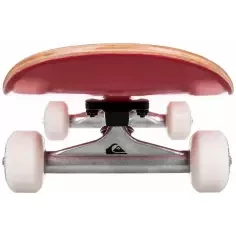
Truck height also matters. Low trucks favor stability and control with small wheels; medium or high trucks allow more room for larger wheels and help reduce the risk of wheelbite. The deciding factor here is the type of skating you’re really going to do, not a generic preference.
Complete skateboard guide: FAQs about decks and components
Which complete skateboard is best to start with?
For beginners, a well-assembled complete skateboard is usually the clearest choice. The reason is practical: trucks, wheels and bearings are already combined with a general-purpose logic. That lets you focus on stance, pushing and your first turns without having to solve compatibility issues from the outset.
A useful reference to get started would be a 7.75” to 8.0” deck if you want a more agile response, or 8.0” to 8.25” if you prioritize support and stability. In practice, a slightly wider base tends to make initial learning easier. Add protective gear from the very first session: helmet, knee pads and wrist guards make sense even at low speed.
How should you place your feet on the skateboard for better control?
Foot placement affects both balance and turning ability. As a basic reference, the front foot usually goes near the front truck bolts, angled at roughly 30°, while the back foot is more perpendicular, near the rear truck. This position helps distribute weight better and correct quick reactions from the board.
Things to keep in mind when you’re learning: keeping your feet too close together reduces stability, and placing them too far toward the nose or tail makes the board more twitchy. What really makes the difference here is keeping your weight centered over the trucks. The same logic works both for rolling on flat ground and setting up for a turn.
What is skateboarding and how is it practiced?
Skateboarding is a board sport on four wheels, practiced in the street, at skateparks or on smooth urban surfaces. It can be focused on tricks, transitions, short-distance commuting or a mix of several uses. That’s why the gear is not interpreted the same way for street as it is for cruising.
In practice, progressing in skateboarding requires balance, repetition and a board adapted to the terrain. What sets one board apart from another in these conditions is how it responds under your feet: width, truck height, wheel size and the overall stiffness of the setup. That combination defines the feel more than any single spec.
Where to buy complete skateboards and components online?
Mundo-Surf offers complete skateboards, decks, trucks, wheels, bearings, grip tape, hardware, protective gear and accessories. The real advantage of a specialized shop lies in helping you make a coherent choice according to your level and how you’ll use it. If you have to focus on one point, it’s worth checking the key measurements first: deck width, truck height and wheel diameter.
How to assemble a custom skateboard for your style?
A custom build makes sense once you know the type of response you’re looking for. For technical street, a deck between 7.75” and 8.25”, low or medium trucks and 51 mm to 53 mm wheels usually work well. For park or more versatile use, a base from 8.0” to 8.5” with 54 mm to 55 mm wheels offers more support and sustained speed.
Compatibility between parts follows a simple logic: truck width should match deck width, and wheel size should suit truck height. One thing to keep in mind when building from components: a poor combination can result in a sluggish or unstable board. What makes the difference here is not adding “more” parts, but choosing the right ones for how you’ll actually ride.