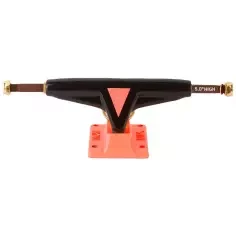
Skateboard trucks are one of the parts that most influence how the board behaves. What makes the difference here is not just the brand or the finish: it’s the compatibility between truck width, deck, wheels and the real type of use. A well‑matched setup provides stability, predictable turning and better control in street, transition or cruising.
Why trucks are crucial on a skateboard
The truck is the connection between the deck and the wheels. In practice, it determines how the board turns, how it responds to the rider’s weight and how much repeated use it can withstand. A poorly chosen truck can make the board unstable or sluggish, even with a good deck and proper wheels.
It’s useful to distinguish its main parts: hanger, axle, kingpin, bushings and pivot. Each one influences the overall response of the setup. Understanding this basics helps you choose wisely according to level, weight and riding style.
Truck size: the first selection criterion
The key criterion when choosing is almost always width. The truck should be as aligned as possible with the deck width: that guideline helps avoid imbalance and uneven wear. If there is only one point to remember, it’s this: the correct truck size conditions everything else.
- 129 mm: narrow option, common on smaller decks and setups focused on technical street. Makes quick turns and rotations easier.
- 139 mm: very versatile size, suitable for most classic skate setups. Offers a clear balance between stability and maneuverability.
- 5" (approx. 127 mm): close to narrow sizes, common in High configurations and in specific uses such as light cruising or transition with compact decks.
Something to keep in mind when assembling a board: an excessive difference between truck width and deck width changes the support on landings and the feeling of control. As a useful reference, many setups work well when the total difference stays within a few millimeters per side.
Truck height: High, Mid or Low
Height changes how the board behaves and the space available for the wheels. A High truck leaves more room for larger wheels, for example from 54–56 mm upwards, and usually works better for cruising or transition. A lower truck reduces the center of gravity and can feel more direct for street.
What distinguishes one setup from another in these conditions is not just the deck size, but the combination of truck height and wheel diameter. In practice, if you mount big wheels with low trucks, the risk of wheelbite increases. It’s worth checking that relationship before you finalize the setup.
Finishes: High and Semipolished
The finish does not by itself change the truck geometry, but it can affect surface resistance and maintenance. A High finish is associated with a construction designed for frequent use and good wear resistance. A Semipolished finish adds a more polished look without sacrificing functional protection.
In practice, the choice between the two depends more on usage and maintenance preferences than on pure performance. If the setup is going to take hits, scrapes and constant sessions, it’s better to prioritize durability and easy upkeep. If the visual appearance of the truck also matters, Semipolished makes sense.
What to check in the technical specifications
There are several points worth checking before choosing. The first is the hanger, which can be standard or hollow. A hollow hanger reduces weight, something noticeable in technical tricks and setups where every gram counts.
- Bushings: harder for heavier riders or for a firmer response; softer for easier turning.
- Kingpin: regulates bushing compression and, therefore, turn stiffness.
- Axle: should provide good support for wheels and bearings, with proper machining and no play.
- Baseplate and pivot: they affect turning precision and the durability of the whole set.
As a general guideline, a light rider usually feels comfortable with soft or medium bushings. From around 75–85 kg upwards, many setups benefit from firmer bushings to avoid an overly loose feel. Same logic as with height: the adjustment depends on real use, not on a single figure in isolation.
For street, manuals and technical tricks, narrow and relatively light trucks usually work well. Sizes like 129 mm match compact decks and provide a quick response. What really matters here is precise turning and how easily you can move the board in rotations.
For cruising and transition, a bit more stability is usually desirable. A 139 mm truck or a High configuration works better with slightly larger wheels and rougher surfaces. In practice, this combination gives more stability and reduces a twitchy feeling in the setup.
For beginners, an intermediate, versatile size tends to make progression easier. A 139 mm is a common reference because it doesn’t penalize control or the learning of basic turns, pushing and first tricks. If you only keep one idea in mind, it’s to avoid extreme setups when starting out.
The relationship between body weight and truck response
The rider’s weight directly affects how the bushings work and the stability of the board. A lighter skater can benefit from more responsive trucks and softer setups. A heavier skater often needs more firmness to maintain support and avoid excessive turning.
Something to consider when you’re chasing a specific feel: not everything is solved by changing trucks. Sometimes the correct adjustment comes from modifying only the bushings or kingpin tightness. That detail is often more decisive than changing truck size unnecessarily.
What to check before assembling
Before assembly, it’s worth checking three basic compatibilities: deck width, truck height and wheel diameter. That combination prevents wheelbite, improves alignment and gives the whole setup a coherent base. In practice, a balanced setup is more noticeable than any single spec on its own.
At Mundo-Surf, the useful approach to choosing trucks is not to compare models out of context, but to place each size and construction in relation to its intended use. What sets one board apart from another in these conditions is the coherence of the complete setup: deck, trucks, wheels and bushings all working in the same direction.