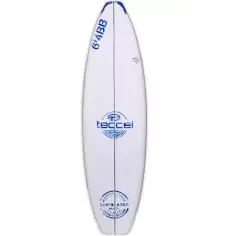
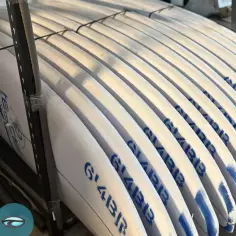
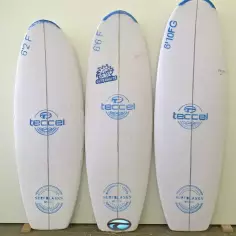
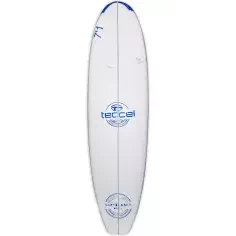
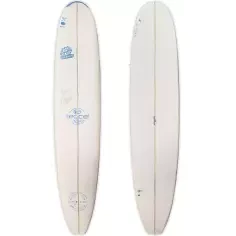
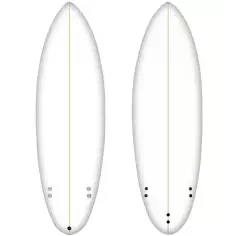
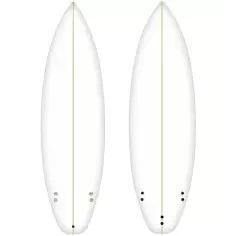
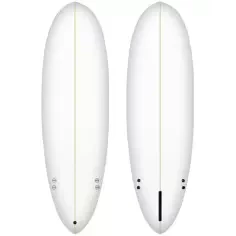
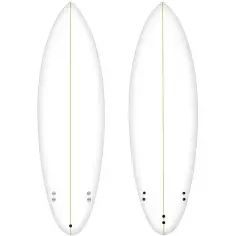
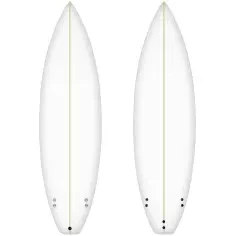
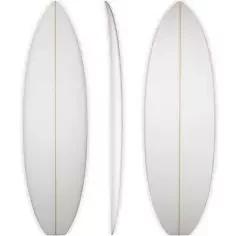
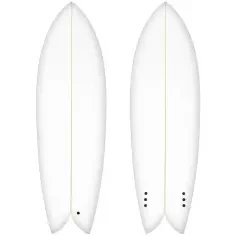
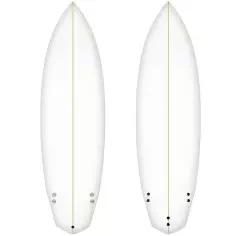
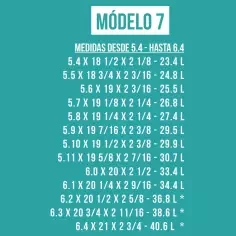
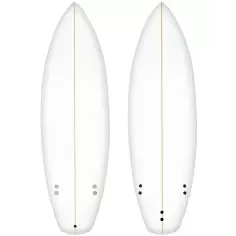
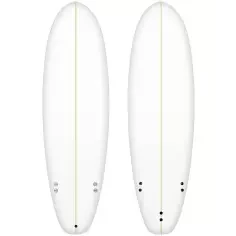
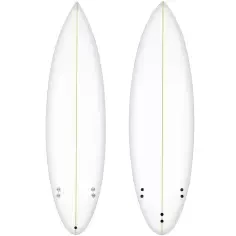
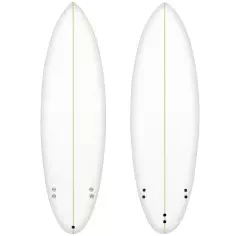
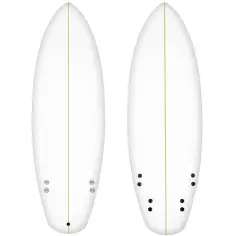
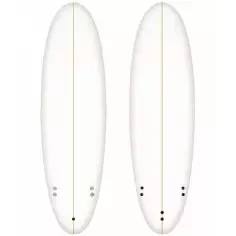
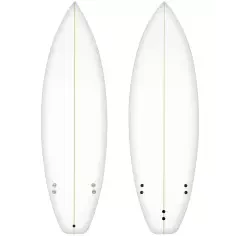
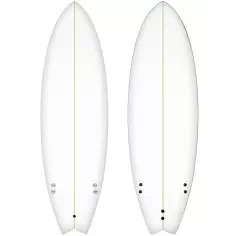
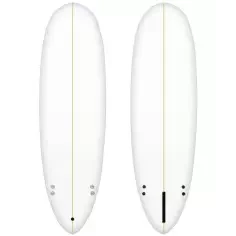
Foam is the raw material that makes up the core of surfboards. It is a polyurethane foam or expanded polystyrene, known as EPS. Polyurethane foams incorporate a central wooden stringer that provides stiffness and serves as a guide during shaping.
EPS is lighter and offers greater buoyancy. In practice, it is usually reinforced with stringers or carbon strips depending on the intended construction. At Mundo-Surf, the foam can be chosen either raw or pre-shaped: the pre-shape service consists of machining the blank with a CNC machine to leave it very close to the final shape.
Types of foam: polyurethane, EPS and blanks according to the board
Polyurethane is the traditional foam. What makes the difference here is the feel when shaping, its stiffness and the visual reference provided by the central stringer. It usually works well in shortboards, fish and beginner boards when the deciding factor is a more direct response underfoot.
EPS floats more and weighs less. This is worth bearing in mind when planning a board with more volume: longboards, SUP or designs aimed at making paddling easier. What distinguishes one board from another in these conditions is not only the material, but also the combination of final volume, lamination and structural reinforcement.
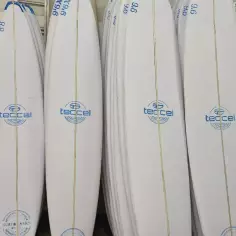
X-Tra and Teccel blanks are a common reference among shapers, especially due to their consistency in density and cut. If there is only one key point to remember, it is this: a well-adjusted density helps balance strength, buoyancy and shaping margin. Mundo-Surf works with both raw foam and pre-shaped Teccel foam machined by CNC.
Choosing the right foam: guide for shapers and board manufacturers
The choice of foam depends, above all, on the type of board you want to make. For a 5'6" to 5'11" shortboard, standard-density polyurethane is usually sufficient. In fish or boards with more volume, between 5'8" and 6'0", a blank that allows for a bit more float without overly increasing the final weight may be of interest.
If the project is a gun for big waves, from 6'0" upwards, stiffness is usually the deciding factor. In that case, polyurethane with a reinforced stringer is still a very commonly used base. In practice, the wave program also matters: a board for a powerful beach break does not have the same demands as one for a long point break.
With longboards and SUP the logic changes. You need more total foam volume, but with a distribution of density that maintains buoyancy without adding excessive weight. Blanks specifically designed for these sizes already account for that ratio, which greatly simplifies the initial selection.
Frequently asked questions about foams and pre-shapes
What is a pre-shape and how do you choose the base foam for the board?
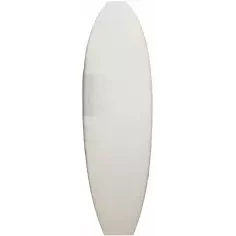
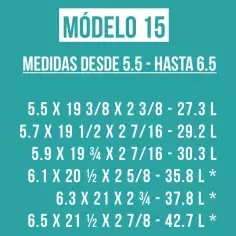
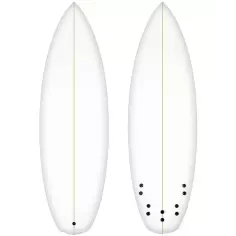
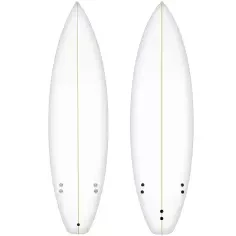
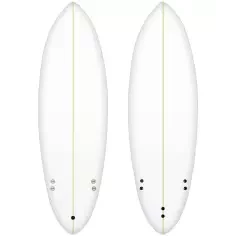
A pre-shape is the machined base of a future surfboard. It starts from a raw foam blank that is processed with a CNC machine to define the approximate volume, rocker and general lines. It is not a finished board, but a starting point to build a surfboard with less initial work.
What really makes the difference here is the time saved in roughing and shaping. Even so, the final finish still depends on manual work: cleaning up machine marks, refining the rails, fine-tuning the bottom and adapting the shape to the intended real-world use.
If you buy a pre-shape, how will you receive it?
When you buy a pre-shape, you receive the foam cut to the requested dimensions. It is a surfboard that is still unlaminated, without final sanding and without finishes. Afterwards, you will need to go over the machine marks, refine the rails and complete the lamination with polyester or epoxy resin depending on the type of construction.
Something to bear in mind when evaluating this option: the pre-shape does not replace fine shaping work. It reduces the roughing hours, but it does not eliminate the manual tuning phase that determines the board’s final performance.
Should the pre-shape be ordered in the same size as the finished board?
Yes. If you want a 5'11" board, the normal thing is to order a pre-shape of 5'11". Sanding and touch-ups afterwards do not usually reduce the length significantly, because the machining marks are superficial and manual adjustments focus more on finishing than on changing the nominal dimensions.
The same logic applies to shortboards, fish, guns, longboards or SUPs. If there is only one key point to remember, it would be this: the pre-shape should match the desired final size, and not a larger size “for margin”, except in very specific projects involving major modifications.