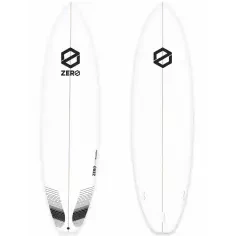
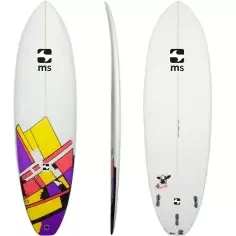
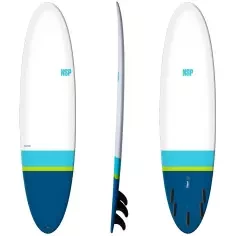
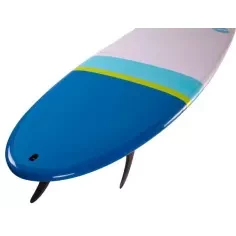
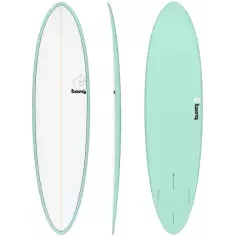
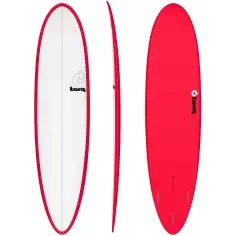
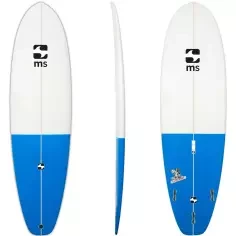
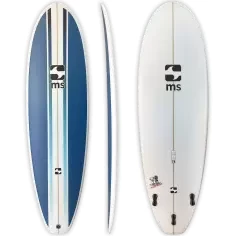
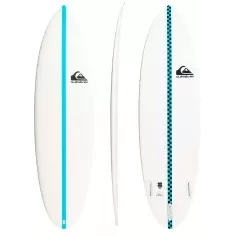
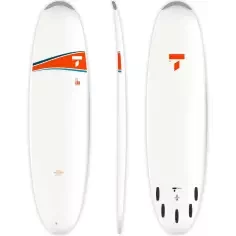
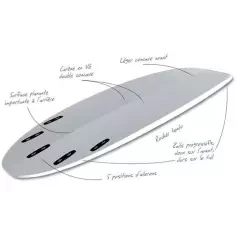
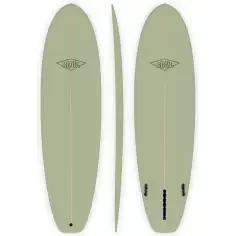
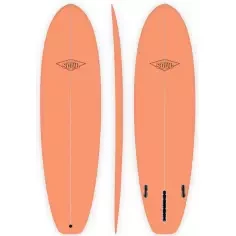
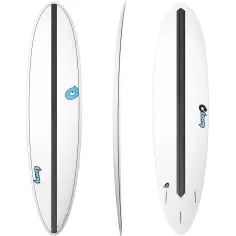
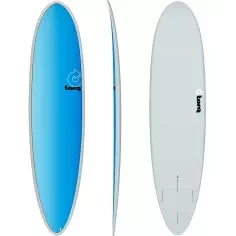
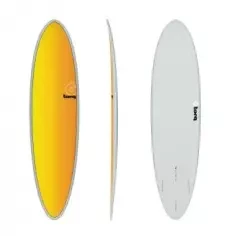
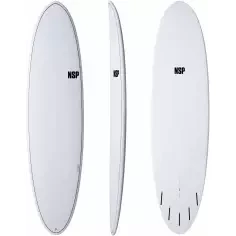
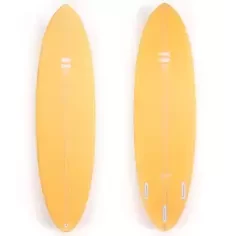
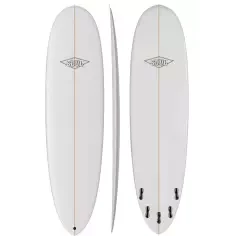
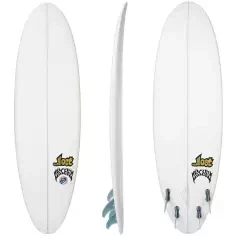
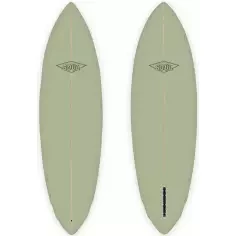
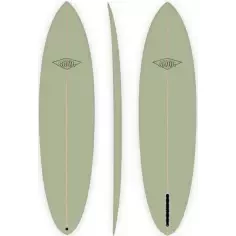
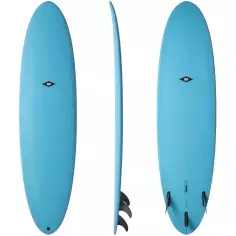
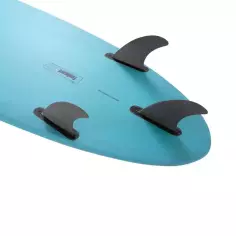
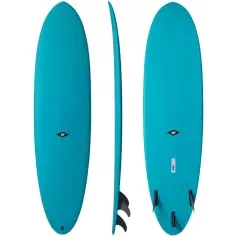
Evolution surfboards are a suitable choice as a first board after a week of beginner lessons. Being wide from nose to tail, they make takeoffs easier and offer superior stability. The generous volume helps with paddling, although it’s important to choose a board adapted to your weight and level. They allow you to progress, surf along the face of the wave and do your first bottom turns with greater control.
Frequently asked questions about evolution surfboards for learning
What is an evolution surfboard and how do you choose the right one?
It’s a type of surfboard designed to make it easier to progress from a beginner level. It offers generous volume for greater stability and easier paddling. It’s usually larger and has more volume than other boards, because it’s intended for surfers who need to progress and catch their first waves safely after having learned with a softboard surfboard.
What makes the difference here is the wide point shifted forward. In practice, this provides extra stability and makes control in small waves easier. That volume distribution lets you focus more on technique and less on constantly correcting balance.
What is an evolution surfboard used for and how does it differ from other surfboards?
Evolution surfboards are designed to help you start catching the open face of the wave and do your first turns. With more volume along the entire board, they offer lots of stability and make paddling and popping up easier. This is especially noticeable in small waves, which are usually the most common conditions during the beginner phase.
Normally you learn from scratch with a softboard surfboard and then keep progressing with this type of larger surfboard. The criterion that guides the choice compared to other models is clear: they prioritize buoyancy and ease of use over fine manoeuvrability.
When is it time to move on and change from an evolution board to an intermediate-level board?
This change usually comes when you already have good control of your takeoff, pumping along the face of the wave, and stability in different conditions. From that point on, it can make sense to look for a surfboard that meets other needs, such as a fish surfboard or a hybrid surfboard.
If there’s one key point: the change doesn’t depend on rushing to shorten the board, but on your real water time. When you’re already linking basic turns and generating speed with some consistency, a shorter board can offer more manoeuvrability.
How to identify an evolution surfboard: shape, volume and material characteristics
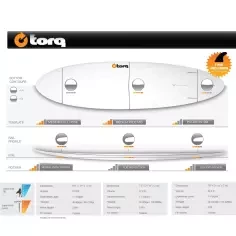
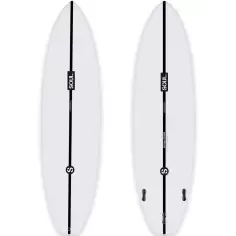
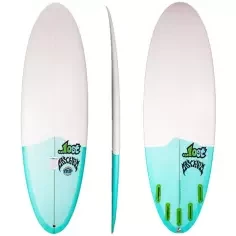
An evolution surfboard is recognized by its medium length and a wide point moved forward, closer to the chest, to improve stability. The tail is usually wider than on other models. The thickness is generous, with the goal of making the learning phase easier.
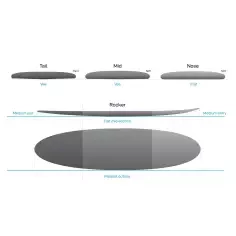
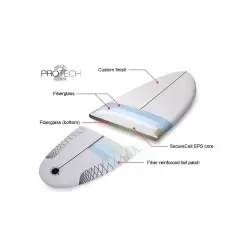
In practice, when you look at an evolution board you can see fairly even volume from nose to tail. What distinguishes one board from another under these conditions is how that buoyancy is distributed and how much support it provides when standing up. Many current evolution surfboards are made of epoxy or polyester: epoxy usually offers more lightness and buoyancy, while polyester provides a more classic feel.
How to choose the right size and volume for an evolution surfboard
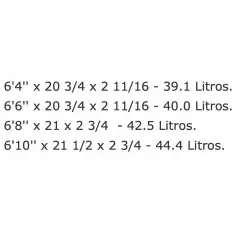
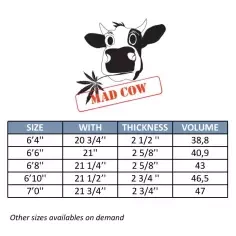
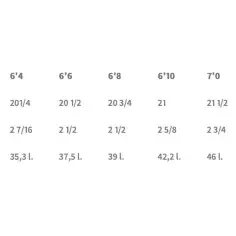
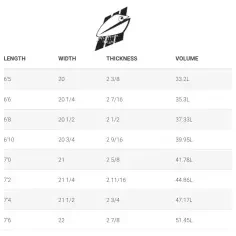
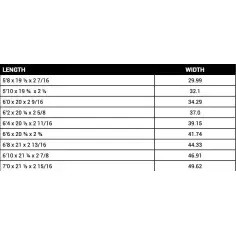
The key criteria are body weight and previous experience. If there’s one key point: an evolution board should offer easy paddling without so much volume that it slows technical progression. Things to keep in mind when comparing dimensions: a range between 45 and 70 litres works well for many beginner profiles.
Below 70 kg, a volume of 45 to 55 litres usually works well. Above 85 kg, you’ll typically be looking at 60 to 70 litres. In practice, your surfing frequency, fitness level and the type of wave also matter: someone who surfs once a month will need more help from the board than someone who goes in three times a week.