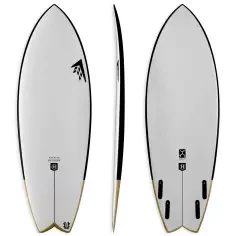
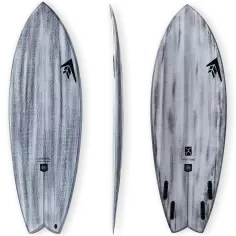
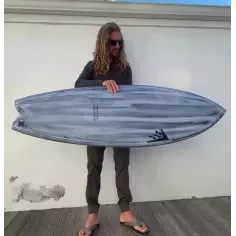
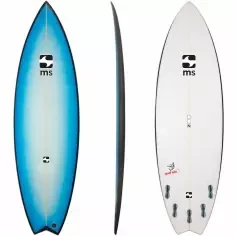
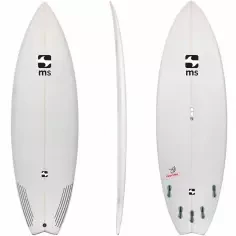
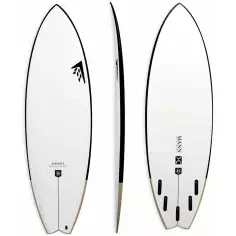
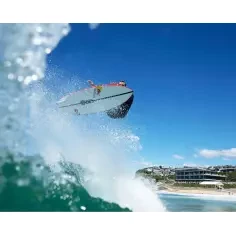
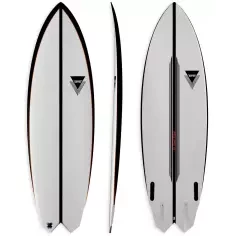
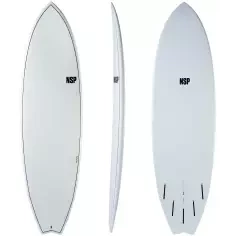
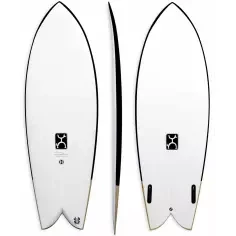
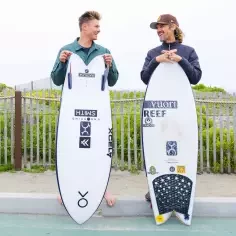
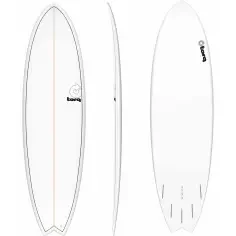
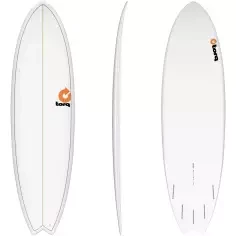
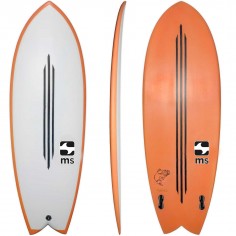
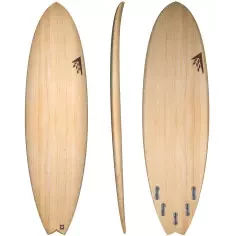
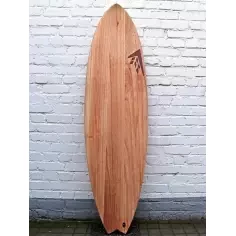
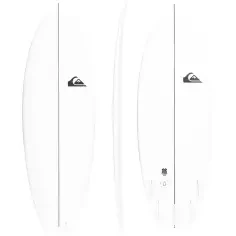
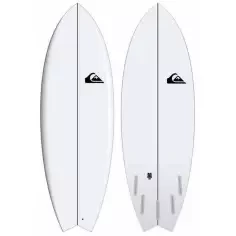
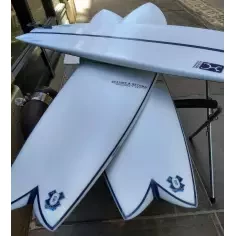
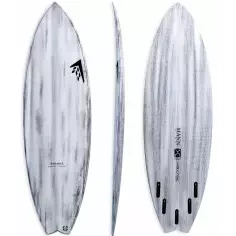
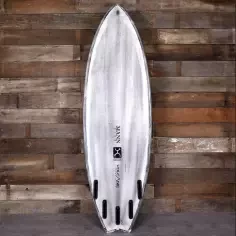
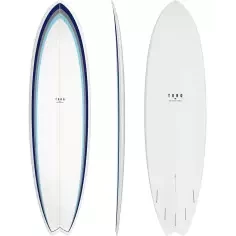
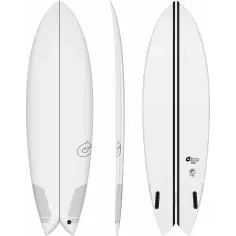
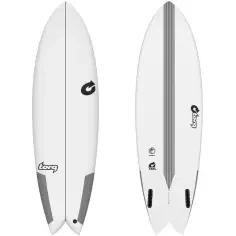
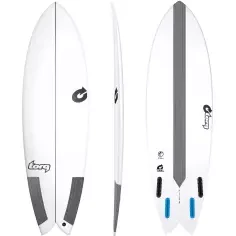
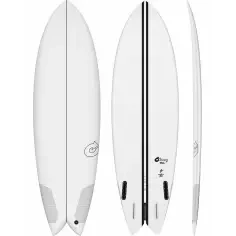
Fish surfboards have more volume than shortboards and a wide outline from tail to nose. They are a good fit for intermediate surfers looking to move to a shortboard, and also for experienced surfers on small, low‑power days.
In practice, they are easy boards to paddle and get going. They help you progress when you’re still lacking paddling speed, and they let you make the most of weak sessions or crowded lineups. Maneuverability is one of their strengths in softer conditions.
How to choose a fish surfboard: key features and criteria
Choosing a fish mainly depends on your level, weight, and usual wave type. Four points make the real difference: volume in liters, outline, rocker, and construction. Each one affects paddling ease, speed, and turning response.
What a fish surfboard is for: volume, maneuverability, and small waves
A fish board adds extra volume and buoyancy when the wave has little power. It works especially well in small, mushy, or inconsistent waves: it gets into waves earlier and holds speed better through flat sections. For an intermediate level, that usually means more waves surfed per session.
What sets one board apart from another in these conditions is its ability to generate speed without demanding highly technical paddling. The generous width from the midsection towards the tail helps you float with less effort and maintain drive through weaker sections.
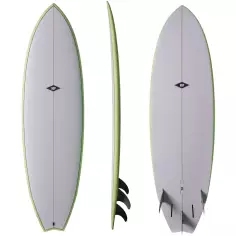
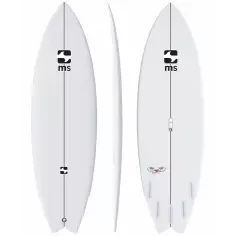
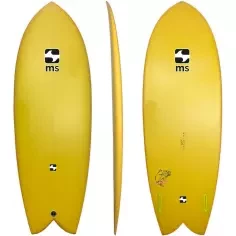
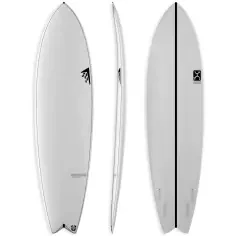
You can recognize a fish by its swallowtail. It’s the most obvious visual feature, though not the only one. The package is rounded out by generous width and a compact outline, in a logic similar to that of a hybrid surfboard.
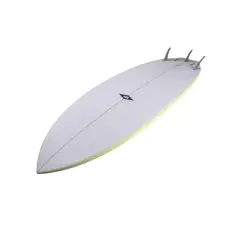
The rocker is usually low to moderate, which is key to generating speed in low‑slope waves. Many fish boards also use a concave on the bottom for extra grip and drive. If you had to keep just one point in mind: the wide outline is the feature that best defines how it rides.
Volume, construction, and materials in fish surfboards
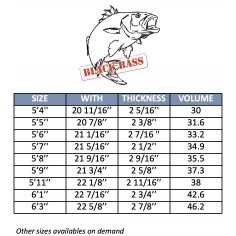
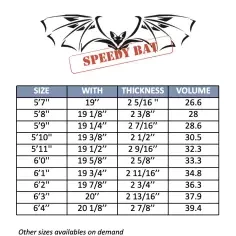
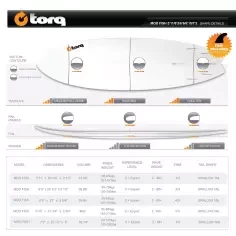
Volume in liters guides a big part of the choice. On a fish, adult sizes commonly range between 28 and 45 liters, although some very wide or hybrid‑style models can go higher. Keep this in mind when comparing with a shortboard: an extra 2 to 6 liters usually makes paddling and wave entry easier.
By level, an intermediate surfer will generally look for a fish with comfortable volume and some margin for error. An advanced rider, on the other hand, may drop volume to gain responsiveness. The deciding factor isn’t just body weight: surf frequency, fitness, and usual wave type also matter.
As for construction, the most common options are PU and EPS/Epoxy. PU offers a more classic feel and progressive flex; EPS/Epoxy generally provides more lightness and buoyancy for the same volume. Fin boxes allow you to fine‑tune the board’s performance even further.
Twin fish and retro design: classic and modern options
A twin fin setup gives a fast, loose feel strongly associated with classic fish boards. In small waves, it favors flowing lines and drawn‑out turns. It’s a common choice for those who prioritize speed and a smooth, gliding sensation.
More modern versions may come as thruster or 2+1, along with a slightly more pronounced rocker. The key difference here is the level of control you’re looking for: twin for more freedom, thruster for greater hold and precision in tight turns.
When to surf a fish board: ideal conditions
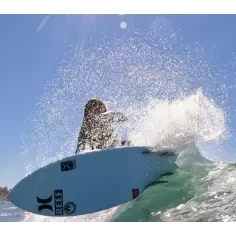
The fish performs best in low‑power waves, typically from knee‑high to a bit above chest‑high. It also works in choppy surf, soft peaks, or days with a fading swell. In practice, it’s a board designed to keep speed where others bog down.
For an experienced surfer, it’s usually a second board focused on fun in weaker conditions. For an intermediate surfer, it can be a logical step towards shorter boards. If you had to keep just one point in mind: a fish is a great choice when the goal is to paddle easily, catch waves early, and maintain speed through weak sections.