Men's surf clothing guide
Not all surf clothing performs the same in real use: between a cotton T-shirt and a lycra top with UV protection, the difference lies in comfort, durability and behavior in the water. In practice, the deciding factor is not just price, but exposure time, temperature and type of session. At Mundo-Surf, what makes the difference here is helping you place each garment according to its real use in surfing, bodyboarding or at the beach.
Essential men's surf wear: T-shirt, boardshorts and wetsuit
Basic surf garments are organized around three functions: thermal protection, sun protection and freedom of movement. If there is only one key point, it is to relate each garment to the water temperature: above 22 °C, boardshorts or a rash guard are usually enough; between 17 and 22 °C, a light combination often works well; below 17 °C, neoprene becomes the main reference. It is not about piling on garments, but choosing the right ones for your area and season.
Men's surf T-shirts: UV protection and quick-dry
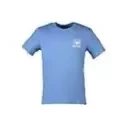
Technical surf T-shirts are usually made from lycra, polyester or polyamide, with quick-dry properties and sun protection that generally starts at UPF 50+. What sets one garment apart from another under these conditions is the fit: a tight-fitting rash vest reduces chafing against the board and moves better in active sessions, while a looser cut is more comfortable for swimming, paddling or the beach.
For occasional use, one or two technical T-shirts are usually enough for rotation. If your frequency goes up to 2 or 3 sessions a week, keep this in mind when comparing models: flatlock seams, true stretch and resistance to salt water tend to matter more than the outer design.
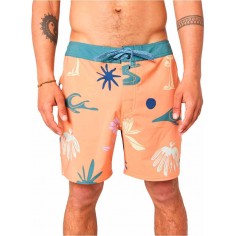
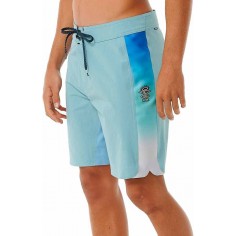
Surf boardshorts and swim trunks: comfort and durability in the water
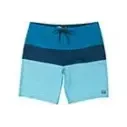
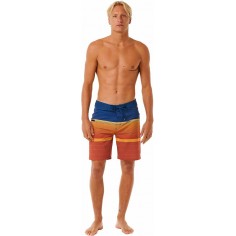
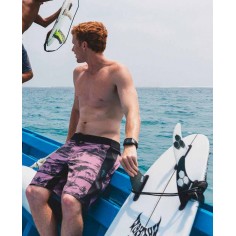
Surf boardshorts and swim trunks are designed not to limit hip flexion or cause excessive chafing while paddling. What makes the difference here is the pattern, length and fabric: a medium length of 17" to 19" usually offers a good balance between coverage and mobility, while 2-way or 4-way stretch fabrics make maneuvers and weight shifts easier.
In warm waters, a quick-drying pair of boardshorts can be enough. In mild waters, many surfers follow the same logic as with a rash guard: combining boardshorts with a thin neoprene top or rash vest lets you adapt better to changes in wind and temperature.
Men's surf-style clothing by use and style: technical, urban and casual
Surf clothing changes as much by function as by context of use. The deciding criterion is usually simple: if the garment will go in the water, you should prioritize fabric, fit and drying time; if it will be used out of the water, day-to-day comfort, fabric weight and the ability to withstand salt, sun and frequent washing matter more.
For regular practice, training or competition, you want garments with consistent technical performance. In practice, that means lightweight materials, non-irritating seams, stretch panels and neoprene thickness matched to water temperature: 2/2 mm or 3/2 mm in mild conditions, 4/3 mm when the water drops to around 12–15 °C, and thicker options if your local winter demands it.
What distinguishes one board from another in these conditions does not apply here; in clothing, the comparable factors are how it fits your body and the fatigue it causes after an hour of paddling. A highly technical garment only pays off if your usage frequency justifies that level of performance.
Men's surf-style clothing with an urban look: hoodies, shirts and design
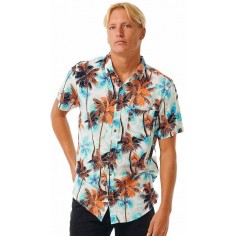
Many users look for surf clothing for after the session or for everyday wear. In that case, what makes the difference here is the balance between comfortable fabric, reasonable drying time and functional cut: combed cotton T-shirts, mid-weight hoodies and lightweight shirts usually work well in mild or in-between seasons.
Keep this in mind when you want mixed use between beach and street: an urban garment does not replace a rash guard or a technical top in the water. It serves a different purpose and should be kept separate from your in-water gear.
Men's surf clothing brands: how to choose according to your profile
Men's surf clothing brands differ in more than just looks. In practice, some focus their development on performance, others on durability, others on more casual lines or lower-impact materials. If there is only one key point, it is to check whether the brand matches the way you are really going to use the garment.
How to choose according to your level and frequency
If you surf occasionally, for example 1 or 2 times a month, reliable boardshorts and a basic technical T-shirt are usually enough. If your frequency goes up to 2 or 3 times a week, wear and tear changes: it pays to prioritize seams, elastic recovery and fabrics that do not deform with salt, sun and repeated rinsing.
For intensive training or competition, the deciding factor becomes consistency of performance. Less chafing, better thermal regulation and faster drying do make a difference when sessions are long or frequent.
Men's surf accessories: hats, flip-flops, jackets and backpacks
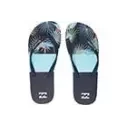
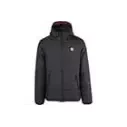
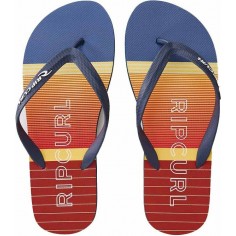
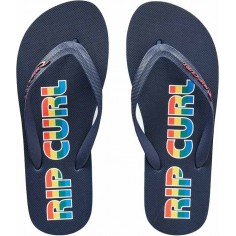
Accessories complete your gear setup, even if they are not as high a priority as neoprene, rash vests or boardshorts. What makes the difference here is their specific function: quick-drying hats or caps for sun exposure on land, flip-flops with good grip on wet surfaces, lightweight jackets for the temperature drop after your session, and backpacks suited to daily transport.
If sun exposure is high, it is worth paying attention to fabrics with UV protection and wide brims on technical hats. In windy areas or where temperatures change abruptly, a light outer layer is usually more useful than a thick garment that takes a long time to dry.
Practical guidelines for choosing surf clothing at Mundo-Surf
In a broad category, the decision becomes easier if you sort your criteria. First: water and air temperature. Second: frequency of use. Third: actual needs in or out of the water.
As mentioned earlier, not all garments are suited to the same scenario. At Mundo-Surf, the useful approach is to compare men's surf clothing from that angle: UV protection, thermal range, mobility, durability and context of use. That is the basis that helps you choose more precisely.