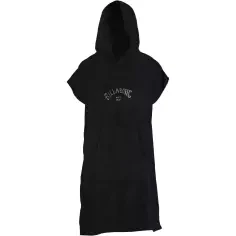
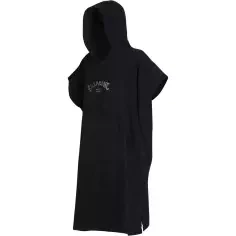
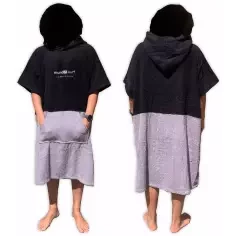
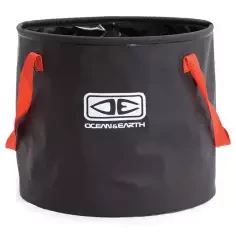
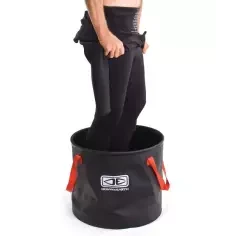
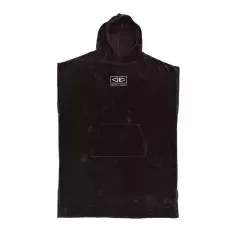
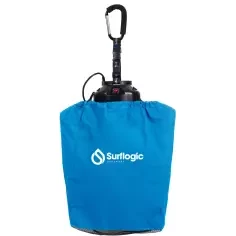
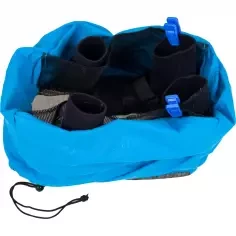
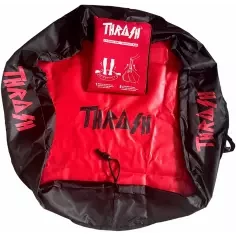
At Mundo-Surf you’ll find accessories to take care of your wetsuit: specific hangers for drying, changing mats and dry bags to protect your gear between sessions. What really makes the difference here is how each accessory is used in real life: preventing bad smells, limiting deformation and making changing on the beach more comfortable.
Hangers and systems for drying your wetsuit
Proper drying is a decisive part of maintenance. Trapped moisture degrades neoprene over time and encourages odors. In practice, the factor that determines how long a wetsuit lasts is not just its thickness or range: how it is dried after each session also matters.
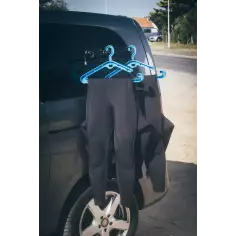
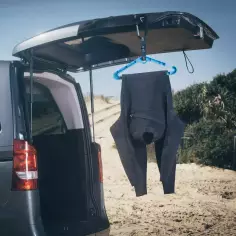
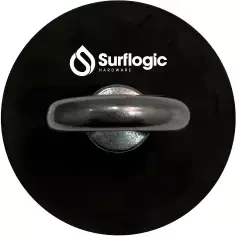
Hangers and hooks for hanging a wet wetsuit
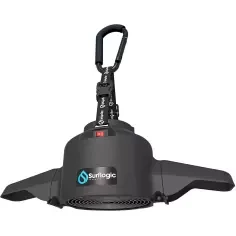
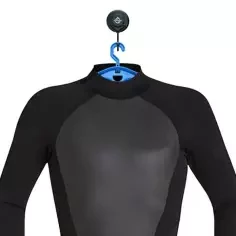
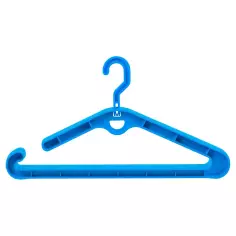
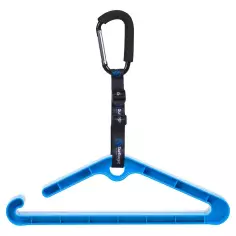
A specific wetsuit hanger prevents unnecessary tension on the shoulders. Compared to a conventional clothes hanger, a specialized hanger distributes the weight of a wet suit better, which is important for 4/3 mm, 5/4 mm or thicker suits. What distinguishes one board from another in these conditions doesn’t apply here; what distinguishes one hanger from another is its ability to support the load without deforming the upper panel of the suit.
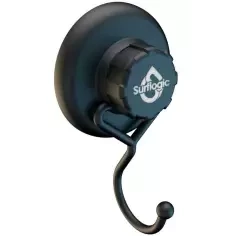
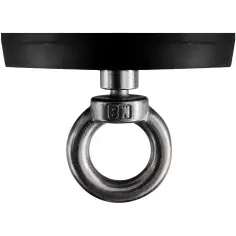
It is also worth paying attention to the material of the support: technical plastic, treated aluminum or corrosion‑resistant components. This matters when the suit dries near the sea or in a damp van: a rusty hook or weak structure ends up affecting both ease of use and the preservation of the neoprene. Auxiliary hooks, with suction cup or magnetic systems, expand drying options at home or while traveling.
If there is just one key point, it’s this: a good hanger reduces the risk of deformation and helps drying to be more even. This is most noticeable with thick suits, which retain more water and weigh considerably more once wet.
Cleaning and maintenance of neoprene
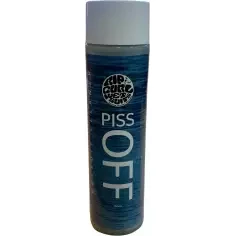
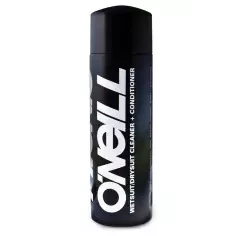
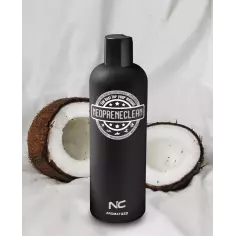
After drying, cleaning is the second key factor. Salt, sand and organic residue build up in linings, seams and zips, and can speed up wear. Cleaners formulated for neoprene help deodorize and reduce bacteria without being harsh on the material.
The factor that usually decides which format to choose is how often you use your suit. A spray is convenient for quick maintenance, while a soak‑type cleaner is better when there is a strong build‑up of odor or several back‑to‑back sessions. In practice, in cold water or with intensive use in autumn and winter, regular cleaning becomes even more important due to the longer drying times.
When storing your suit, keep this in mind: it must be completely dry and away from direct sunlight and heat sources. The same logic as for drying applies here, because storing a damp wetsuit in a trunk or closed bag accelerates deterioration.
Changing mats and dry bags to protect your wetsuit
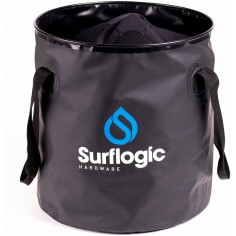
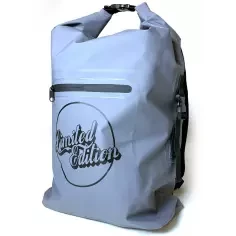
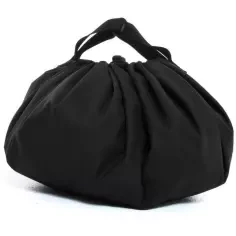
Transport and storage between sessions are as important as drying. A dry bag limits exposure to salt water, sand, dirt and sunlight, all of which shorten the lifespan of neoprene. What really makes the difference here is not just carrying the suit from point A to point B, but how well it is protected during that time.
In practice, a long journey to the spot, several hours in the car or contact with wet surfaces make it harder to preserve your gear. A well‑sealed bag helps isolate the wet suit from the rest of your equipment and keeps the inside of the vehicle cleaner. If you also carry booties, gloves or a thermal rash vest, this factor becomes even more important.
Portable changing mats: comfort and privacy
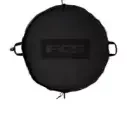
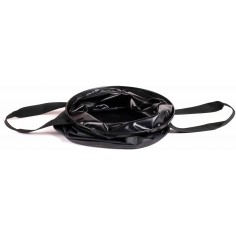
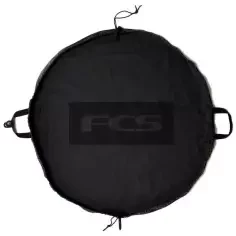
A portable changing mat clearly serves two functions: providing privacy and keeping your suit isolated from wet or dirty ground. Foldable formats are usually the most practical for those who get in the water frequently and want to cut down preparation time before and after the session.
What really makes the difference here is ease of use in real‑world conditions. A compact changing mat lets you get changed without putting your feet on sand, asphalt or mud, and it also works to gather all your wet gear before storing it. For surfers who stack several sessions per week, this accessory makes the routine much simpler.
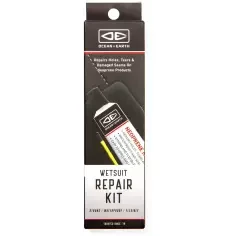
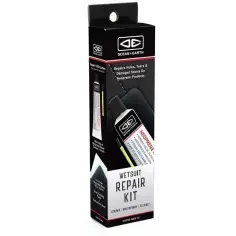
Quick repair: neoprene patches and glues
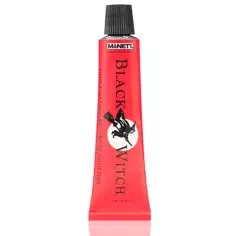
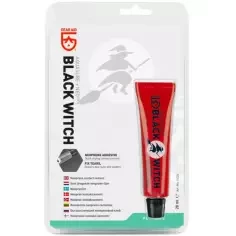
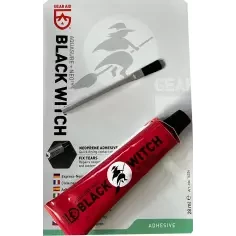
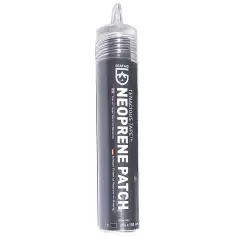
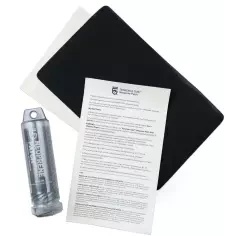
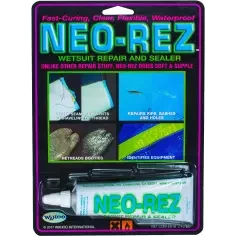
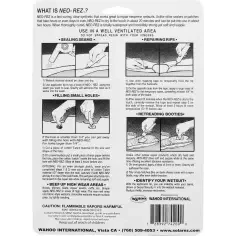
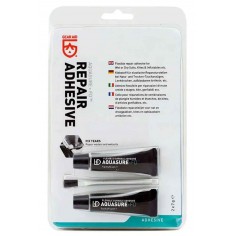
Having a small repair kit on hand helps contain minor damage before it gets worse. Neoprene‑specific patches and adhesives are used for small cuts, separated seams or common friction areas such as armpits, knees or around the zip.
When checking your suit, keep this in mind: it’s worth looking for micro‑cracks, open seams and surface tears once a month, or more often if use is intensive. In practice, repairing a small opening in time usually prevents water leaks and loss of thermal performance in the next session.
If there is just one takeaway about overall maintenance, it’s this: the real lifespan of a wetsuit depends on a chain of care steps, not on a single accessory. The right hanger, regular cleaning, thorough drying, protected storage and periodic inspection make up the combination that best preserves neoprene over the seasons.