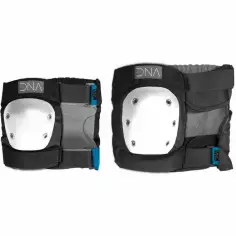
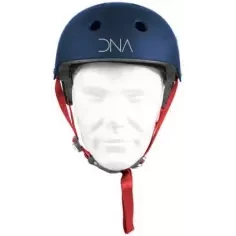
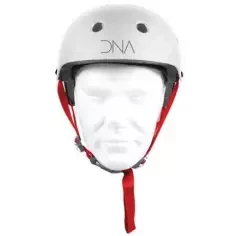
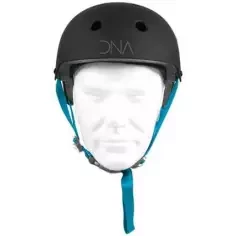
Here you can find the protective gear you need to practice skateboarding more safely: helmet, knee pads, elbow pads, wrist guards and complete sets. The decisive factor in choosing is not the brand alone, but the skill level, the fit, and the intended use.
Skate protection guide: helmets, knee pads, elbow pads and wrist guards
Which essential skate protections to choose: helmet, knee pads, elbow pads and wrist guards
To practice skateboarding, it is best to use full protective gear: helmet, knee pads, elbow pads and wrist guards. In practice, the lower the level, the more important it is to cover all areas exposed in a fall.
What really makes the difference here is having a complete protection set rather than separate pieces. For beginners, children or use in skateparks, this solution simplifies fitting and reduces sizing mistakes between different pieces. If there is only one key takeaway: for beginners, full protective gear is the most logical reference.
Skateboard helmets: which helmet to choose according to your skate level
To skate safely, it’s advisable to go for a helmet specifically designed for skateboarding, with a robust construction and reasonable weight. Standard models combine an outer shell in polycarbonate or ABS with an inner impact-absorbing foam: a suitable base for frequent low- and medium-intensity impacts.
In practice, the decisive criterion when choosing a helmet is the actual fit on the head. It should sit firmly without pressure points and not move when you turn or tilt your head. When comparing sizes, keep in mind: a helmet that is too loose loses effectiveness, and one that is too tight ends up being worn less.
It’s also worth checking the ventilation and the available size range. Adult models are usually sized by head circumference, often between 52 and 60 cm, while junior ranges are shorter. What differentiates one board from another in those conditions doesn’t apply here: for helmets, what mainly sets one model apart from another is the inner shape, ventilation, and stability of the fit.
Complete protection sets for skate: elbows, knees and wrists
A practical choice is to opt for a coordinated protection pack. A complete set usually includes helmet, knee pads, elbow pads and wrist guards, with a consistent sizing logic that makes the decision much easier, especially for first-time setups.
In practice, this format is useful for recreational use, learning, and ramp or park sessions. Wrist guards help limit hyperextension when you put your hands out to break a fall, while knee and elbow pads absorb impacts and scrapes. If your priority is to start from a solid base, it’s worth looking at complete sets first.
Junior skate protections: helmet and protection pack for kids
Skateboard protective gear becomes even more important when a child starts skating. A well-fitted junior pack should include a lightweight helmet, knee pads, elbow pads and wrist guards proportioned to children’s or teenagers’ sizes: that proportion is what helps the protection stay in place.
If there is only one key point about junior skate, it’s this: proper fit determines both safety and how consistently the gear is worn. Knee and elbow pads should hold in place without restricting movement, and wrist guards should not overly limit grip. A stable, comfortable helmet is often decisive at the beginner stage.
When choosing equipment for children, prioritize ease of putting it on, simple closures and well-defined sizes. For occasional use on flat ground, a well-fitted basic level may be enough, while for skatepark or intensive learning it makes more sense to reinforce knees, elbows and wrists with greater coverage.