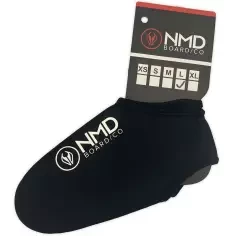
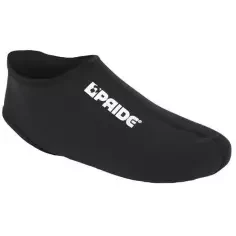
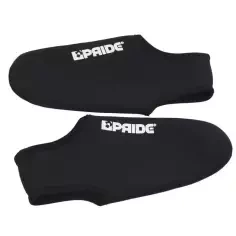
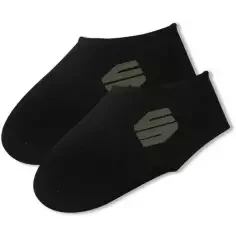
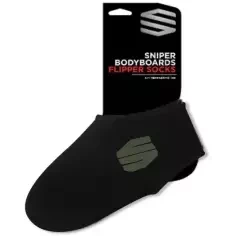
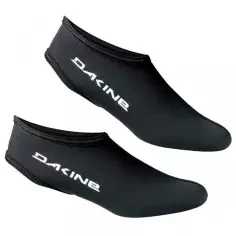
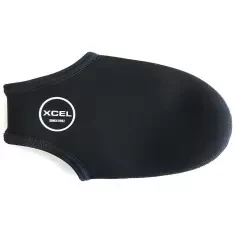
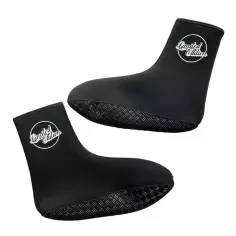
Low-cut bodyboard socks are booties designed to protect the foot and heel from chafing caused by bodyboard fins. They only cover the most sensitive areas and allow for very high freedom of movement. Made from thin neoprene between 0.5 mm and 2 mm thick, they provide minimal thermal insulation: a solution suited to warm or mild water.
Neoprene socks for bodyboarding: frequently asked questions about these protective booties
What are low-cut bodyboard socks and when should you use them?
A low-cut bodyboard sock is a bootie that only covers the lower part of the foot, especially the heel and the area in direct contact with the fin. Its minimalist design maintains flexibility and reduces bulk inside the fin. What makes the difference here is its specific purpose: protecting the areas where chafing appears, without moving to a full bootie.
For which seasons and water conditions are they most suitable?
This type of bootie is mainly suited to summer and warm or mild water, usually from around 20 °C upwards. In practice, they provide very little thermal protection, but they do offer an effective barrier against repeated friction. If there is one key point, it is this: they are designed more to prevent blisters and chafing than to keep you warm.
Who are they most useful for?
They are a good option for anyone looking for a small, simple bodyboard sock that adds hardly any weight or thickness. One thing to bear in mind when choosing this style: it works especially well for riders who prioritize feel, a direct fin fit and ankle mobility. They can also be useful in other fin-based water sports, as long as the main need is localized protection.
What neoprene thickness should you choose?
The thickness of the neoprene mainly affects the balance between feel, fit and warmth. A 0.5 mm model offers the lightest, most flexible feel, suitable for very warm water and sessions where the lowest possible bulk is desired. A 2 mm model adds a bit more insulation and padding, useful in mild water or on windy days.
The key criteria for choosing are usually simple: water temperature and your personal tolerance to cold. Below 18–19 °C, many people already prefer more protection than a low-cut sock can provide. The factors that distinguish one board from another in these conditions do not apply here; in this case, what distinguishes one thickness from another is how much warmth you’re willing to add without losing direct contact with the fin.