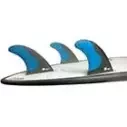
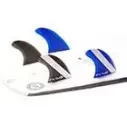
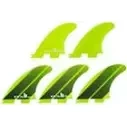
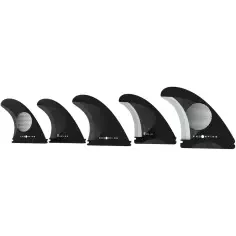
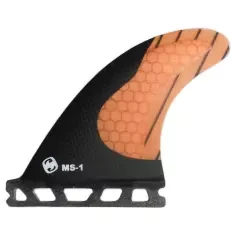
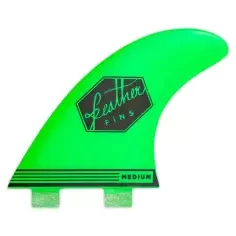
Mundo-Surf offers a wide selection of surf fins with different setups and fin box systems. Fins have a direct influence on how the board performs: if your level is intermediate or advanced, it’s worth fine-tuning this choice. You can check this guide to understand how fins affect the performance of your surfboard and then filter by weight, number of fins, materials, and compatibility with your board.
Criteria for buying surf fins according to your style and level
The choice of fins depends on several factors: your surfing level, the type of waves you usually ride, your board dimensions, and your turning style. What really makes the difference here is knowing what each setup provides in terms of speed, hold, and control. Not all fins correct the same issues or respond the same under pressure.
In practice, the most common setups are Thruster, Twin, Quad, and Single Fin on longboards. Each one changes maneuverability, drive, and stability. What sets one board apart from another in these conditions is how it distributes support and acceleration along each section of the wave.
Things to keep in mind when evaluating materials: stiffness and flex significantly change the response under your feet. Fiberglass usually offers a more solid and progressive feel, while honeycomb or carbon constructions reduce weight and provide a livelier release. At intermediate and advanced levels, this difference is most noticeable in quick turns and rail-to-rail transitions.
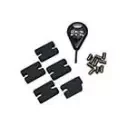
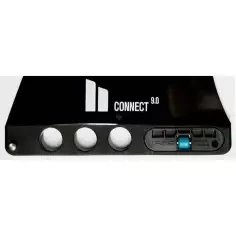
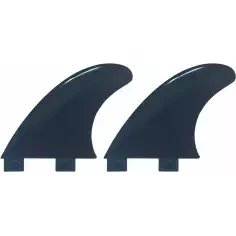
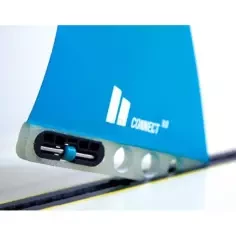
The key criterion when choosing between fin box systems is simple: compatibility with your board. The most common are FCS, FCS II, and Futures, and they are not interchangeable with each other. If you focus on one main point, it’s worth checking the fin box system before buying.
Guide to choosing surf fins: fin box systems and setups
What is a surf fin and how does it affect your board’s performance?
The fin is the component that helps provide direction, stability, and hold to the board. Its size, template, rake, base, and stiffness change the way the board accelerates and turns. In practice, a fin that is too small can make the board feel too loose; one that is too large can make it slower in transitions.
It’s also advisable to relate fin size to the surfer’s weight. As a useful reference, many brands work with approximate ranges: size S up to 55–65 kg, M between 65–80 kg, and L from 80 kg upwards. The key selection criterion here is not only weight, but also how powerfully you surf and the volume of the board.
Why is the Tri-fin (Thruster) system the most versatile setup?
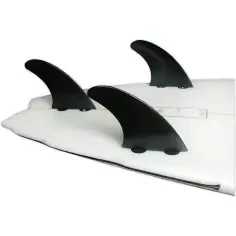
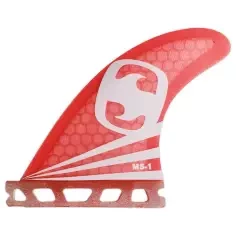
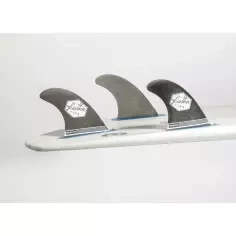
The Thruster setup, with three fins, is still the most commonly used on shortboards and hybrid boards. It combines good hold with a predictable response, which is useful from intermediate through advanced levels. That’s why it usually works well in a wide range of conditions, from waist-high waves to overhead surf.
What makes the difference here is the center fin: it adds control in turns and security in more vertical maneuvers. Compared with a Twin, it loses some looseness but gains consistency in more critical sections. If your board is designed for all-round use, this is usually the most logical baseline choice.
What are Twin-fin setups used for on retro surfboards?
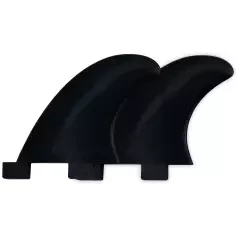
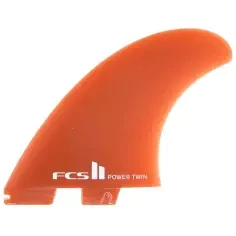
The Twin-fin is used mainly on retro fish, mini Simmons, and boards with a wide outline and a focus on speed. It generates a lot of acceleration in small to medium waves, usually from knee- to chest-high. In this type of surfing, the feeling is freer and more fluid.
What sets one board apart from another in these conditions is its ability to maintain speed without having to pump too much. A Twin with a wide base favors longer turns and open lines. Something to keep in mind when using it in hollower or bigger waves: it offers less hold under strong pressure than a Thruster.
When should you choose a Quad-fin system for more speed and hold?
The Quad-fin uses four fins: two front and two rear, without a center fin. This setup usually provides a lot of speed and very effective hold on the wave face. In fast, hollow waves or those with long sections, that combination is especially useful.
In practice, an intermediate surfer can use it to get more speed in smaller waves, while an advanced surfer will usually turn to it in more powerful conditions. What makes the difference here is the balance between drive and control in the bottom turn and the exit of the turn. If the board feels draggy with a Thruster, a Quad can be a sensible alternative.
What are the characteristics of Single Fin setups for longboards?
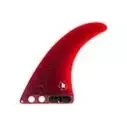
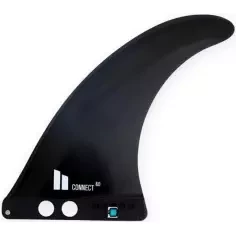
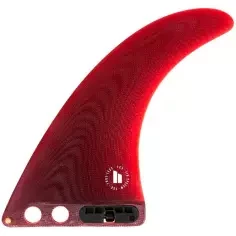
The Single Fin is the classic setup on longboards and some traditionally inspired mid-lengths. A single center fin provides stability, long drawn-out lines, and a more flowing style of surfing. It usually performs well in small to medium waves, where reading the line takes priority over tight turns.
The key selection criterion in this case is usually the size of the fin and its rake. As a reference, on longboards from 9'0" to 9'6", central fins from 8.5" to 10.5" are common, depending on weight, volume, and style. If you focus on a single factor, it’s worth tuning the fin to the board’s real use: more vertical surfing calls for less size; more noseriding and stability call for more surface area.