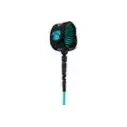
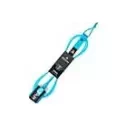
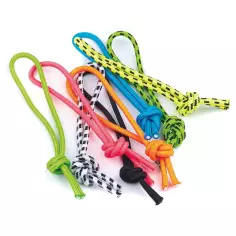
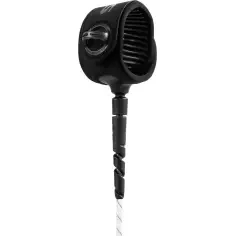
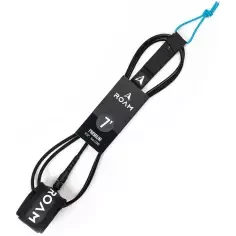
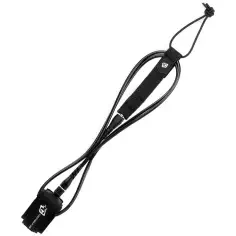
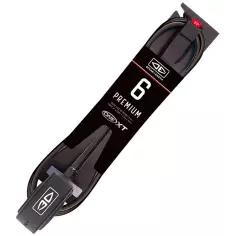
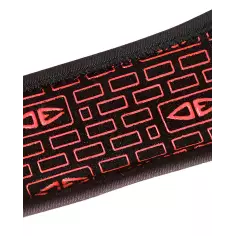
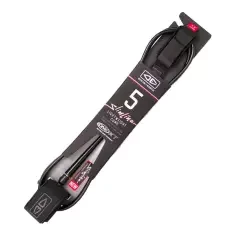
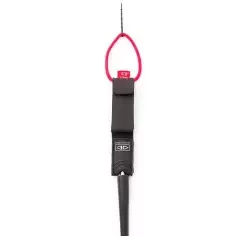
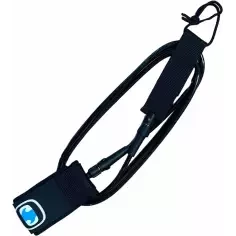
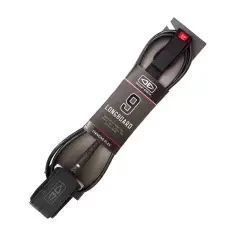
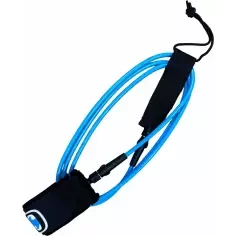
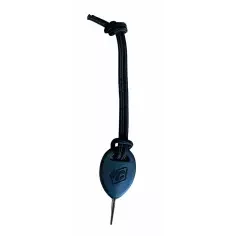
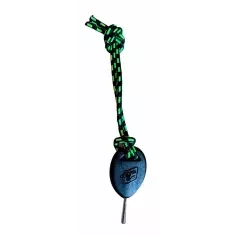
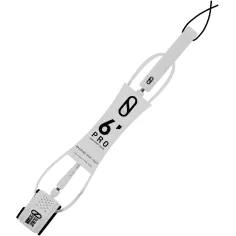
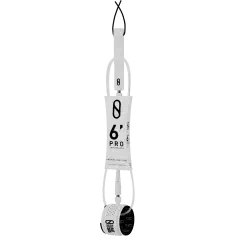
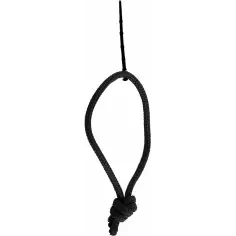
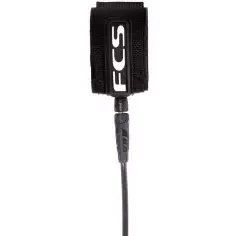
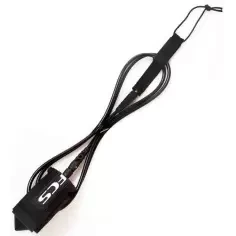
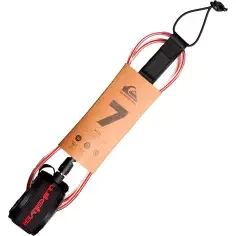
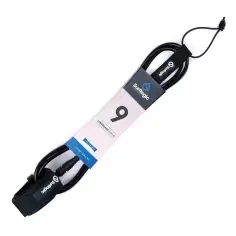
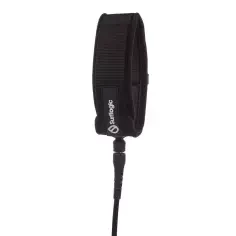
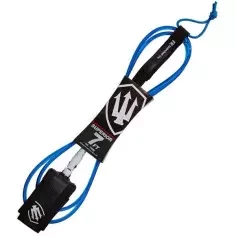
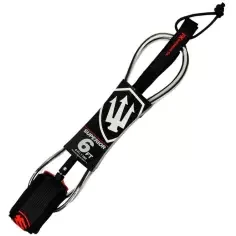
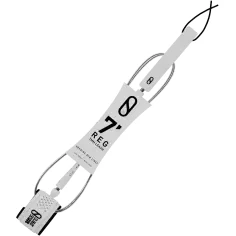
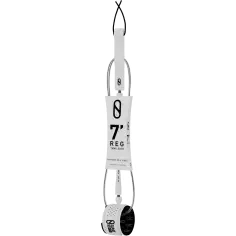
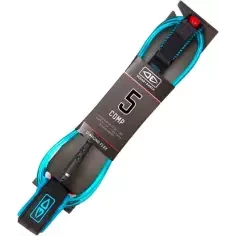
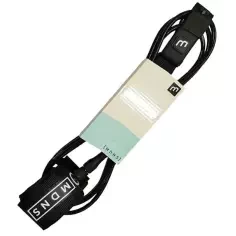
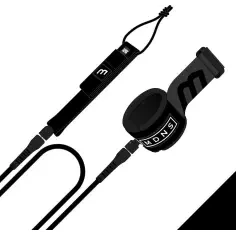
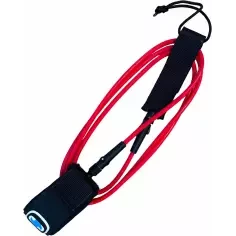
The surf leash is the cord that connects your ankle to the back of the board. Its role is simple and decisive: keeping the board attached to the surfer after a wipeout or hold-down, with a direct impact on safety and control during the session.
What really makes the difference here is not the colour or the brand, but the match between the leash, the board and the type of waves. Points to keep in mind when choosing a model: length, diameter, swivel system and actual use in the water.
How to choose the right surf leash for your board
How to choose a surf leash according to the board and conditions
The main criterion when choosing is first the length. In practice, a leash should measure roughly the same as the board or be very close to that size. If the board is 6'4", a 6' leash is usually the standard reference.
What distinguishes one board from another in these conditions also influences the type of leash. For shortboards and small to medium waves, a comp or lite leash can make sense. For longer boards, more volume or more powerful conditions, it is better to move up to a more robust longboard or regular model.
What a surf leash is and why it is essential
A surf leash is a flexible connection between the surfer and the surfboard. It prevents you from losing the board after a fall and reduces the risk of it drifting away or becoming a hazard for other people in the water.
If there is only one point to remember, it is this: it is not a secondary accessory. It is a safety component that also affects paddling comfort, drag on the wave and the reliability of the setup when the swell gets bigger.
Types of leash according to use
There are different formats depending on the type of board and wave. The regular leash is the most versatile option for medium-sized waves. The comp leash prioritises lightness and lower water resistance, while the longboard leash is designed for longboards and higher inertia.
In demanding conditions you have big wave models, with a larger diameter and greater strength. In practice, it is not advisable to oversize without reason: an overly thick leash also adds drag and reduces flow.
How long your surf leash should be
The basic rule is clear: a length similar to that of the board. That balance allows the board to move far enough away in a fall, without staying too close to the body or creating unnecessary tension while paddling.
Points to keep in mind when fine-tuning this measurement: a leash that is too short can make the board snap back more violently. One that is excessively long adds extra length, more chance of tangles and a less clean feeling under your feet.
Surf leash swivels: what they are and why they matter
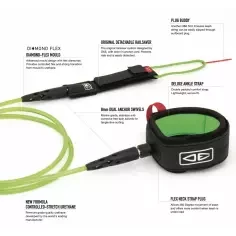
Swivels are rotating pieces located at one or both ends of the leash. Their function is to prevent the cord from twisting on itself when the board turns, when the surfer is sitting and waiting, or when the leash builds up twists after several wipeouts.
What really matters here is the smoothness of the movement. A single swivel can be enough for basic use, while a double swivel system improves rotational control and reduces discomfort in long sessions.
Why swivels are important in practice
When the leash wraps around the ankle or leg, it changes the feeling of freedom and can be annoying during the take-off. It can also leave the cord in a poor position for the next wave, something you notice more in sessions with a lot of movement or cross-currents.
In practice, a good swivel system keeps the leash more stretched out and more predictable. It does not completely eliminate tangles, but it does reduce a very common source of discomfort during the session.
Regular vs. comp leash: differences in diameter, strength and performance
The main difference between a regular leash and a comp is the diameter of the cord. A comp leash usually comes in under 6 mm: it offers less drag, less weight and a lighter feel, designed for shortboards, performance surfing and small or clean waves.
The regular leash is often around 7 mm. It provides more strength, a greater safety margin and superior durability in variable conditions. The deciding factor is not only technical level, but above all the power of the wave, the size of the board and how often it will be used.
How to install the leash on your surfboard
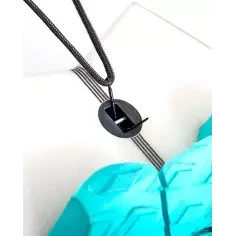
Correct installation starts at the tail plug. Thread the cord through the leash plug and then secure the closure so that the connection is firm, without excessive slack and without the cord touching the rail or tail tip directly.
If the cord is too long and rubs against the tail, it is best to adjust it to avoid premature wear. As mentioned earlier, the details matter: a well-chosen leash loses part of its effectiveness if it is poorly installed.
To expand on each step of mounting and adjustment, Mundo-Surf explains it in detail on its blog. You can also check this guide on how to choose a surf leash according to your board, level and conditions.