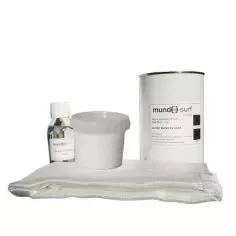
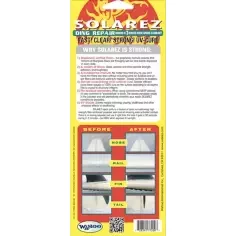
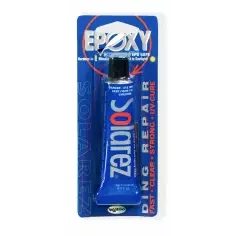
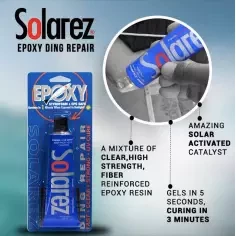
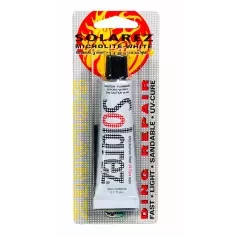
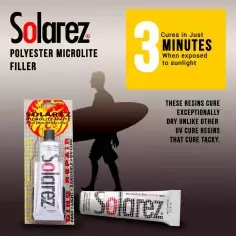
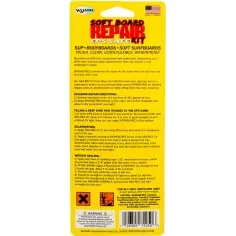
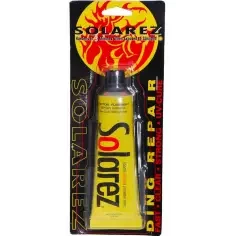
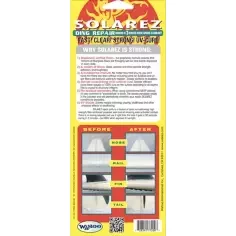
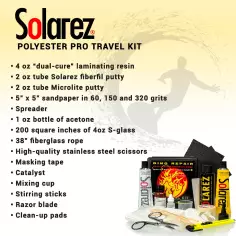
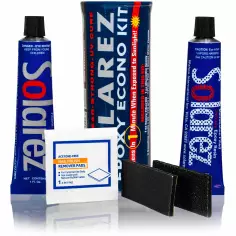
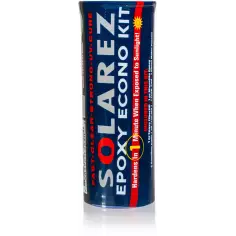
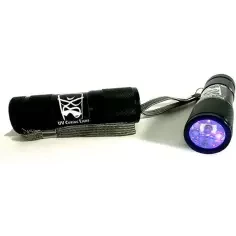
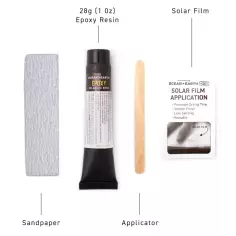
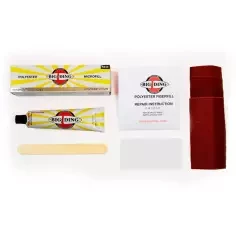
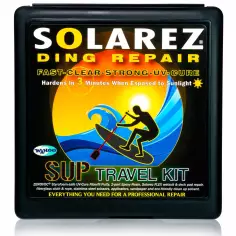
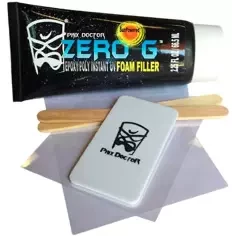
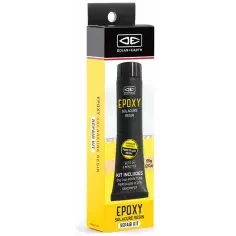
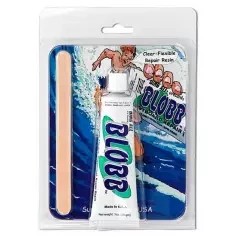
Surfboards are fragile and can be easily damaged. In practice, many repairs can be done at home if you choose the right materials: polyester or epoxy resin depending on the type of foam, fiberglass, plugs, repair kits, sandpaper, brushes and adhesives.
Repair kits and materials: criteria for choosing resin, cloth and additives
The criterion that determines the choice is simple: first you need to identify the core of the board, then the type of repair. What really makes the difference here is not so much the size of the ding, but the compatibility between resin and foam. If there’s only one point to remember: a poor choice of resin can worsen the damage.
When to use epoxy or polyester resin: differences between PU and EPS
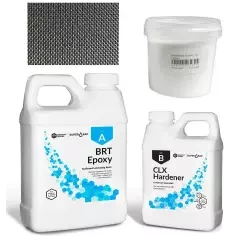
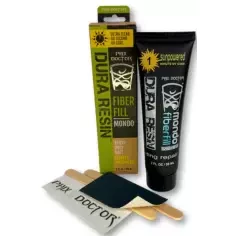
If the board is epoxy with an EPS core, you must use epoxy resin or a repair product formulated on that basis. Something to keep in mind when hesitating between both systems: polyester resin attacks polystyrene and can melt the core, creating a bigger hole.
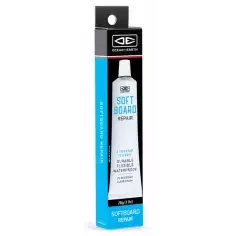
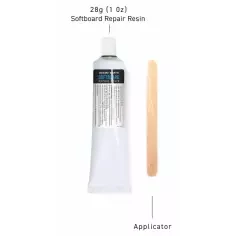
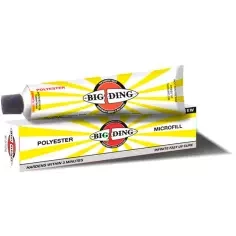
If the board is polyester with a PU foam core, the most suitable option is usually to use polyester resin. In practice, an epoxy resin can also be used to repair this type of board. What distinguishes one board from another under these conditions is the core material, not the outer finish.
UV resin: correct use and when to add catalyst
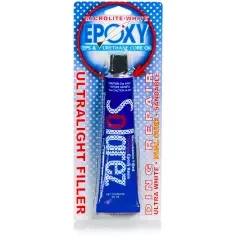
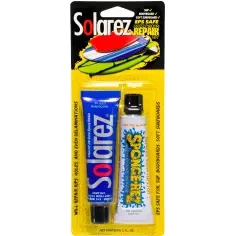
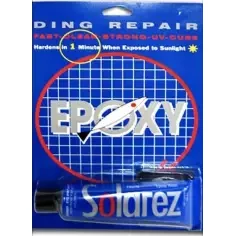
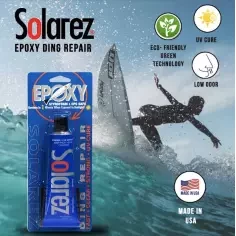
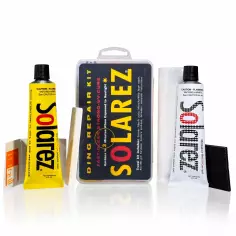
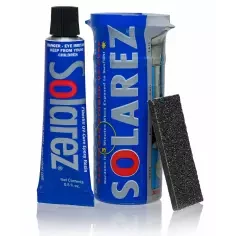
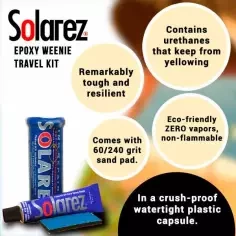
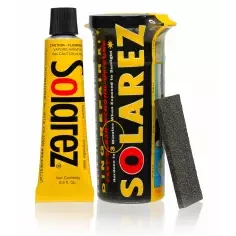
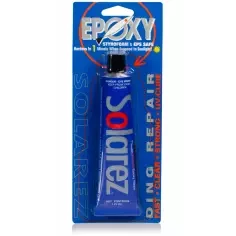
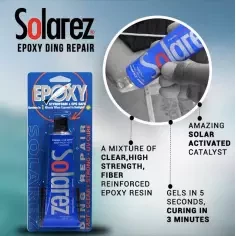
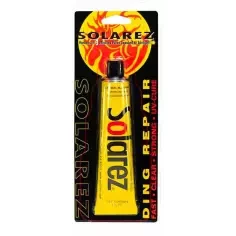
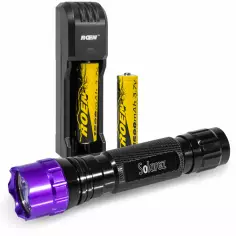
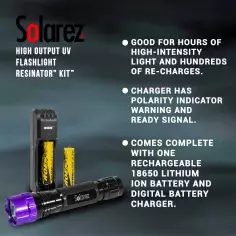
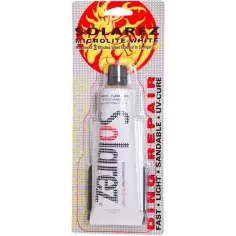
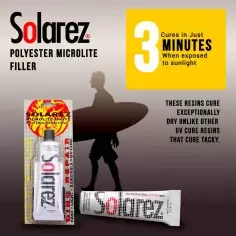
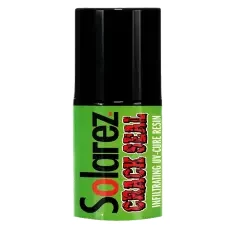
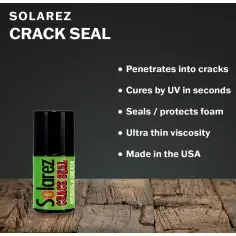
UV resin already incorporates the additive needed to cure with the sun’s ultraviolet radiation. That’s why it does not need to be pre-mixed with catalyst under normal conditions: it works with the same logic as any sun-curing Solarez product.
If the repair has to be done without sunlight, for example at night or indoors, PMEC catalyst can be added. What makes the difference here is controlling the amount properly, because too much will speed up curing too much and make the finish more difficult.
Correct pre-shape size for the board
If you’re aiming for a finished board of 5'11, the normal thing is to order a pre-shape of 5'11. In practice, sanding out the machine marks does not usually reduce the final length to any noticeable degree.
Something to keep in mind when working with short sizes: fine-tuning is usually done more on outlines, rails and thicknesses than on the overall length. The criterion that decides the choice is not leaving extra margin in length, but starting from a blank already close to the final dimensions.
Correct catalyst ratio in polyester resin
To cure polyester resin, the usual mix with PMEC catalyst is between 1% and 3%. What makes the difference here is the ambient temperature: the hotter it is, the less catalyst you should use.
Exceeding that range can “burn” the resin and cause the repair to yellow. In practice, working above 25 °C with polyester resin requires more control and gives you less room to work. For more on this point, Mundo-Surf goes into detail in its article on how to laminate a surfboard.
Waxed styrene: when to use it in the hot coat
To sand the resin properly in the final stage, the usual mix is to add 5% waxed styrene to the polyester resin. This additive prevents the surface from remaining tacky and allows sanding without clogging the sandpaper.
If there’s only one point to remember: waxed styrene is used only in the final layer, called the hot coat or gel coat. It is never used in the lamination of the fiberglass cloth, because it would alter the adhesion between layers. Mundo-Surf explains this process in its article on how to gloss-coat a surfboard.