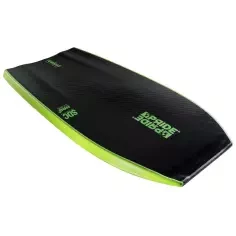
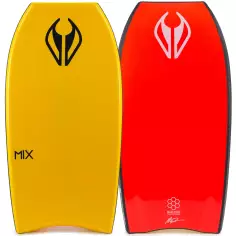
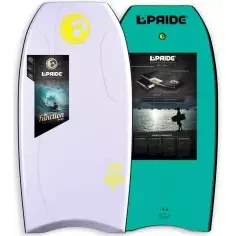
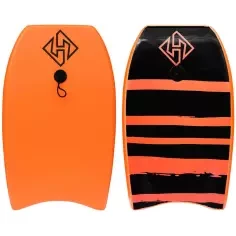
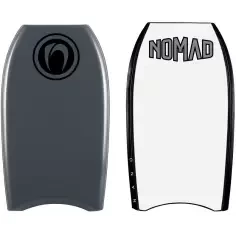
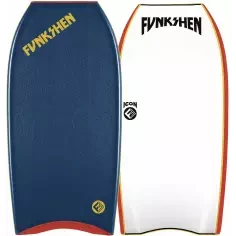
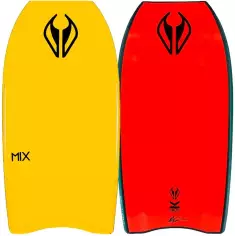
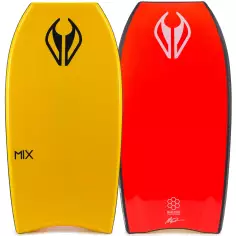
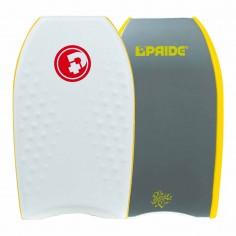
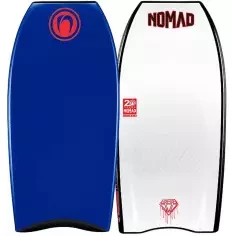
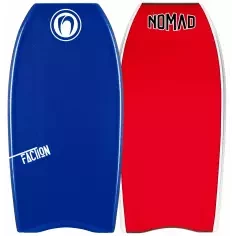
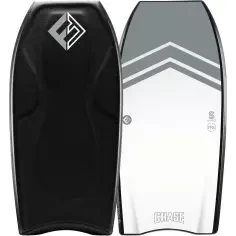
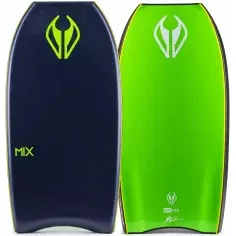
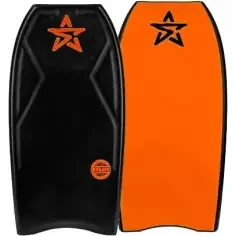
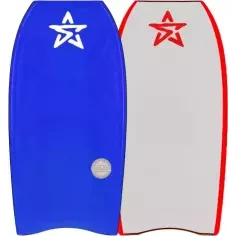
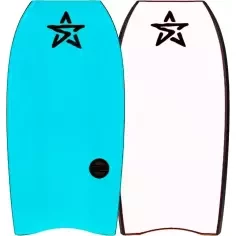
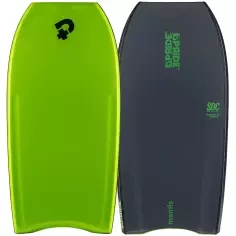
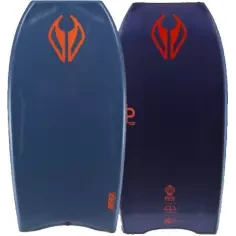
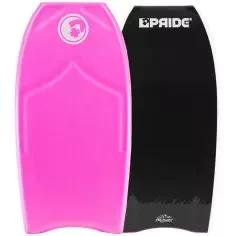
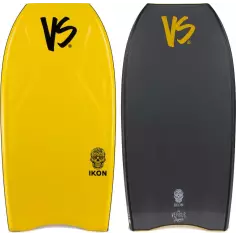
Choosing a bodyboard depends on specific criteria: size, height, weight, experience level, type of core, number of stringers, materials and water temperature. What makes the difference here is not the number of options, but knowing which combination fits your real use. If you need a more detailed basis, you can check this tutorial on how to choose a bodyboard.
Frequently asked questions about bodyboard boards: size guide and materials
How do you choose a bodyboard according to height, weight and level?
The key criterion is the relationship between size, buoyancy and control. In practice, a board that is too big provides stability but reduces responsiveness; one that is too small makes certain turns easier, although it requires more technique and can sink prematurely.
As a general reference, the board usually comes up to around the navel. For beginners, it’s advisable for it to be 2 to 5 cm above; for intermediate or advanced riders, it can be 0 to 3 cm below, depending on the type of wave and riding style.
Weight also has a direct influence. At the same height, a heavier person generally needs more volume or a slightly larger size to maintain planing and speed.
What is a bodyboard and how do you use it?
A bodyboard is a short, flexible board designed to ride lying down, and also for drop knee manoeuvres or, to a lesser extent, kneeling, depending on the level. It is usually used with bodyboard fins: they help you catch the wave earlier, gain speed and position yourself better on the face.
If there’s one key point to remember, it’s this: bodyboarding depends heavily on the combination of board, fins and sea conditions. What sets one board apart from another in these conditions is its ability to flex, generate speed and maintain control along the line.
Which bodyboard should you buy according to material and conditions?
One thing to consider when comparing materials: water temperature changes the behaviour of the core. In cold water, PE usually offers a more progressive, controlled feel; NRG also works well when you’re looking for stiffness and responsiveness.
In mild or warm waters, PP is a common benchmark thanks to its reactivity and structural strength. As a simple rule of thumb: below about 18 °C, PE or NRG is often preferred; above that range, PP makes sense for many riders.
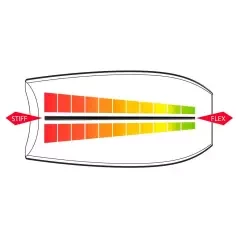
The number of stringers affects overall stiffness. Without a stringer, the board flexes more; with 1 stringer you gain support; with 2 stringers, the board withstands intensive use, heavier riders or more powerful waves better.
What size bodyboard should you choose according to height and level?
The most useful visual reference is still navel height, but it should not be used on its own. What really matters here is cross-checking that reference with weight and technical level.
For beginners, a slightly taller board makes paddling, take off and stability in whitewater or weakly defined faces easier. For more experienced riders, a slightly shorter size allows for quicker transitions and a better fit in critical sections.
In practice, common sizes like 38", 39", 40", 41" or 42" cover most adult and junior profiles. If you are hesitating between two sizes, the deciding factor is usually weight rather than height.
What materials are bodyboards made of?
The most common core materials are PE, PP and EPS. Each one changes flex, buoyancy, responsiveness and range of use.
PE usually offers a softer, more forgiving flex in cold water. PP is stiffer and more reactive, widely used in mild and warm waters. EPS is mainly found in beginner or occasional-use boards, with a different design logic from that of a more performance-oriented bodyboard.
In addition to the core, it’s worth paying attention to the deck, slick and internal reinforcements. Same principle as for stringers: the more demanding the use, the more the full construction matters, not just the main material.
What are the differences between PE, PP, NRG, EPS, Quad Concave and Drop Knee?
These are not equivalent categories, and that’s important to clarify. PE, PP, NRG and EPS refer to the core material; Quad Concave describes a type of channeling on the bottom; Drop Knee refers to a shape designed for that specific style.
What sets one board apart from another in these conditions is not a single isolated feature. A board can be PP and at the same time incorporate a quad concave or a shape oriented towards drop knee, so it’s important to read each specification in context.
Does Mundo-Surf install the leash on the bodyboard?
Mundo-Surf does not install the leash on boards shipped by mail. That setup is only done for purchases made in the physical store in Seville.
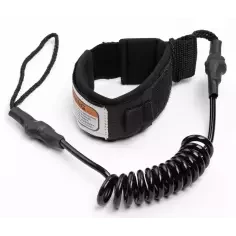
In practice, installing it at home is a simple process if you use the correct anchor point and suitable accessories. You can check this guide on how and where to fit a leash on a bodyboard to avoid mistakes in position or tension.