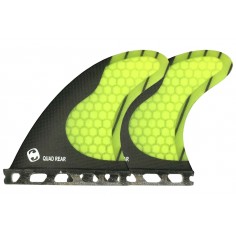
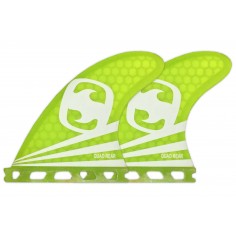
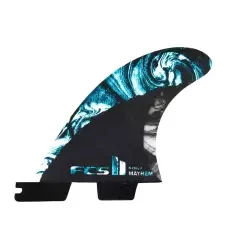
Quad fins: setup for maximum speed in the water
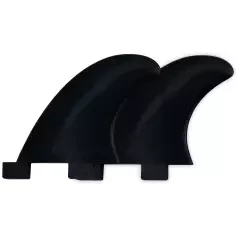
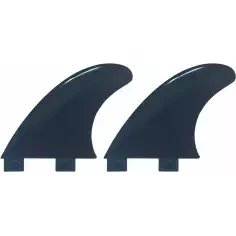
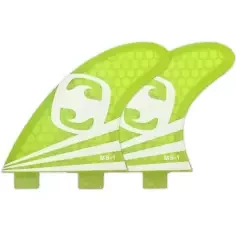
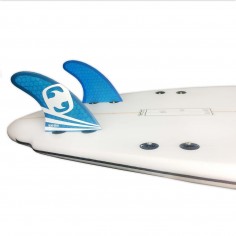
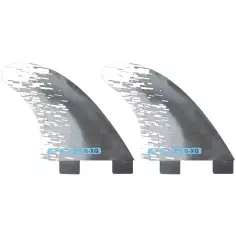
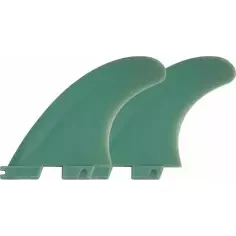
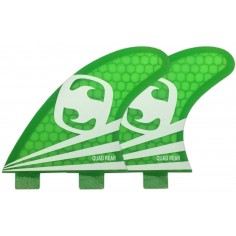
Setting up quad fins adds speed and drive to the board. When speed is a key factor, it’s easy to understand why this quad setup is increasingly common among surfers looking for performance and maneuverability. In practice, a quad configuration works with four fins that act together: the front fins provide drive and support in the turn, while the rear fins add directional control.
When to use a quad setup on a surfboard
This setup makes particular sense in small waves, usually between 0.5 and 1.5 meters, and on boards with a wide tail. The criteria that determine the choice here are the type of wave and the board’s outline: quads tend to perform better in weaker conditions, where you need to accelerate quickly and maintain speed through flat sections. If there’s only one point to remember: a quad setup offers speed without losing turning ability.
How to choose the fin size and fin system
Things to keep in mind when choosing fins: the size should match the surfer’s weight, the board’s volume and the technical level. As a useful reference, size S usually works under 65 kg, M between 65 and 80 kg, and L from 80 kg upwards, although each brand may vary slightly. What also distinguishes one fin from another under these conditions is its mounting system.
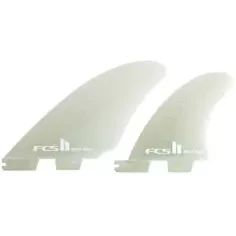
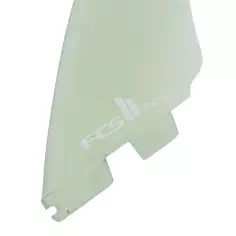
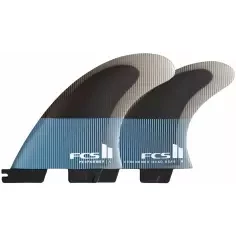
- FCS system: quick-mount system, available depending on the model with one tab or two tab, very common on modern boards.
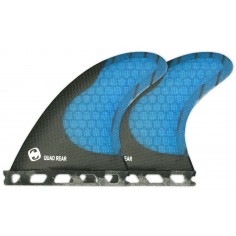
- Futures system: single base in a long fin box, with progressive support and good power transfer.
- Wide base: provides more stability, hold and drive coming out of turns.
- Variable flex: changes the board’s response according to surf style and wave type.
In practice, the fin system doesn’t only change compatibility, it also affects how it feels under your feet. The first step is to check which fin boxes your board has. Same logic as for any other fin set: if the mount doesn’t match, that option is ruled out from the start.
Materials and performance of quad fins
Materials create clear differences in flex, control and durability. What makes the difference here is not only how stiff the fin is, but how it responds in fast or mushy waves. In practice, each construction steers the board toward a different feel:
- Fiberglass: more progressive flex and a smoother feel, useful in small waves and for surfing with longer lines.
- Composite with reinforced base: greater resistance to frequent use and a more direct response.
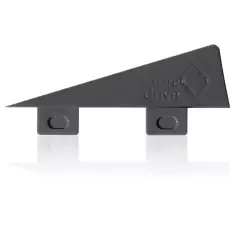
- Rear keel: rear fin with more surface area, designed to boost speed and traction.
- Fish-style profile: promotes acceleration and glide on wider or hybrid boards.
Things to keep in mind when comparing materials: a stiffer fin usually offers more precision in steeper waves, while a fin with more flex helps generate drive in weaker conditions. For an intermediate level, a balanced construction is usually the easiest to adapt to. For an advanced level, fine-tuning depends heavily on the type of board and your usual spot.
What distinguishes one board from another in these conditions is the relationship between its tail, its volume and the type of support the surfer uses. A fish between 30 and 40 liters, for example, usually makes very good use of a quad in small waves, while a narrower shortboard may call for a more precise choice of rear fin size. If there’s only one criterion to keep: it’s worth defining the board’s real use first, rather than focusing only on the brand or price.
At Mundo-Surf, the practical way to choose is to compare size, fin system and material according to your weight, level and usual waves. In practice, a good fin choice changes the board’s response more than it might seem. Check those three points before deciding.