Single fin longboard fins: what they are and how to choose
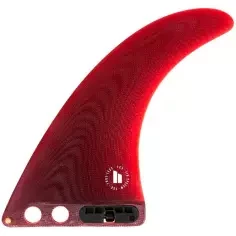
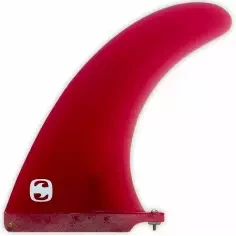
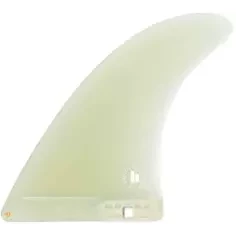
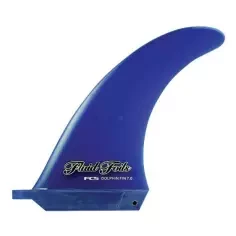
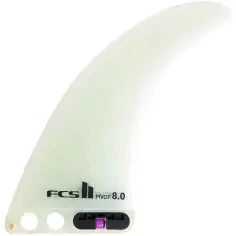
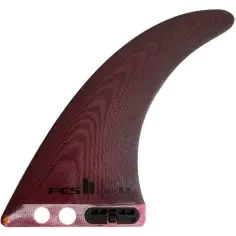
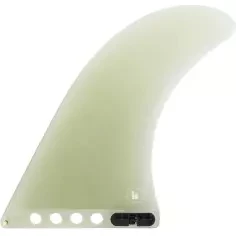
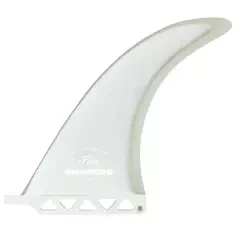
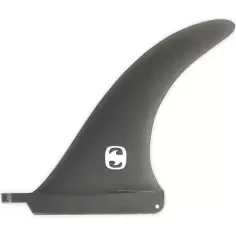
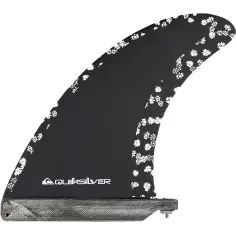
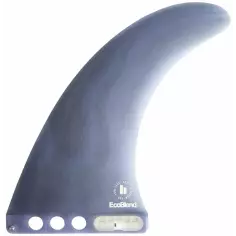
Longboard surf fins are usually of the single fin type, meaning a relatively long center fin, between 6'' and 11'', which can be accompanied by two side stabilizers. This setup defines how the board behaves in the water. The center fin provides directional control and maneuverability, while the side bites add stability in wide turns.
In practice, choosing the right fin means identifying what type of surfing you do and what feel you want from your longboard. What makes the difference here is the fin size, its flexibility and the construction material. A larger fin generates more drag and stability; a smaller one allows tighter, more agile turns.
The material, usually fiberglass, has a direct impact on how the board responds when paddling, trimming and turning. What distinguishes one board from another in these conditions is not just the fin size, but also how it delivers support and flex under pressure. If there is only one key point to remember: the fin should be chosen according to the balance you want between stability, smoothness and turning ability.
Types of single fins for longboard: center fin and side stabilizers
The most common setup is the single center fin: a single fin mounted in the middle of the board. It is the classic option on traditional longboards, especially suited to smooth surfing with trim, cross-stepping and wide turns. The criterion for choosing between a single fin or a setup with stabilizers is your technical level and the type of waves you usually surf.
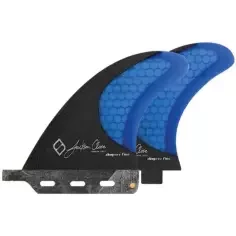
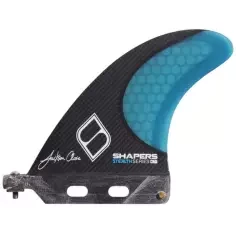
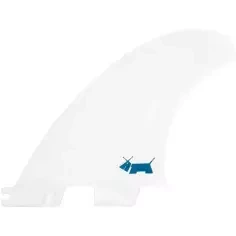
The side stabilizers, also called side bites, are two small fins placed on either side of the center fin. Their role is to complement the hold and provide extra stability when the wave has more face or when you are looking for a more responsive type of surfing. In practice, this combination is useful in medium to solid conditions, where it is best to keep the board better locked in during turns.
If there is only one key point to remember: a pure single fin favors classic style and smoothness, while a center fin with side bites makes the behavior closer to that of a more versatile longboard. One thing to keep in mind when comparing both options: side bites do not replace the center fin, they only change the balance between support, grip and maneuverability.
Fin systems: US Box and FCS Connect fins for your board
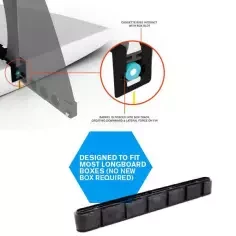
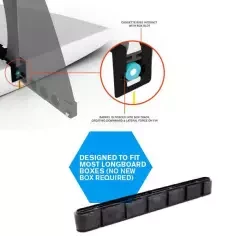
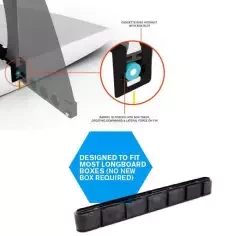
The fin box system is the standard in this category. The US Box format is the most widespread and is compatible with the vast majority of longboards. One thing to keep in mind when choosing a fin: it is advisable to check that your board is fitted with a standard US Box fin box.
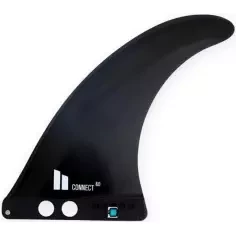
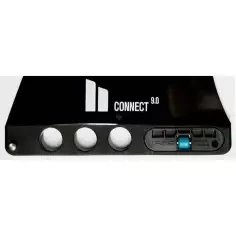
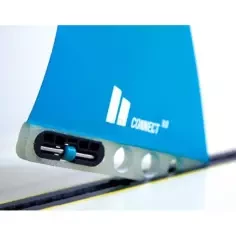
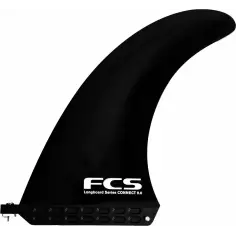
The FCS Connect fin is a very well-known alternative within this same format, designed to make mounting and changing the fin easier without tools. The deciding factor here is not so much pure performance as ease of use. In equivalent conditions, both systems offer very similar behavior in the water.
What makes the difference here is how easy it is to adjust or replace the fin depending on the session. If you change setups often, a quick system can be practical. If the fin is going to stay on for a long time, the traditional US Box fulfills the same role with no real performance disadvantage.
Criteria for buying longboard fins: size, material and maneuverability
The first criterion is size. As a useful reference: boards between 8'0'' and 9'0'' usually work well with fins from 7'' to 8.5'', while boards from 9'0'' upwards usually call for sizes between 9'' and 11''. In practice, a longer fin provides more hold and longitudinal stability; a shorter one frees up the tail and makes quick direction changes easier.
Your level also matters. For a beginner or intermediate surfer, a larger fin usually helps in small to medium waves, because it stabilizes the line and makes the board more predictable. For a more experienced surfer, a slightly smaller size can offer a livelier, more maneuverable feel.
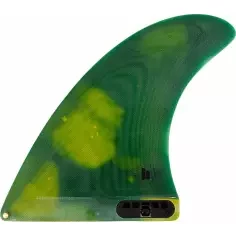
Material is the second important criterion. Fins made of fiberglass with a resin base offer a solid balance between durability, flex and response. What distinguishes one board from another in these conditions is how it transfers energy into the turn: a fin with more flex smooths the exit of the turn; a stiffer one responds more directly.
One thing to keep in mind when assessing flex: in small or choppy waves, a flexible fin can provide a smoother feel. In more powerful waves or for more precise surfing, a stiff fin usually gives more support and control. The factor that decides the final choice is your real surfing style, not just the length of the board.
Longboard fin brands at Mundo-Surf
At Mundo-Surf, brand choice should be seen more as a matter of technical focus than of catalog. FCS is very present in modular setups and practical mounting solutions. Other brands such as Shapers, Madness or Eurofin focus on different flex profiles, designs and usage ranges.
What makes the difference here is the combination of budget, technical level and board type. One brand may be a better fit for a classic 9'2'' to 9'6'' longboard, while another may make more sense on a hybrid or more maneuver-oriented board. Same logic as for fin size: the choice depends on how you actually use it in the water.
All the fins in this section should be compatible with a longboard surfboard equipped with a standard fin box. If there is only one key point to remember: before comparing design or material, it is worth confirming the compatibility of the fin system and the right size for your board.