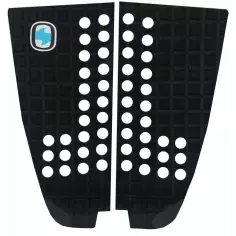
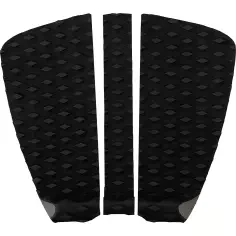
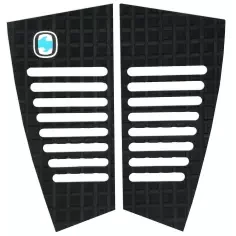
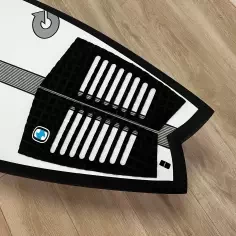
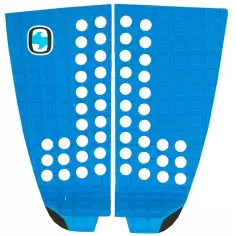
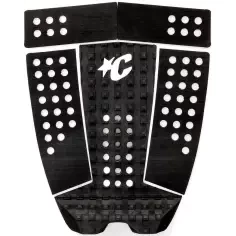
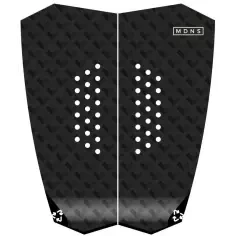
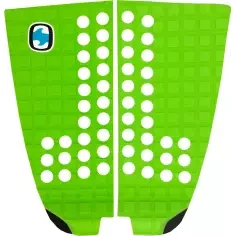
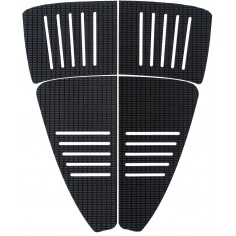
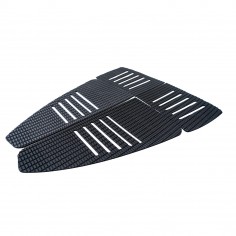
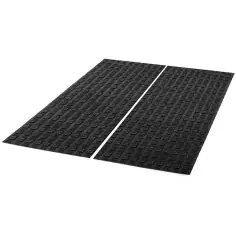
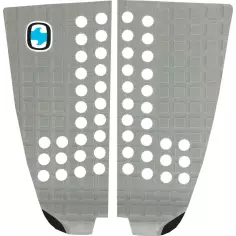
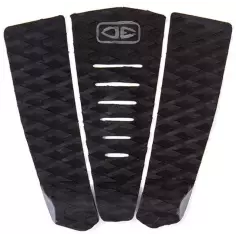
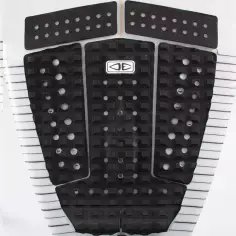
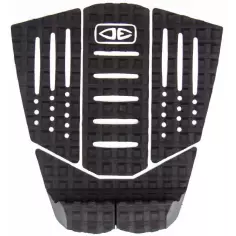
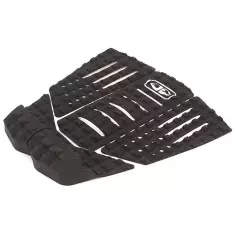
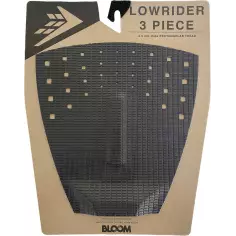
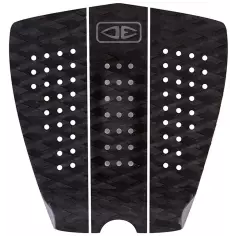
Multi-piece rear grips adapt to the width of the tail of your surfboard. They are available with or without an arch bar, with different kick tail heights and in various designs, brands and colors. This accessory improves control and rear foot grip, and also lets you fine‑tune the look of your board.
Multi-piece rear grips: traction and grip according to your stance
The rear surf grip has a direct effect on stability and on how precise your rear-foot placement is. It increases traction in a key area of the board: where you load weight to turn, slow down or accelerate. Pads made from self-adhesive EVA offer good water resistance and maintain grip with continuous use.
In practice, a well-positioned rear grip helps you control changes of direction and pressure on the tail more effectively. This is most noticeable in short maneuvers, powerful turns or sessions in stronger waves. What really makes the difference is how the pad matches the way you place your foot, not just its design.
Grip configuration: 2, 3, 4 or 5 pieces
The key factor when choosing the number of pieces is the usable space on the tail and the type of stance you usually use. A pad with fewer pieces leaves more free surface and lets you fine‑tune foot placement; one with more pieces provides better coverage on wide tails or more generous outlines. The same logic as with the board: the more precisely it fits, the better it will feel under your feet.
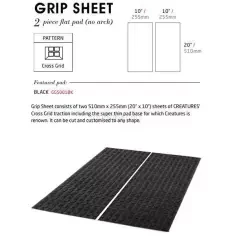
- 2-piece grip: the cleanest option, for those who prioritize freedom of movement.
- 3-piece grip: a balanced format, common on shortboards and all‑round boards.
- 4-piece grip: greater coverage, useful when you want more support area.
- 5-piece grip: wide coverage for wider tails or a very defined stance.
The arch bar adds a central arch that helps you locate your foot without looking. Worth considering when you want a clear reference in quick maneuvers or more support in long sessions. If you prefer a flatter contact with the board, a pad without an arch bar usually feels more neutral.
Kick tail and contour: how it changes the feel
The height of the kick tail changes the way your back foot locks into position. A low kick gives a more progressive feel; a higher kick offers a more direct support for aggressive maneuvers. What distinguishes one board from another in these conditions also includes fin placement and tail width.
For intermediate or advanced surfers, more pronounced contours can deliver extra precision in vertical turns. For more versatile use, it is advisable to consider a medium level of contour. If there’s only one key point: the kick tail should adapt to the way you actually step, not force it.
How to choose according to the board’s tail
Fitting the width of the tail is the first criterion. On narrow tails, a grip that is too wide can stick out or force your stance; on wide tails, one that is too small can leave areas without useful support. Check the available surface before deciding on the number of pieces.
You should also take the type of board into account. On a shortboard, the pad is usually placed close to the leash plug to make the most of the leverage over the fins. On fish, groveler or hybrids with wider tails, a multi-piece configuration usually makes it easier to achieve coherent coverage.
Brands and customization
Mundo-Surf works with brands such as Slater Designs, Firewire, FCS, Creatures of Leisure, Dakine, MS, Madness and Ocean & Earth. What matters is not the brand by itself, but the combination of texture, contour, number of pieces and dimensions. That is the criterion that really guides a useful choice.
Color and design help you keep a visual line consistent with the board, but they should not be the main criterion. In practice, customization is more interesting when it does not compromise fit or functionality. For specific projects, self-adhesive, cut‑to‑size EVA sheets in a 160 x 104 cm format offer a wide margin for adaptation.
What to check before deciding
It is worth assessing four points: tail width, number of pieces, presence of an arch bar and kick tail height. With these criteria you can already filter most options without wasting time on secondary details. What really makes the difference is identifying how you actually use your board.
If you surf small waves and look for maneuverability, a less invasive pad is usually a better fit. If you prioritize control in more powerful waves or more technical surfing, greater coverage and more defined contours may be more suitable. Check out the multi-piece rear surf grips and, if you need to anchor your choice to the shape, also take a look at the surfboards.