Shopping Cart
There are no more items in your cart


How to choose a fish surfboard: beginner's guide to fish surfboards


Choosing a fish surfboard comes down to matching volume, outline, rocker, and construction to your body, skill level, and the waves you ride most. This fish surfboard guide helps you sort the essentials: fish surfboard size, volume, fin setup, and materials, so you end up with a board that works on the water, not just one that looks good on the rack.
Choosing the right fish surfboard size and volume
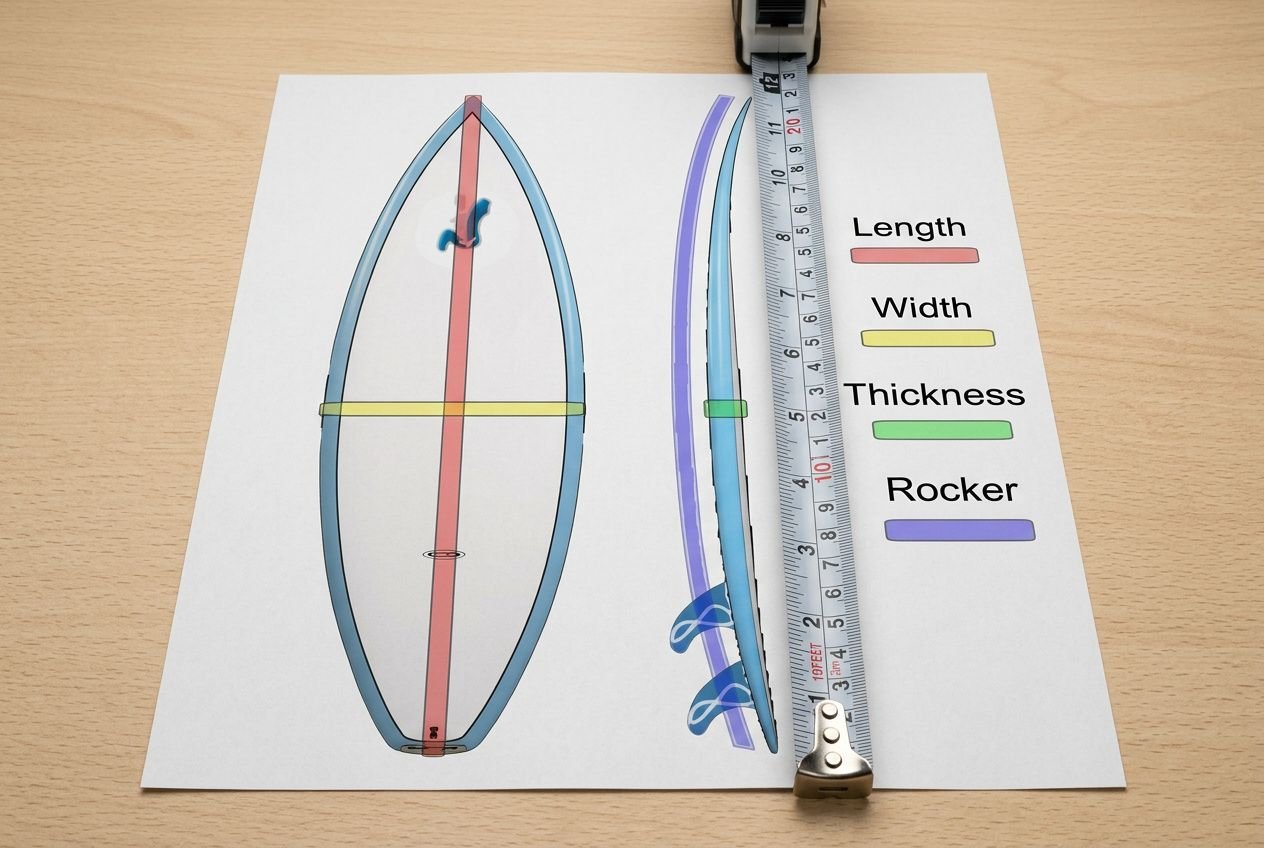
Start with volume. It is the number that most clearly shapes how a fish surfboard feels under your feet, especially compared with a shortboard. Adult models usually sit between 28 and 45 litres, which covers everything from an advanced surfer chasing sensitivity to a beginner needing more support.

Size guidelines by surfer height and body type
Building on that, fish surfboard size is not just a matter of length. Your weight, fitness, and how often you surf all affect how short or full a board can be without losing stability or paddle power.
A reliable starting point is simple: intermediate and advanced surfers usually look for a board 2 to 6 inches shorter than their height, while a beginner does better on one 6 to 12 inches taller. In practice, heavier surfers should lean towards more volume.
- Surfer height reference Intermediate and advanced riders: choose a board 2–6 inches shorter than your height for control and responsiveness.
- Beginner sizing Select a board 6–12 inches taller than your height to maximise stability and floatation for easier wave entry.
- Body weight Heavier surfers should prioritise models with greater volume; lighter surfers can size down without losing paddling ease.
- Surf frequency A fit surfer who surfs three times weekly can manage less volume than someone who surfs occasionally; conditioning matters as much as weight.
Mundo-Surf stocks the Torq Fish Soft Deck in five lengths, from 5'11" to 7'2". That range makes it easier to match a fish surfboard model to your build and your skill level without forcing a compromise.
| Surfer profile | Recommended length vs height | Volume range (approx.) |
| Beginner | +6 to +12 inches above height | 38–45 L |
| Intermediate | −2 to −4 inches below height | 32–40 L |
| Advanced | −4 to −6 inches below height | 28–34 L |
| Heavier surfer | Standard or +2 to +4 inches | 38–45 L |
How skill level affects volume choice
On a fish surfboard, volume does not behave quite like it does on a shortboard: adding 2 to 6 litres over your usual shortboard volume gives easier paddling, earlier entry, and better glide through softer sections in smaller waves.
For intermediate surfers, that extra foam is often the right choice when you want progression without frustration. A slightly fuller board gives you margin for error and keeps sessions focused on actual riding rather than repeated missed take-offs.
By contrast, an advanced surfer can trim volume to gain sharper response and more manoeuvrability. The board feels more alive under the back foot, but only if your timing and placement are already solid.
Fish surfboard size for beginners and intermediates
That logic has a floor, though: a fish surfboard is not the right starting point for a total novice, who is usually better served by a mid-length or longboard first.
As soon as you can pop up reliably and trim across the face, choosing a fish surfboard starts to make sense. Its wider outline, higher volume, and shorter plan shape can bring a good mix of stability and manoeuvrability, especially in smaller waves where a more performance-focused board may feel sticky or underpowered.
For surfers moving on from beginner surfboards or a funboard, a soft-deck version is worth knowing before you buy. The Torq Fish Soft Deck uses an EPS core with an extruded PE foam skin, giving you a more forgiving step into intermediate riding while keeping the speed and feel that make a fish surfboard so appealing.
Most riders will be deciding between twin, twin plus trailer, or quad, and that choice changes hold, release, and drive more than board length alone.
Best wave conditions and fin setup for a fish surfboard
A fish surfboard works best inside a clear performance window. Its flatter rocker, fuller outline, generous volume, and distinctive tail shape are built to create speed in weaker surf.

What wave types suit a fish board best
That performance window is centred on small waves and softer surf. Knee-high to slightly above chest-high peaks are where a fish board comes alive, especially when a shortboard starts feeling sticky and underpowered through flat sections.
- Mushy beach breaks: the flatter fish surfboard shape carries speed through soft, slow-breaking sections where glide matters more than late vertical turns.
- Choppy or fading swells: extra width and volume help the board keep moving even when the swell loses shape between sets.
- Smaller waves: early entry and built-in buoyancy make wave-catching easier than on a lower-volume shortboard.
The different types of fish surfboards stretch that range in different directions. A retro fish surfboard shape feels at home in clean waist-high peelers and can stay comfortable into overhead waves, while a performance fish with more rocker and sharper rails holds together better when the surf turns faster and steeper. A hybrid fish surfboard sits between those two, the right choice when your local conditions change week to week.
Twin fin vs quad fin: which setup should you choose
Once the surfboard shape fits the surf, the difference comes down to fin setup. A fish twin with a classic twin fin setup gives you long lines, easy projection, and that flowing feel most riders associate with a fish surfboard, whereas a quad fin fish adds more grip, drive, and release through stronger turns.
- Fish twin: a traditional option for smooth, drawn-out surfing style on softer faces.
- Quad fin fish: more hold and control when the wave has push, or when you want a more performance fish feel under your feet.
- Five-fin box: added range for changing wave conditions, whether you ride it as a twin, quad, or thruster.
- Tri fin (thruster): a familiar step for surfers coming off a shortboard and looking for tighter, more predictable arcs.
Building on that, a fish surfboard shape rewards rail-to-rail flow and drawn-out carves rather than the tight, vertical approach you would force onto a shortboard; on the water, that matters.
Construction materials and which fish surfboard suits your skill level
Once size, volume and fin setup are dialled in, fish surfboard construction is what really changes the feel under your feet and how well the board holds up over time. Get that part wrong and even a well-chosen fish surfboard shape can feel off.

PU, EPS/epoxy or soft deck: which material is right for you
That choice starts with how you surf. PU gives you a familiar, settled ride. EPS/epoxy adds lift and quicker response, while soft-deck builds trade some rail edge for comfort and durability.
- PU/polyester: heavier, with progressive flex and a smoother, more classic feel. It suits a retro fish surfboard shape and surfers who like longer lines and drawn-out turns.
- EPS/epoxy: lighter and more buoyant for the same volume, with quicker response through small, softer waves. It is often the right choice when you want a modern fish surfboard or hybrid fish to feel lively.
- Soft deck: usually an EPS core with biaxial fibreglass, epoxy resin and an extruded PE foam skin. Durable, safe and forgiving, it works well for a beginner moving towards shorter boards.
- Standard fish fibreglass: a balanced mid-weight build for intermediate surfers through to the advanced surfer who want performance without the full weight of PU or the extra bounce of epoxy.
Building on that, the Torq Fish Soft Deck mixes EPS and PE foam in a way that suits progressing surfers as well as experienced riders on easier days. Mundo-Surf carries it in five sizes with the key specs laid out clearly, so you can compare boards without guessing.
Is a fish surfboard right for your current skill level
A true standard fish, especially a small traditional one, is fast and loose but not very forgiving. A complete beginner is usually better starting on a longboard or mid-length while pop-up, trim and basic control come together.
Once those foundations are there, a fish surfboard starts to make sense. The difference comes down to the mix of speed, paddle ease and stability: an intermediate surfer coming off a funboard will usually find more support than on a shortboard, with noticeably more responsiveness than a larger board.
By contrast, an advanced surfer already comfortable on a shortboard can go for a leaner fish model with less volume for small-wave sessions and still keep the performance feel they expect. The same logic applies to a modern hybrid fish, which often suits surfers who want fish speed without going fully traditional.
Protecting your board with the right boardbag
That wider outline also affects how you carry and store the board. A regular bag often pinches a fish board at the rails because the template is too narrow, and that is where pressure damage starts.
The fish board bag from Ocean & Earth, the HYPA Fish, is cut for a single fish surfboard or hybrid fish, with a wider template and 10 mm XP protection at the nose, tail and rails. It fits boards up to 22.5 inches wide, which covers most fish outlines.
The anti-shock foam lining and tail gusset keep the board snug in transit rather than letting it shift against the rails.
Frequently asked questions
What size fish surfboard do you need?
Start with volume. Adult fish surfboard sizes usually sit between 28 and 45 litres, and the right figure depends more on your weight, fitness, and how often you surf than on height alone.
Building on that, an intermediate rider will usually go 2 to 6 inches shorter than their height and add 2 to 5 litres compared with a shortboard. A beginner needs more foam under the chest, so the board is generally 6 to 12 inches longer than their height for easier paddling and stability.
If the choice still feels tight, the difference comes down to usable float rather than stated length. Mundo-Surf provides size guides on product pages, and Mundo-Surf can help you narrow down the right fish surfboard model.
Are fish surfboards good for beginners?
That sizing logic matters here too. A fish surfboard is usually not the best first board, and a beginner will progress faster on a longboard or mid-length while learning take-off, trim, and basic control.
Once those foundations are there, a softer or higher-volume fish becomes a solid step toward a shorter shape. In practice, a soft-deck version with a PE foam surface feels more forgiving and less twitchy than a small traditional fish surfboard.
A hybrid fish surfboard can be the right bridge when you want some of the flow and paddle power of a fish without jumping straight onto a demanding shortboard.
What waves are fish surfboards best for?
Once you move into the right size, wave range is what defines the board. A fish surfboard works best from knee-high to a little above chest-high in softer surf: mushy beach breaks, bumpy peaks, and fading swells where flatter rocker helps you carry speed.
By contrast, a classic shortboard tends to bog more easily in weak sections. A hybrid fish keeps that easy drive but stretches the range into waist-high to overhead waves across beach breaks, points, and reefs.
When the surf gets steeper and more powerful, the right choice when staying in this category is a performance fish. That shape, fitted with quad fins and extra rocker, holds better in overhead waves.
Recommended products
Share this article: