Shopping Cart
There are no more items in your cart


Surfboard types and uses: longboard, shortboard and funboard guide


This guide covers every major category, from the longboard and hybrids to mid-lengths, explaining how each shape performs, which wave conditions suit it best, and what skill level it demands, so you can make an informed call before you buy.
An overview of the main surfboard types and sizes
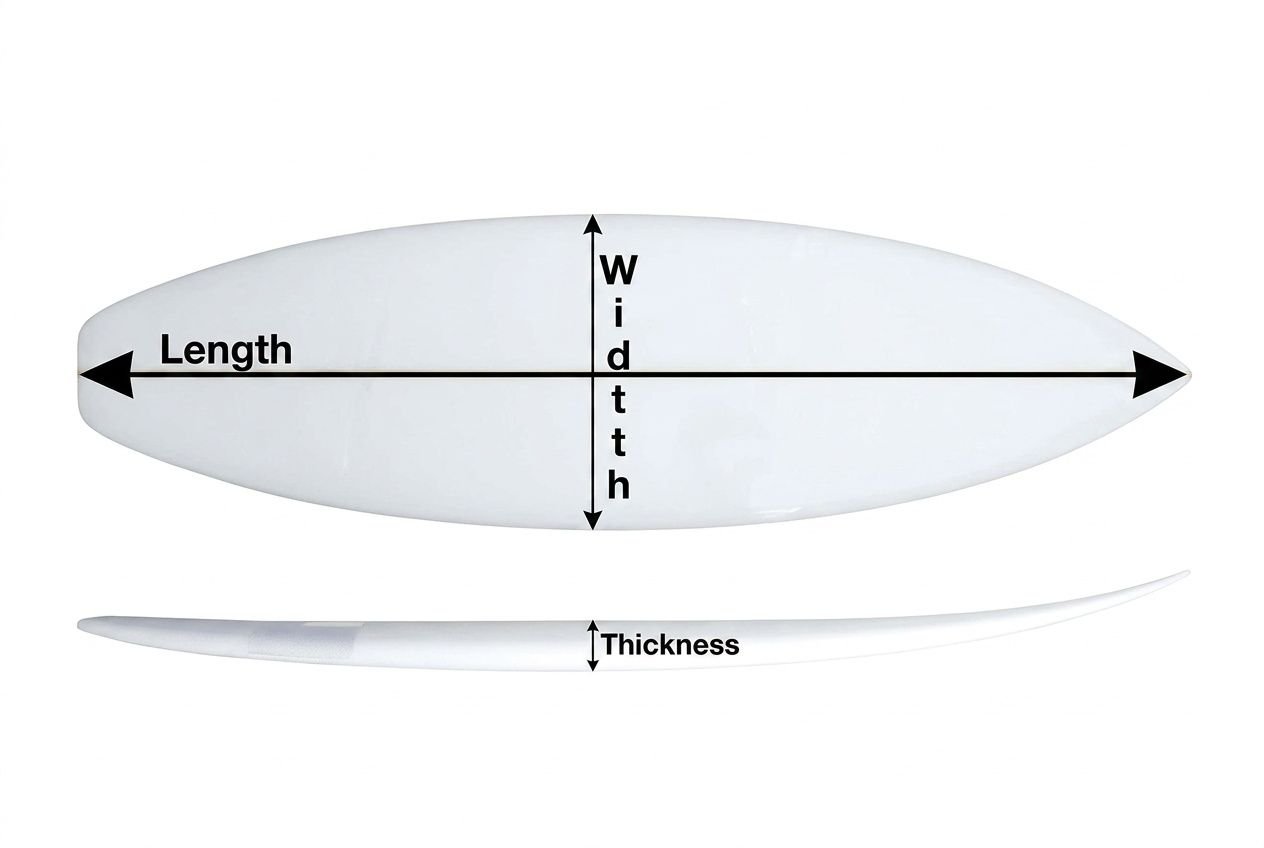
Every board is a compromise. Length, width, thickness, rocker and tail shape are tuned to favour certain waves and a certain way of surfing, so getting clear on those links is the foundation for reading surfboard types and sizes properly.

Why board dimensions define your surfing experience
The surfboard types and sizes you see in shops and line-ups are never random: each measurement changes how the board feels under your feet. Length affects paddling speed and stability, which is why longer shapes hold a cleaner line through chop and build glide with less effort.
Once length comes down, response goes up. A shortboard turns faster and fits steeper pockets better, but it gives away some ease on take-off and some comfort between sections.
Volume ties the whole picture together. It comes from length, width and thickness, and it dictates buoyancy, wave count and how forgiving the board feels when timing is not perfect.
Width matters just as much. A wider plan shape gives you more platform for balance, while a narrower outline lets you roll from rail to rail with less resistance and more control through committed turns.
Key design elements shared across all board types
- Rocker: the curve from nose to tail. More rocker suits steep, hollow waves; flatter rocker keeps speed alive in softer surf.
- Tail shape: wider tails release more easily and carry glide, while narrower tails hold better when the wave has push.
- Fin setup: a single fin tracks with clean directional drive; a twin fin feels looser and more playful; a thruster sits in the middle; a quad adds speed and hold through longer arcs.
- Rail profile: a fuller rail adds forgiveness and flotation, while a harder rail bites the face more cleanly for sharper turns.
A fuller nose adds volume forward and helps with paddling and entry, while a pulled-in nose reduces drag when the take-off gets critical.
Matching board type to wave conditions and skill level
Soft, slower waves reward more volume, more surface area and extra stability; hollow, faster waves reward lower volume and cleaner control. On the water, that matters.
A longboard helps newer surfers build timing and trim, mid-lengths bridge ease and manoeuvrability, and a shortboard asks for stronger technique but gives back tighter turning in punchier surf.
Mundo-Surf covers that full range, with stock available for quick dispatch and surfboard types and sizes aimed at every stage of progression. The 100-day returns policy is worth knowing before you buy, especially if you are choosing between surfing board types for a local break that can change a lot through the season.
Longboard vs shortboard: which one suits you best
Yet neither is automatically better: the difference comes down to your waves, your level, and the kind of surfing you want to do.
What makes a longboard surfboard unique
A longboard surfboard usually runs from 8 to 12 feet, with a fuller nose, more volume, softer rail lines and a low-to-medium rocker. That shape gives you easy paddle power, early entry and strong stability, even in weak surf from one to two feet. That shape suits beginners catching their first waves and experienced surfers chasing clean trim equally well.
- Firewire Special T Red: a classic old school longboard by Dann Mann and Taylor Jensen, available in 9'0" and 9'6", with a single fin US box system for smooth, traditional lines.
- TimberTek construction: Firewire’s proprietary build uses a 1 lb EPS core, parabolic balsa and paulownia rails, plus a 3 mm paulownia epoxy skin to keep weight down while preserving durability.
- Wave range: this kind of longboard works from knee-high summer waves through to waist-to-chest surf, so it covers a lot of real-world sessions.
Building on that, the TimberTek rail construction matters more than it may seem at first glance. On the water, that matters: the paddle feels lighter, take-offs come sooner, and the board carries through drawn-out turns without feeling dead.
Shortboard strengths and who should ride one
By contrast, a shortboard is designed around tighter curves and faster direction changes. Most sit between 5'6" and 6'4", usually with a thruster setup, lower volume and a narrower outline built for steep, punchy surf. That gives you sharper response through critical sections, but the margin for error shrinks accordingly.
As soon as volume drops, buoyancy and stability drop with it. A shortboard asks more from your paddle, punishes late decisions and leaves less room for error on take-off. The right choice when you already have reliable fundamentals is often the shorter board, especially in hollow or powerful waves where a longboard surfboard starts to feel limited.
How to choose between a longboard and shortboard
If you mostly surf slow, crumbly waves, a longboard will usually get you more waves and longer rides. If your home break is punchier and you already read sections well, a shortboard will let you push performance much further.
Worth knowing before you buy: progression is not a one-way move from longboard to shortboard. Plenty of surfers keep both and switch according to the day, because the same logic applies to wave shape as much as ability. Mundo-Surf stocks both ends of the range, and the AI assistant Kelly can help you narrow the fit for your specific setup.
Different shapes of surfboards and what they are for
Beyond the classic longboard and shortboard split, the different shapes of surfboards cover the space in between with far more precision.
Fish, funboard, and groveller shapes explained
That middle ground starts with two proven options: the fish surfboard and the funboard. They solve similar problems in very different ways: outline, volume, and tail shape each pull the feel in a distinct direction.
Fish boards are shorter and thicker, with a fuller nose and a wider tail, which helps them generate speed in softer waves. That extra width carries glide well, while the compact length keeps solid manoeuvrability, especially in small to medium surf. Many twin fin surfboards follow this logic, although some fish boards also come as a quad or even a more modern setup.
By contrast, the funboard gives you more length and a calmer feel under your feet: usually 6 to 8 feet. It sits between a longboard and a shortboard, paddles easily, and still lets you turn with enough control to keep progressing from ankle-high waves to overhead days.
| Board shape | Typical length | Best wave size | Ideal surfer level |
| Longboard | 8'0"–12'0" | 1–4 ft | Beginner to advanced |
| Funboard | 6'0"–8'0" | 1–5 ft | Beginner to intermediate |
| Fish board | 5'4"–6'4" | 1–4 ft | Intermediate to advanced |
| Shortboard | 5'6"–6'4" | 3–8 ft+ | Advanced |
| Hybrid | 5'6"–6'6" | 1–5 ft | Beginner to intermediate |
| Mid-length | 6'6"–8'6" | 2–6 ft | Intermediate to advanced |
| Gun | 7'0"–10'0" | 8 ft+ | Advanced to expert |
Specialist and novelty board shapes for experienced surfers
Twin fin surfboards feel loose and fast through direction changes, while a thruster tends to feel more anchored; in practice, that changes how freely the tail releases in smaller surf.
Building on that, the single fin sits at the other end of the spectrum. It gives a smoother, more drawn-out line with less snap than a high-performance shortboard, but more flow through clean faces and a very direct link between rail engagement and speed.
For serious power, big wave surfboards follow a completely different brief: 7 to 10 feet, narrow outlines, and maximum hold. That means hold through steep drops and reliable edge contact on a fast face, conditions where width and rocker matter more than manoeuvrability.
Some experienced surfers also look at asymmetrical or finless designs. Asymmetrics adjust the tail shape to match frontside and backside turning forces, while finless boards remove fin-driven control altogether and force you to steer through trim, body position, and rail pressure.
At the classic end of the range, nose-rider logs push longboard technique further. They usually run over 9 feet, carry a wide concave nose, and often use a single fin setup for stable trim, which is the right choice when your focus is cross-stepping to the nose and holding the pocket.
Hybrid surfboard, mid-length and evolving board shapes
The fastest-moving part of the market now sits between the classic shortboard and the funboard. Hybrids and mid-lengths lead that space, with surfboard shapes built around versatility, easier paddle power and real performance in everyday surf.

What makes a hybrid surfboard stand out
A hybrid surfboard blends ideas from shortboard designs, fish boards, egg boards and mini malibu outlines into one compact format. You get a short, wider plan shape with a fuller nose and the wide point pushed forward: that extra foam under the chest helps paddle entry, wave-catching and early control.
That layout suits small waves especially well. Hybrid boards keep speed in softer surf where a standard shortboard often feels sticky, while still offering enough manoeuvrability to stay lively under your feet.
- Shape: wide and compact, with a rounded nose and width carried forward for easier paddle power and earlier take-off.
- Wave range: tuned for small waves and weaker conditions where a more performance-led shortboard can struggle.
- Price point: generally more affordable than many traditional shortboards while keeping good response through turns.
- Accessibility: extra stability and a forgiving feel make hybrid boards easier to ride for surfers below advanced level.
A hybrid surfboard is not limited to soft beach breaks. It also holds up well in overhead surf, so you keep versatility across a broad range of sessions. Mundo-Surf carries a strong range of hybrid surfboards, with real stock availability and fast dispatch from its own warehouse.
Mid-length boards and mini malibu compared
Once you look at surfboard templates side by side, the difference comes down to tail width. Mid-lengths usually carry a narrower tail than a funboard of similar size, which gives you cleaner hold, better control and a smoother arc through turns.
That sets them apart from the mini malibu, even when the lengths overlap. Mid-lengths place generous volume through the upper half of the board, helping paddle efficiency and stability for intermediate to advanced surfers who want more wave count without going back to a full longboard.
The mini malibu, usually around 7 to 8 feet, keeps the easy nature of a longboard: stable trim, simple take-off and plenty of glide. By contrast, mid-lengths lean more towards refined turning and better engagement once your technique is there, worth knowing before you buy.
The same approach runs through the mid length surfboards available at Mundo-Surf. The range covers different sizes and constructions, so you can match the board to your build, your waves and the amount of volume you want under your feet.
Choosing the right template for your progression
If you are stepping down from a longboard, a funboard or mini malibu usually makes the cleaner transition because you keep flotation, stability and familiar paddle habits. The board you pick depends on where you are in your progression.
Once that feels natural, hybrid boards become the right choice when you want more release and sharper response without the jump straight into a demanding shortboard. They bridge the gap better than most boards in weaker, average surf.
Mid-lengths suit another path. They work for experienced surfers who want more consistency, easier entry and less physical strain, while keeping enough drive and hold to make the most of quality waves.
- Longboard to funboard/mini malibu: a natural first reduction in size, keeping volume and stability while adding easier turning.
- Funboard to hybrid: a smart step once take-offs are reliable and you want more performance in smaller surf.
- Experienced surfer seeking volume: mid-lengths offer strong wave count and smooth turning without moving back to a full longboard.
Mundo-Surf covers each stage with more than 6,000 products in stock and 100-day returns, so you have room to reassess your choice after time on the water.
How to choose the right surfboard as a beginner
When you start surfing, you are choosing two things at once: the shape and the build. Both shape how the board feels under your feet, how easily you paddle, and how quickly you progress.
Best surfboard types for beginners starting out
That first choice narrows fast. For most beginners, the right choice when learning is a board with plenty of volume, that single quality drives stability and ease of paddling in one. Among the main surfboard types, a longboard, funboard, mini malibu, or foam board sits at the top of the list because each one makes wave-catching and balance far more accessible.
In practice, beginner surfboards work best when they are forgiving across every dimension, that extra float helps you paddle sooner, stand earlier, and keep enough control to focus on technique rather than fighting the board.
- Soft-top foam board: high buoyancy, safer falls, and a lower entry cost. Quality varies, so construction is worth knowing before you buy.
- Longboard (8'0"–10'0"): maximum stability and strong paddle efficiency. It is the most forgiving option for learning take-offs, trim, and basic wave reading.
- Funboard (6'0"–8'0"): shorter than a longboard but still generous in volume. It suits beginners with some athletic background who want a smoother path towards smaller boards.
- Mini malibu (7'0"–8'0"): much of the longboard feel in a shorter, lighter outline. Easier to carry and manage if a full-size longboard feels cumbersome.
Building on that, soft-top surfboards deserve special attention early on. The soft deck and forgiving exterior reduce impact in wipeouts, and modern soft-top boards now offer enough performance to stay useful well beyond your first few sessions. That safety translates directly into commitment: when the board absorbs a wipeout without punishing you, you push harder into each take-off.
Surfboard materials and their impact on performance
Once shape is clear, construction becomes the next filter. The main types of surfboard material used today change how a board flexes, how tough it is, and how it carries speed through the water.
- Soft-top (foam): high buoyancy, a safer surface, and a practical fit for beginners. Entry-level models can be basic, while better builds remain useful for a long time.
- Polyurethane (PU): responsive and familiar underfoot, with strong feedback in cleaner, more powerful surf. It dings more easily than epoxy, but repairs are straightforward and the added weight can help with control.
- Epoxy boards: lighter, more durable, and easier to paddle thanks to a polystyrene core and epoxy resin construction. They suit beginners and small-wave surfers well, even if the feel is a little different from PU.
By contrast, some advanced constructions push that thinking further. Firewire's TimberTek uses an ultra-light EPS core, parabolic balsa and paulownia rail construction, and a 3 mm paulownia epoxy skin: a clear example of how modern surfboard design can blend low weight, durability, and response. On the water, that matters when you want easy paddling without giving away too much feel.
As soon as your level improves, your preference gets more personal. PU suits surfers chasing feel in stronger waves, while epoxy favours durability and paddle ease across mixed conditions, and the same logic applies across different types of surfboard. Mundo-Surf carries this spread in stock, with boards confirmed in its own warehouse before dispatch, which helps when fit and availability need to align before you commit to a purchase.
Frequently asked questions
What are the main types of surfboards and what is each one used for?
A longboard, usually 8 to 12 ft, suits beginners and clean small waves: high volume, easy paddle, strong stability, and plenty of glide.
By contrast, a shortboard, often between 5'6" and 6'4", is built for steeper, more powerful surf. With less volume, more rocker, and a narrower nose and rail line, it gives you more maneuverability but asks for better timing and technique.
Building on that, a funboard sits between the two and keeps enough paddle power to stay accessible. Fish boards carry speed well in small to medium surf, while hybrid boards mix design features to create an everyday board that feels versatile and forgiving.
Once you want smoother lines and easier wave entry, mid-lengths come into play. They are a strong option for intermediate to advanced surfers who want wave count and flow, while big wave surfboards such as guns are reserved for heavy surf and grovellers stay focused on weaker conditions.
What is the easiest type of surfboard to use for a beginner?
As soon as you strip it back to what helps most at the start, a soft-top longboard or foam board is usually the easiest answer. More length, width, and volume give you the stability and buoyancy needed to get to your feet and stay there.
That extra platform matters in practice: you catch more waves and stand up earlier, with fewer wipeouts disrupting your progress. The soft deck also cuts the risk of knocks during wipeouts, which is worth knowing before you buy.
Once your take-off and trim start to settle, a funboard or mini malibu becomes a logical next step. You keep useful paddle power and forgiveness, but gain a little more control and maneuverability as your technique builds.
How do surfboard shape and material affect performance?
That progression makes sense because shape controls most of what you feel on the wave. A flatter rocker, fuller nose, and higher volume help a board paddle early and work well in small waves, while a narrower outline and more rocker suit steeper, faster surf.
The rail shape plays its part too. Softer, fuller rails feel more forgiving, while finer rails bite more cleanly into the face; on the water, that matters.
Material changes the feel again. Soft-top and foam board constructions are forgiving and affordable. Polyurethane gives familiar flex, while epoxy boards are lighter and more durable, which can make paddling easier.
Advanced builds add another layer: Firewire's TimberTek uses a lightweight EPS core with wood rails for a responsive, durable feel.
Share this article: