Shopping Cart
There are no more items in your cart


How to choose a good wetsuit: the complete wetsuit guide


This complete wetsuit buying guide covers everything you need to choose a good wetsuit with confidence: thickness ratings, suit types, entry systems, fit, and construction quality, matched to your water temperature, activity, and budget.
Wetsuit thickness guide: what temperature do you need a wetsuit?
Wetsuit thickness comes first. Get that wrong, and even high-quality neoprene will not keep you comfortable for long.
Before you buy wetsuits, check the average water temperature at your local break through the seasons. The difference comes down to that number more than anything else in a wetsuit buying guide.

How to read wetsuit thickness ratings
A rating like 4/3 tells you the key spec straight away: the first number is the torso panel thickness in millimetres, and the second is the thickness used on the arms and legs. If you are asking what temperature do you need a wetsuit for, this is where the answer starts.
Three-number ratings go further by splitting the suit into three zones: torso, legs, and arms. That gives more precise thermal protection without sacrificing movement.
Thinner panels in the limbs are there for a reason. A thin section through the shoulders and legs improves paddling ease and cuts fatigue during longer sessions; that matters more than making every panel the same thickness.
Wetsuit thickness by water temperature
Use this wetsuit thickness guide as a starting point, then adjust for wind, session length, and your own tolerance to cold. A 3/2mm is a common call for many UK summer sessions, while a 5/3mm is often the right choice when winter sets in.
Any suit with 3mm wetsuit thickness or above should carry CE certification. That is an objective benchmark for thermal protection and quality, not a marketing line.
Once the water temperature drops below 6°C, a 6mm suit on its own is not enough. To choose a wetsuit thickness safely in those conditions, you need a hood, gloves, and boots as part of the full set-up.
| Water temperature | Recommended thickness | Typical UK season |
| Above 20°C | 2mm or lighter | Rare UK summer peak |
| 17–20°C | 1–2mm / shorty | Late summer |
| 13–15°C | 3/2mm | Spring / early autumn |
| 11–15°C | 4/3mm | Autumn |
| 8–12°C | 5/3mm | Winter |
| Below 8°C | 5/4mm or thicker + hood, gloves, boots recommended | Deep winter |
| Below 6°C | 6mm + hood, gloves, boots | Coldest UK months |
Extra tips for cold-water conditions in the UK
By contrast, local conditions can still shift the right call quite a bit between one coastline and another.
UK water temperature varies sharply from north to south. A 4/3mm can work in Cornwall in November, while Scotland in the same month often pushes you towards a 5/4mm.
Worth knowing before you buy: sea temperature lags behind the weather by several weeks, so buoy data tells you far more than the air temperature on the day. Good wetsuit care also helps neoprene hold its performance over time.
- Wind chill can make the paddle-out feel far colder than the sea reading suggests, so factor that into your wetsuit thickness choice.
- Session length changes the equation: a suit that feels fine for 45 minutes may fall short over a two-hour winter session.
- Body type affects heat retention, and leaner surfers often need more thickness at borderline temperatures.
Mundo-Surf keeps a wide range in stock with real warehouse availability, so the suit you order is the suit that ships.
How to select a wetsuit type for your water sport
Thickness sets your thermal baseline. Yet the cut and coverage decide how the suit behaves once you are moving, paddling, duck diving, or swimming. Two suits can share the same millimetre rating and still perform very differently, so how to select a wetsuit starts with matching the type to your discipline.

Fullsuits, shorties, and springsuits explained
- Full wetsuit (fullsuit): covers the whole body except the hands, feet, and head. It is built for cold water, long sessions, and reliable warmth, which makes it a strong option as a winter wetsuit.
- Hooded fullsuit: adds neoprene coverage over the head and ears. This is made for colder water, where heat loss through the scalp becomes a real issue.
- Springsuit: leaves the lower legs exposed and sometimes the arms as well. It suits those in-between days, when warm water has gone and fully cold conditions have not quite arrived.
- Shorty / short wetsuit: leaves the arms and lower legs free for easy movement. It works best in warm water for summer paddleboarding, bodyboarding, and other short sessions.
Building on that, Long John and Long Jane designs keep full leg coverage but remove the sleeves. They hold warmth around the core while freeing up the shoulders, which matters for paddlers and kayakers in milder conditions.
Once you move into specialist gear, the same logic applies. Triathlon and open-water swimming suits may resemble a surf full wetsuit, but they use buoyancy panels to support stroke mechanics, so using the wrong type in the wrong setting costs you comfort and performance. On the water, that matters.
Beginner's wetsuit tips for choosing your first suit
A beginner's wetsuit should not be the cheapest thing on the rack: poor fit lets in cold water and creates rubbing at the neck and wrists within a single session. By contrast, Mundo-Surf keeps entry-level stock with dependable construction and fit across the range.
Building on that, for most UK surfers, the right choice when starting out is a 3/2mm full suit for spring to early autumn, then a 5/3mm winter wetsuit for the colder months or regular sessions. Rotating two suits helps each one dry properly and last longer. Worth knowing before you buy: the buying guide on each product page gives activity-based tips to help you decide how to select a wetsuit that fits your level and the water temperature you expect.
Fit, entry systems, and tips for choosing the right wetsuit
Even a well-rated suit falls short if the fit is off or the entry system does not match the way you surf. These details decide whether a suit becomes your regular pick or stays in the bag. Worth knowing before you buy: neoprene loosens once wet, so a dry wetsuit should fit snug, even a little tight at first.

Easiest wetsuit to put on and entry system types
That dry tightness matters even more once you look at entry systems. The easiest wetsuit to put on for beginners is a back-zip: one long zip opening down the spine, wide enough to step into and pull up without much fuss. By contrast, that convenience usually means more water entry and less flexibility through the back.
- Back-zip wetsuit: fastest entry, usually the most affordable, but with more flushing. The right choice when you want the easiest wetsuit to put on and occasional use in warm water.
- Chest-zip (front-zip): shorter zip across the chest, better neck seal, more freedom through the shoulders, and improved warmth for colder sessions.
- Zipfree: no zip at all, entered by stretching the upper panel over the head. Maximum stretch, strong seal, and no zipper to fail, though usually at a higher price.
How a wetsuit should fit for maximum warmth
That extra warmth only happens if the wetsuit fit is right. A wetsuit should fit close to the body, creating a thin layer of warm water between your skin and the neoprene, without loose folds that let cold water circulate. If it slips on and off too easily when dry, the wetsuit size is probably too large.
Start at the lower back: if you can pinch excess material there, the suit is too big. The collar should seal without affecting your breathing, the sleeves should finish at the wrists, and the legs should reach the ankles. In practice, good fitting at those sealing points keeps you warm far more effectively than thickness alone.
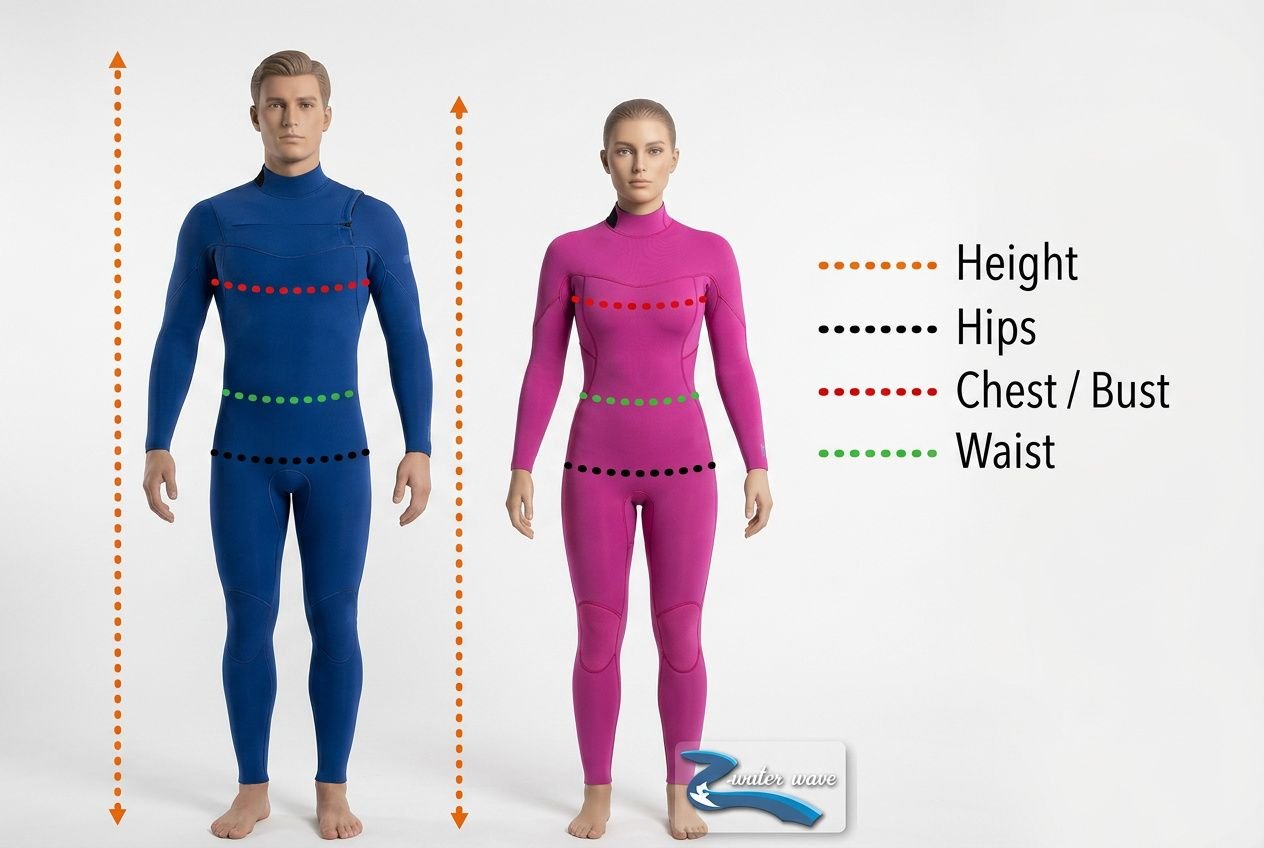
Wetsuit size changes from one brand to another, so your usual number does not always transfer. Always use the brand chart, especially when buying a wetsuit online. If you sit between two sizes, the smaller option usually gives the better seal and helps preserve a close fit as the material relaxes with use. For more detail, see Mundo-Surf's dedicated wetsuit fit guide.
Quality, seams, and sizing tips to consider
Seam construction tells you a lot: flatlock is the standard entry-level option, cheaper but less sealed, while glued and blindstitched or welded seams reduce water penetration and stay warm for longer sessions. Building on that, higher-grade neoprene uses lighter, stretchier material, which improves comfort and tends to last better across several seasons.
The same logic applies to women-specific suits. For women, panel layout and cut are shaped around shoulder width, hips, and torso length, which improves the seal at the neck and cuffs in use. Mundo-Surf keeps women-specific options in stock across different thicknesses, with 100-day returns so you can check the fit properly before committing.
On suits of 3mm and above, CE and PPE certification confirms the thermal claims have been independently tested. Check the label before buying a wetsuit.
Frequently asked questions
Is a 3/2mm wetsuit suitable for UK surfing year-round?
A 3/2mm works well from spring to early autumn in most UK surf zones, usually from April to October depending on your coast. Once winter sets in, the water temperature often drops below 10°C, and that is where a 5/3mm winter wetsuit becomes the reliable choice for thermal protection.
Should I choose a 4/3mm or a 5/3mm wetsuit for UK winter?
The difference comes down to the conditions you actually surf: local water temperature, session length, and how quickly you feel cold. A 4/3mm suits autumn and milder days in the 11–15°C range, especially for shorter sessions.
Once the sea drops below 10°C, which is common on many UK coasts from December to February, a 5/3mm gives you the thermal protection margin you need for sessions lasting more than an hour. If you run cold, treat 12°C as your own threshold for moving to the 5/3mm.
How do I know if my wetsuit fits correctly?
Your wetsuit fit should feel tight on land, slightly restrictive, even. That is normal, because neoprene softens in the water and starts fitting your body properly, trapping a thin layer of warm water against your skin.
Check the key points before your first surf: you should not be able to pinch extra neoprene at the lower back, the collar should sit close without affecting your breathing, and the sleeves and legs should finish at the wrists and ankles without gaps.
Share this article: