Shopping Cart
There are no more items in your cart


How to choose a women's wetsuit: the complete guide


This guide covers everything you need to choose a women’s wetsuit that will actually perform: the right thickness for your water temperature, how to read sizing charts built for female proportions, and which features genuinely matter on the water.
What temperature do you need a wetsuit for women
Water temperature drives the whole decision. Get the wetsuit thickness wrong and even a well-made women’s wetsuit will struggle to keep you comfortable, whether you’re surfing, swimming, or heading into open water.

Wetsuit thickness guide by water temperature
If you’re trying to choose a wetsuit, temperature is the first filter. In warm water above 20–21°C, a 2mm suit or less is usually enough, often in a short-sleeve cut rather than a full suit. Once the water drops below 19°C, wetsuit thickness becomes more than a comfort choice: it helps protect body temperature and extend your time in the water.
The rating is simple once you know how to read it: a 3/2mm surfing wetsuit uses 3mm neoprene through the torso and legs, with 2mm panels through the arms. The thicker sections hold warmth around your core, while the lighter panels preserve flexibility for paddling and pop-ups. The difference comes down to balancing insulation with movement.
| Water temperature | Recommended thickness | Suit type |
| Above 21°C | 2mm or less | Short-sleeve / shorty |
| 19–21°C | 3/2mm | Full suit, long sleeve |
| 15–19°C | 4/3mm | Full suit, long sleeve |
| Below 15°C | 5/4mm or 6mm | Full suit + hood option |
Cold tolerance still matters. If you feel the cold quickly, go one step thicker than the chart suggests. In practice, a 5/4mm wetsuit for women in a UK winter is not excessive for longer sessions, and wetsuit boots start to make sense once the water temperature drops below 12°C.
Women’s wetsuit types for every season
Once thickness is clear, coverage comes next. Exposed skin changes heat loss fast, so the cut of the suit matters as much as the thickness.
- Shorty / short-sleeve suit Short arms and legs for warm water above 20°C; light, mobile, and easy to wear in summer.
- Sleeveless wetsuit (Long Jane) Full-length leg coverage with an open shoulder cut; useful in transitional conditions around 19–20°C, especially when you want leg warmth with extra paddle freedom.
- Full suit (3/2mm to 5/4mm) The standard women’s wetsuit for most UK surfing and open water use; full arm and leg coverage across changing seasons.
- Hooded wetsuit Added head coverage for sub-15°C conditions; a strong option when it gets properly colder and wind chill starts biting.
That brings you to the seasonal default. Through autumn and most of the UK year, a full suit is the right choice when you need reliable warmth without losing too much flexibility. By contrast, winter pushes you towards a thicker option, and Mundo-Surf carries the full range with fast shipping and a straightforward returns policy if the fit needs adjusting.
How to find your wetsuit size as a woman
Your women's wetsuit size has nothing to do with your dress size. A size 10 in everyday clothing can point to a very different wetsuit size once you look at real measurements. Women's wetsuit sizing is built around female proportions: chest, waist, hips, and height all read differently from a dress pattern, so leave jeans labels out of it.
Wetsuit sizing measurements you need to take
- Height: measured from the top of your head to the bottom of your feet. It drives suit length and overall coverage.
- Chest: measured around the fullest part of the bust. It affects front-zip and back-zip fit, along with the thermal seal.
- Waist and hips: waist at your natural waistline, hips at the fullest point at the top of the legs. These measurements shape the lower-body fit.
On the Mundo-Surf women's wetsuit size guide, the height brackets are clear: Extra Small under 1.60 m, Small from 1.60 to 1.70 m, Medium from 1.70 to 1.80 m. Some brands also offer short and tall versions, marked S and T, for the same chest and waist with adjusted height. The right choice when you sit near the top end of a bracket is to go up a size.
Is it better to size up or down in wetsuits
Building on that, the difference comes down to restriction versus seal. If you are between sizes, go up, not down. A suit that is too small limits paddling and tires you faster, while a slightly roomier women's wetsuit can still work well if the torso stays snug, which is the key area for warmth.
Brand-specific wetsuit sizing for women
Once your measurements are set, brand cut becomes the next filter: each label interprets the same numbers differently, so check the brand-specific chart. Roxy tends to suit fuller busts and hips with a narrower waist and slightly shorter arms, while Billabong has a broader cut that works well for athletic or curvier builds.
As soon as you move to Xcel, the feel changes: the fit runs snug at first and often suits athletic shapes best once the material softens in the water. O'Neill fits true to size and handles taller or more curvaceous frames reliably, especially in premium models. Patagonia runs small, so if you sit between measurements, size up, as its Yulex material starts out stiffer than standard neoprene.
From there, use the brand-specific wetsuit size chart instead of assuming one label matches another. Mundo-Surf carries the major brands and provides sizing data for each label, so you can compare charts side by side before you commit.
Recommended products

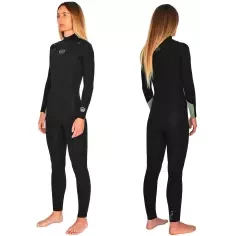
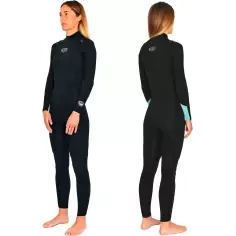
Getting the right wetsuit fit for women
Correct wetsuit fit is where warmth is won or lost. A suit can look fine on the hanger, then fail in the water if the material pools at the lower back or gaps under the arms.

The second skin rule for women's wetsuit fit
The rule is simple: your suit should feel like a second skin. The right wetsuit fit leaves room for roughly one finger between the neoprene and your skin, no more. That narrow space holds a thin film of water your body warms for insulation.
Once the gap gets larger, flushing starts. Excess material at the armpits, lower back, or behind the knees lets cold water move through the suit constantly, and on the water, that matters far more than small aesthetic concerns. A good women's wetsuit stays close through the torso, chest, waist, and legs without locking up your movement.
As soon as the suit is wet, it relaxes slightly and becomes more comfortable, so a genuinely snug fit on land is usually correct. Test your range of motion: bend to touch your toes and rotate your shoulders. If it pulls sharply or affects your breathing, the suit is too small.
How a women's wetsuit full body should feel
A women's wetsuit full body model follows the same second-skin rule: it should sit flush across the chest and lower back, with no rolling or bunching at the cuffs. Sleeves should finish at the wrist bone, while the legs should end just above the ankle.
By contrast, any gap or roll at those points becomes an easy entry for cold water during duck dives or wipeouts. The difference comes down to cut, seams, and panel layout: women's suits are shaped for hips, chest, and buttocks, while men's suits tend to use a straighter outline with more room through the crotch. That is why a female-specific shape seals better through movement.
Building on that, the women's wetsuit guide at Mundo-Surf covers the full range by season, thickness, construction, and panel layout.
Key features to look for in a wetsuit for women
Once temperature and fit are sorted, the next step is the detail that decides how comfortable your suit stays through a full season. Zip placement, seams, and neoprene quality are the three points that shape how a suit performs across a full season.
Zipper choice and insulation trade-offs
That focus on detail starts with the zip wetsuit design. A back zip wetsuit gives you the easiest entry and exit, with a wider shoulder opening and an adjustable neckline, which helps when you are changing quickly in a windy car park. By contrast, the zip sits across a high-movement area, so it creates more flex points where water can get in and can slightly reduce flexibility through the upper back.
- Back zip wetsuit: easiest to get on and off; adjustable neckline; wider shoulder opening. Trade-off: more prone to flushing and less flexible across the upper back.
- Front (chest) zip wetsuit: zip placed in a lower-movement area; better seal for insulation; full shoulder mobility. Trade-off: takes more manoeuvring to get in and out.
- Zipperless design: maximum flexibility and no zip entry point for water. Trade-off: tighter, more technical entry, better suited to experienced surfers.
Once you narrow it down, the right choice when surfing colder water is usually a chest zip. For many riders, it avoids the pressure or rubbing a back zip can create along the spine during long sessions, while improving warmth at the same time. In practice, a back zip still makes sense for summer use or warm-water trips where convenience matters more than outright insulation.
Mundo-Surf carries both formats across its range, so your wetsuit buying decision can stay focused on how you actually surf. If quick changes are the priority, the back zip works well. If warmth and paddling freedom matter more, a chest zip is the stronger option.
Seam types and neoprene quality explained
From there, seams and material decide how long the warmth stays in.
- Flatlock seams: panels are overlapped and stitched through. Durable and flexible, but they let water pass through, so they are better for warm-water suits than UK winter use.
- GBS (glued and blind stitched): panels are glued before stitching, often with internal tape to reduce leakage. More comfortable and warmer than flatlock, with solid three-season performance.
- Liquid-welded seams: GBS construction finished with liquid seam sealing. This improves warmth, durability, and resistance to leaks, making it the usual standard for serious cold-water suits.
Building on that, modern wetsuit material has improved a lot across all price points. Better neoprene stretches more freely, so you keep flexibility through the shoulders and spend less energy while paddling. A raglan gusset, an extra neoprene panel under the arm, is another feature worth knowing before you buy: it reduces shoulder fatigue during longer sessions.
Women's winter wetsuit brands and models
That brings you to actual models. At Mundo-Surf, the main winter wetsuit options in 4/3mm and 5/4mm include Rip Curl Dawn Patrol and Omega, O'Neill Hyperfreak and Reactor, Billabong Launch, Salty Days, Foil and Synergy, plus Hurley Plus suits in both thicknesses. Most of these use GBS or liquid-welded seams, and several are available as a hooded wetsuit for water below 15°C: women wetsuit selection.
Once thickness becomes the deciding factor, a 4/3mm covers most UK winter sessions and stays comfortable for a lot of surfers. Move to 5/4mm if you are out regularly in January or February on exposed Atlantic coasts, or if you feel the cold quickly. Some 4/3mm suits already include an integrated hood, which can delay the need for a dedicated hooded wetsuit.
If the first fit is not right, Mundo-Surf's 100-day returns policy covers size or model exchanges across the full range, useful when you are also comparing winter suits against lighter options for warmer conditions. The same logic applies if you are checking thickness and construction again through the full range: women's winter wetsuits.
Frequently asked questions
How do you know your wetsuit size as a woman?
Start with five measurements: height, weight, chest at the fullest point, waist at the natural waistline, and hips at the fullest part near the top of the legs. Then match them against the brand’s specific wetsuit size chart, not your usual clothing size, because a women's wetsuit size is built around fit in the water rather than everyday wear.
Building on that, size codes such as 6S, 8T or 10 usually indicate height variations within the same core body measurements. The difference comes down to your proportions: a short or tall option can make the same wetsuit size feel either precise or awkward. If you sit right at the top of a size bracket, going one size up is often the right choice when you want to keep paddling natural and comfortable.
What is the best wetsuit thickness for UK waters?
Once fit is sorted, warmth becomes the next filter. In UK conditions, wetsuit thickness should follow the water temperature: a 3/2mm works for spring and autumn, while a 4/3mm full suit is the standard winter wetsuit from October to March.
By contrast, colder spells call for more insulation. UK water temperature commonly ranges from 8°C to 16°C outside summer, so a 5/4mm suit or a hooded wetsuit can keep you in the water longer without sacrificing too much flexibility; on the water, that matters. When temperatures climb above 20°C, a 2mm short-sleeve or shorty is usually enough.
Should a women's wetsuit feel tight when you first try it on?
A women's wetsuit should feel snug on land, almost like a second skin, because the material will soften slightly in the water and the fit will relax where it should.
In practice, the quick check is simple: you should be able to slide one finger between the suit and your skin, but not more. Test shoulder rotation, bend forward, and make sure movement stays free. Small folds behind the knees or under the arms are usually fine, but excess neoprene across the chest or lower back lets water flush through and reduces warmth fast.
Share this article: