Shopping Cart
There are no more items in your cart


Improve your advanced surfing turns: master the bottom turn


This guide covers advanced turning techniques in surfing, from bottom-turn mechanics to top-turn execution and rail control. You will learn how to generate more speed, hold your line through critical sections, and connect manoeuvres with genuine power on every wave.
Advanced surfing turns and bottom-turn power
The bottom turn is not merely a transition; it drives everything above it. If you get it wrong, style at the top will not rescue the manoeuvre.
Set up the bottom turn
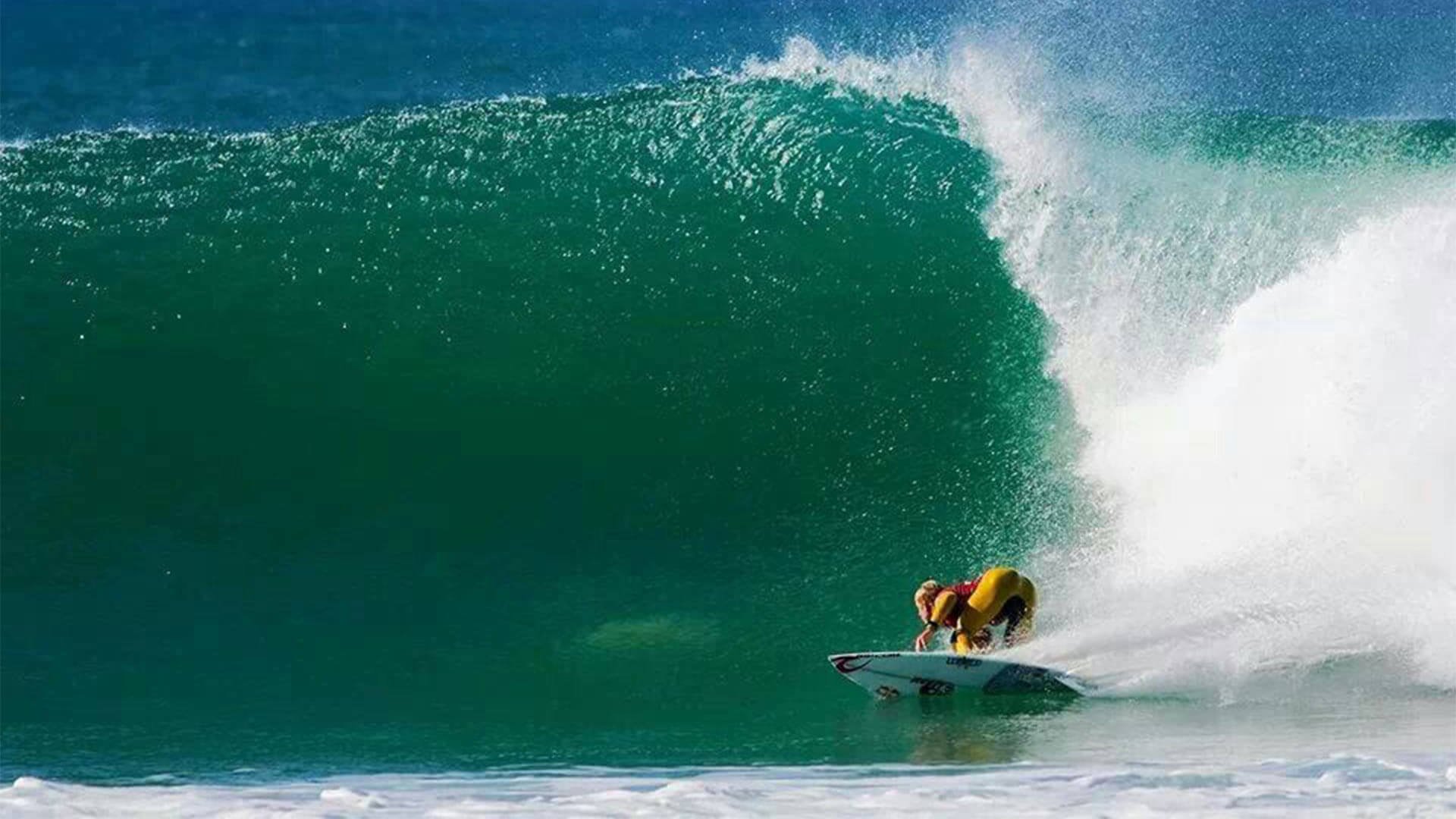
Improving your bottom turn starts before your feet even touch the water. The difference comes down to where you catch the wave: take off near the pocket, the steepest part of the face, where the wave delivers the energy and projection you need. A flat-section take-off drains your momentum before the turn begins. In practice, the various types of turning techniques you use in surfing all depend on building and preserving that initial speed through the descent.
- Straight descent: after take-off, ride down the face in a straight line, perpendicular to the beach, with your knees bent and lower body compressed. Keep your weight centred rather than tipped forwards.
- Spring compression: as the board reaches the trough, compress your body like a spring, loading energy into your legs so you can extend upwards and redirect the board back up the face with real force.
- Rail engagement: lean into the rail at the bottom of the wave, where water draws upwards through the sucking trough. This helps you harness the energy and convert it into forward speed and directional control.
Compression timing decides scale: release early for a minor turn angling diagonally towards the shoulder, release late for a major one that sends the board almost vertically up the face. Both are valid; the wave section and your next intended manoeuvre decide which is appropriate. Filming yourself helps: excessive front-foot weight shows immediately, and correcting it is the fastest way to improve your bottom turn.
Use body positioning to improve control
Body positioning is where riders seeking to advance their surfing skills often make the biggest gains. Your stance controls everything: keep your hips and shoulders low to reduce your centre of gravity, with the back foot carrying most of the weight when you initiate a turn. This stance determines how cleanly you engage either rail; the different types of turning techniques you use in surfing, from frontside to backside to snaps and cutbacks, each require a specific shift in weight distribution.
For frontside turns, facing the wave with toe-side pressure through the leading arm and a lean over the rail drives the board cleanly onto that edge. By contrast, backside riding requires heel-side pressure, with the hips dropped lower so you can push weight through the heels without losing balance. Bending your knees controls the transfer between front and back foot, and between heel and toe; it is an active, deliberate shift to practise on every wave.
Drive the surfboard through power zones
A wave carries two distinct power zones: the pitching lip at the top and the sucking trough at the bottom. Most surfers use only one. The bottom zone is where the board gains its most powerful directional energy, as water draws off the base and surges upwards. Harness it by leaning onto the rail at the precise moment the surge peaks.
To turn your surfboard while retaining maximum speed, engage the rail early in the trough, not at mid-face, where the energy has already dispersed.
Link the board into top turns
Once the bottom turn is complete and the board is tracking up the face, the top turn demands an immediate shift: transfer pressure to the back foot and use your upper body to steer the pivot sharply at the peak. On the water, that matters. A hesitant upper body bleeds the speed your bottom turn created, while committed shoulder rotation drives the board cleanly through the arc.
As an advanced surfer building a complete manoeuvre repertoire, use a surfskate on land to drill the bottom-to-top sequence away from the ocean. The timing and muscle memory transfer directly. Mundo-Surf stocks a full range of surfskates suited to this training, with real stock availability and fast delivery, so you can maintain momentum between surf lessons and water sessions.
Frequently asked questions
What is the difference between a minor and a major bottom turn?
A minor bottom turn sends you diagonally across the face towards the shoulder. You keep speed, but sacrifice some projection. By contrast, a major bottom turn drives the board more vertically up the wave, creating greater power and height for top-turn manoeuvres such as snaps and off-the-lip attacks. The wave’s peel angle and your next manoeuvre decide which option fits: a fast-peeling, steep wave favours the major version, while a slower, more open face suits the minor angle. Timing the compression and release is the difference between the two in practice.
How do I stop losing speed through my turns?
Speed loss through a turn usually comes from one of three errors: catching the wave too far from the pocket, placing too much weight on the front foot during the descent, or engaging the rail too late in the trough, after the wave’s energy has already moved upwards. Fix the take-off position first. Riding closer to the steepest section builds the momentum you need before the bottom turn begins. Then focus on clean compression at the base, followed by decisive rail engagement. Film your surfing; a front-foot stall shows clearly on footage and is easier to correct once identified.
Can body positioning alone improve my top turns?
Body positioning is a powerful lever, but it works only when the bottom turn delivers the board to the right spot on the face at the right speed. A functional stance keeps your hips low, shoulders square and back foot weighted, giving you the rotation needed for a sharp top turn. In frontside surfing, the leading arm leaning over the toe-side rail initiates the arc; on backside turns, dropping the hips and pushing through the heels does the same work. Build that stance through focused practice on smaller, predictable waves before applying it to critical, powerful sections where timing pressure is higher.
Share this article: