Shopping Cart
There are no more items in your cart


Difference between wetsuit materials: a neoprene guide


The range of wetsuit materials now goes well beyond one standard neoprene recipe. From petroleum-derived neoprene to limestone neoprene, Yulex and hybrid blends, the balance you want between stretch, thermal output and environmental impact determines which material suits you.
What wetsuit material types are available

Closed-cell vs open-cell neoprene explained
At the core of most suits, you have neoprene foam: nitrogen bubbles sealed inside the foam structure slow heat transfer by conduction, with uncompressed thermal conductivity around 0.054 Wm⁻¹K⁻¹, roughly ten times lower than water. On the water, that matters.
- Closed-cell neoprene: sealed gas bubbles resist water entry, maintain steady insulation and sit behind most surfing wetsuits, whether they use classic synthetic foam or limestone neoprene.
- Open-cell neoprene: an exposed inner surface grips directly to the skin for a close fit often used in freediving, but it takes on water more easily and needs more care when getting in and out.
- Smooth-skin panels: a lined neoprene construction with a smooth rubber outer face that cuts windchill and holds heat across the chest or back, though it tears more easily under fingernails.
Softer grades usually contain more gas and give better surface insulation at first. Once that foam compresses repeatedly, those bubbles break down, water uptake rises, and you lose warmth as well as buoyancy.
Limestone, Yulex and eco-foam alternatives
Limestone neoprene, made from calcium carbonate, reaches 99.7% water impermeability and absorbs less water than oil-based neoprene. By contrast, Yulex uses plant-based natural rubber rather than standard synthetic inputs, which makes it hypoallergenic and lowers its carbon footprint.
Building on that, some neoprene-free constructions mix natural and recycled content instead of relying on traditional rubber alone: the neoprene free wetsuit from Billabong uses 85% natural rubber and 15% upcycled synthetic additives, with claimed thermal performance comparable to a conventional 4/3 mm suit.
Worth knowing before you buy: lamination method alone can shift drying time by 20–30 minutes per session, which compounds across a winter of daily use.
How depth and compression affect neoprene performance
Once you look past labels, thickness stops being the whole story. At 15 metres depth, neoprene foam thickness is cut by roughly half and thermal conductivity rises by around 50%, which can increase heat loss to about three times the surface rate.
Thicker neoprene on a spec sheet does not always guarantee better warmth in use. The difference comes down to the foam quality, the lining, the fabric package and how well the suit resists compression.
By contrast, air neoprene traps dead air in a perforated middle layer to boost insulation without adding much extra thickness. That makes it the right choice when you surf cold water and still want mobility.
As soon as you compare real builds, the material package matters more than the label alone: the Superstretch Neospan neoprene used in the Hurley Plus 4/3 mm combines a limestone neoprene base with recycled rubber for flexibility and heat retention that standard petroleum-based neoprene at the same thickness can struggle to match.
How neoprene lining and panel design shape performance
Once the foam core is set, the feel of a suit comes from the lining and the way each panel is built. That is where wetsuit materials stop being an abstract spec and start affecting warmth, insulation, stretch, and durability in real sessions.
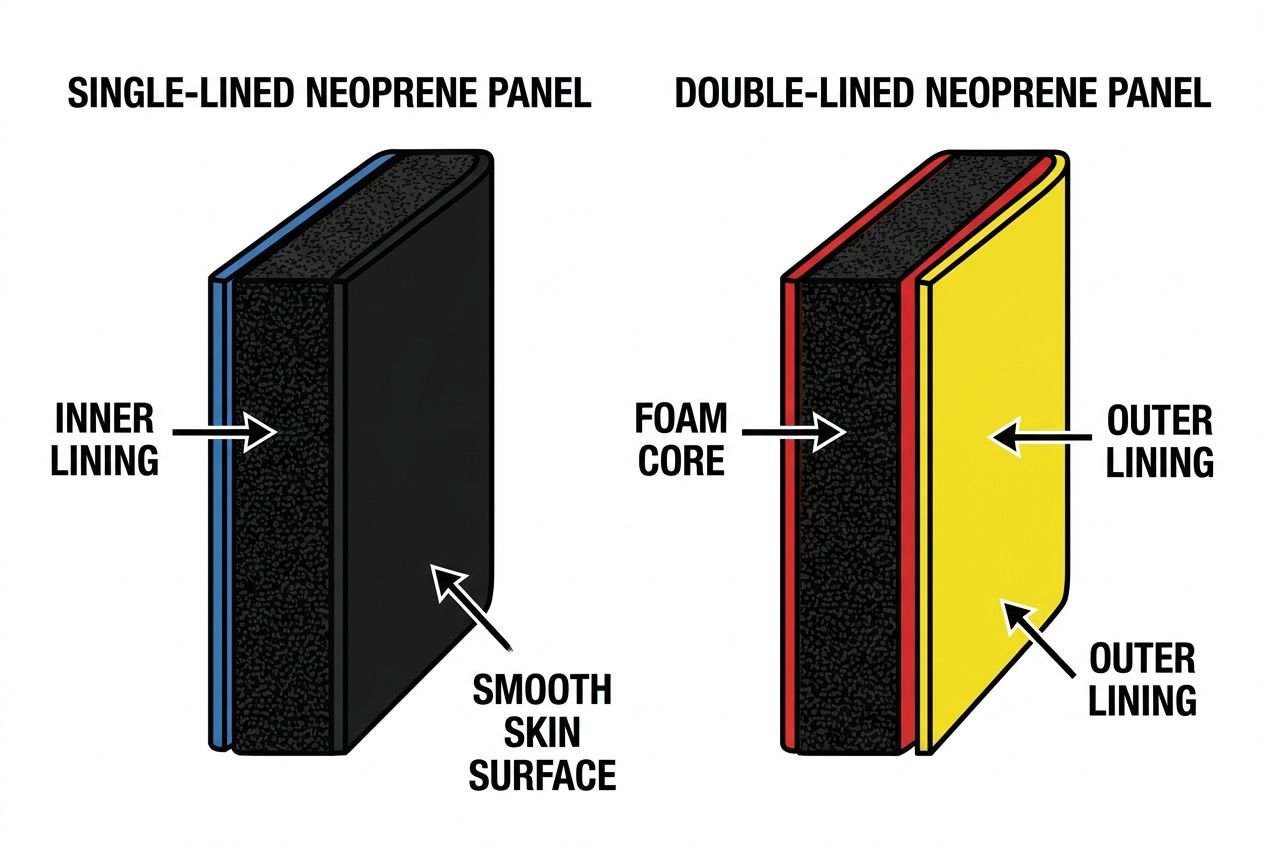
Single-lined vs double-lined neoprene panels
Single-lined neoprene uses fabric on one side and an exposed smooth-skin rubber outer face on the other, while double-lined neoprene adds fabric to both sides for better durability, UV resistance, and easier entry.
Building on that, most modern suits mix the two. You will usually see lined neoprene or smooth-skin panels on the chest and back to cut windchill, then double-lined panels on the arms and legs where freedom of movement and long-term wear matter more; in practice, no single wetsuit material makes sense everywhere on the suit.
| Panel type | Construction | Primary benefit | Typical placement |
| Single-lined (smooth skin) | Fabric one side, rubbery outer skin | Windchill and heat retention | Chest, back |
| Double-lined | Knitted fabric both sides | Durability, UV resistance, easy entry | Arms, legs |
| Jersey neoprene | Lightweight knit, high stretch | Mobility and flexibility | Shoulders, underarms |
| Smooth skin (glideskin) | Exposed rubbery neoprene surface | Wind and water repellence | Chest panels, collar |
Nylon vs polyester lining, which is better
Once panel layout is sorted, the difference comes down to the lining fabric. Nylon lining is widely used in nylon neoprene and nylon-lined neoprene because it blends well with spandex, giving a smoother hand against the skin, strong stretch, and good comfort when you are paddling for hours.
Polyester, by contrast, takes dye more easily and usually costs less, trading a small degree of flex when paired with denser foam for strong colour retention and hard-wearing durability. Worth knowing before you buy: both nylon lining and polyester options now exist in recycled versions, so the environmental gap is much smaller than it used to be.
From there, the final feel of a wetsuit material depends on the full laminate. A soft foam with a flexible jersey lining creates easy elongation and a less restricted fit, while a firmer foam under a tougher outer fabric shifts the balance towards durability.
Advanced linings: graphene, plush and polar systems
Graphene-infused fabric systems, including Silicone Stretch lining made with recycled graphene fibres, are built to reflect body heat and dry quickly: on the water, that matters during long winter sessions when standard jersey lining starts to bleed heat.
Polar and plush interiors push the same idea further. The Xtend 2.0 fabric polar lining used on the chest and back of the Hurley Plus 4/3 mm focuses warmth around the core with insulating threads, while plush constructions use hollow nylon fibres to improve drying speed as well as insulation.
Recommended products
Seam construction, entry systems and neoprene care
The foam, lining and wetsuit material only deliver if the seams hold. Seam construction and entry system each affect warmth differently, and the entry layout adds a third variable that goes beyond the rubber itself.
Flatlock, GBS and liquid-sealed seam differences
Building on that, care starts with the seam type. Each construction has its own weak point: GBS seams benefit from regular checks along the glue line, while liquid-sealed finishes are more exposed to sharp knocks that can crack the synthetic rubber layer.
- Flatlock seams: two panels stitched directly together. Strong and affordable, but they let water pass through, which makes them better suited to warm-water types of wetsuits and lower thicknesses.
- GBS (glued and blind-stitched): panels are glued, then stitched without the needle fully penetrating. The right choice when you want warmth, flexibility and durability across a broad range of suit thicknesses.
- Liquid-taped / welded seams: a liquid synthetic rubber compound is applied inside, outside, or both. You get a waterproof seal with very little extra weight, usually on cold-water suits with higher thickness.
Once that is clear, heat-sealed interiors add another layer of protection: 100% of the internal seams are sealed. They work with foam neoprene, lined neoprene, nylon-lined neoprene and eco alternatives alike, including limestone neoprene, which is worth knowing before you buy.
How to take care of your neoprene wetsuit
That same logic applies to maintenance. The difference between wetsuit materials for swimming and surf use carries into care, but the basics stay constant: whether you have thin neoprene with advanced lining, a back zip wetsuit, or one of the more technical wetsuits made with smooth-skin panels, rinse it in cool fresh water after every session.
By contrast, some finishes need a lighter touch. Smooth-skin panels tear more easily, so flat-handed donning, careful storage and avoiding abrasive surfaces matter.
As soon as the suit is dry, store it on a wide padded hanger in the shade. Never fold or machine-wash, and deal with small cuts early using neoprene glue so the fabric, lining and outer rubber are not stressed further.
Building on that routine, suits made from limestone neoprene or natural rubber blends can benefit from an occasional neoprene-safe conditioner on the seams. It helps preserve the glue bond whatever sits underneath, whether that is a limestone core, a synthetic foam, or a natural rubber blend.
In practice, longer life comes from reading the suit as a whole: foam core, fabric, lining, seam construction and the entry layout all work together. Mundo-Surf stocks the full range of care accessories alongside every model in its range.
Frequently asked questions
What is the best material for a wetsuit for UK waters?
For UK waters, the practical benchmark is limestone neoprene in a 4/3 mm thickness: compared with standard petroleum-based neoprene, it is lighter and offers better insulation at the same thickness. It also offers 99.7% water impermeability, which translates to more warmth without adding bulk.
Building on that, if reducing environmental impact matters to you, eco-foam blends made with natural rubber deliver similar insulating performance with a smaller footprint. When budget allows, look for a suit that pairs limestone or eco-foam neoprene with a graphene-infused polar lining across the chest and back.
What is the difference between single-lined and double-lined neoprene?
Once the base material is set, the difference comes down to how the neoprene is finished. Single-lined neoprene uses knitted fabric on one side and a smooth-skin or water-repellent outer on the other, which cuts windchill without the drag of a full fabric coating.
By contrast, double-lined neoprene adds fabric to both sides. That makes it tougher, easier to pull on, and more resistant to UV and ozone damage. Most good suits mix the two in a zoned layout: single-lined neoprene through the torso, double-lined panels on the limbs.
Does seam construction really affect warmth?
Seam construction has a direct impact on warmth. Flatlock seams let water through the stitch line, which can work in warmer conditions but undermines insulation in cold water.
As soon as temperatures drop, sealed construction matters more: GBS seams reduce water ingress and stay flexible, while liquid-welded seams form a waterproof barrier with very little extra weight. Worth knowing before you buy: sealed seams work with the neoprene foam, rubber, lining and chest zip to complete the thermal envelope and hold warmth in place.
Share this article: