Shopping Cart
There are no more items in your cart


How tight should a wetsuit be: the perfect wetsuit fit guide


A wetsuit needs to be skin-tight : it should feel almost too small when you first try it, because the neoprene will stretch and conform once it gets wet. The material's elasticity means the suit loosens slightly after a few uses, providing a snug seal that prevents water from flushing in. A loose suit lets excess water fill the gaps, adding weight and killing insulation, an overly tight suit, on the other hand, can crack or simply be impossible to pull on. Use the brand's size guide, prioritising weight over height, and keep in mind that premium wetsuits stretch more, making them easier to don while staying tight enough for real warmth.
Is it better to have a tight or loose wetsuit fit
How tight should a wetsuit be? Snug enough to trap a thin water layer against your skin, loose enough to allow unrestricted movement. A properly fitting wetsuit creates an insulating barrier by keeping warm water between the neoprene and your body, that trapped layer heats up from your core temperature, delivering thermal protection a loose suit simply cannot match. When you buy a wetsuit, expect it to feel almost uncomfortably tight on dry land : that's normal, and it's necessary.
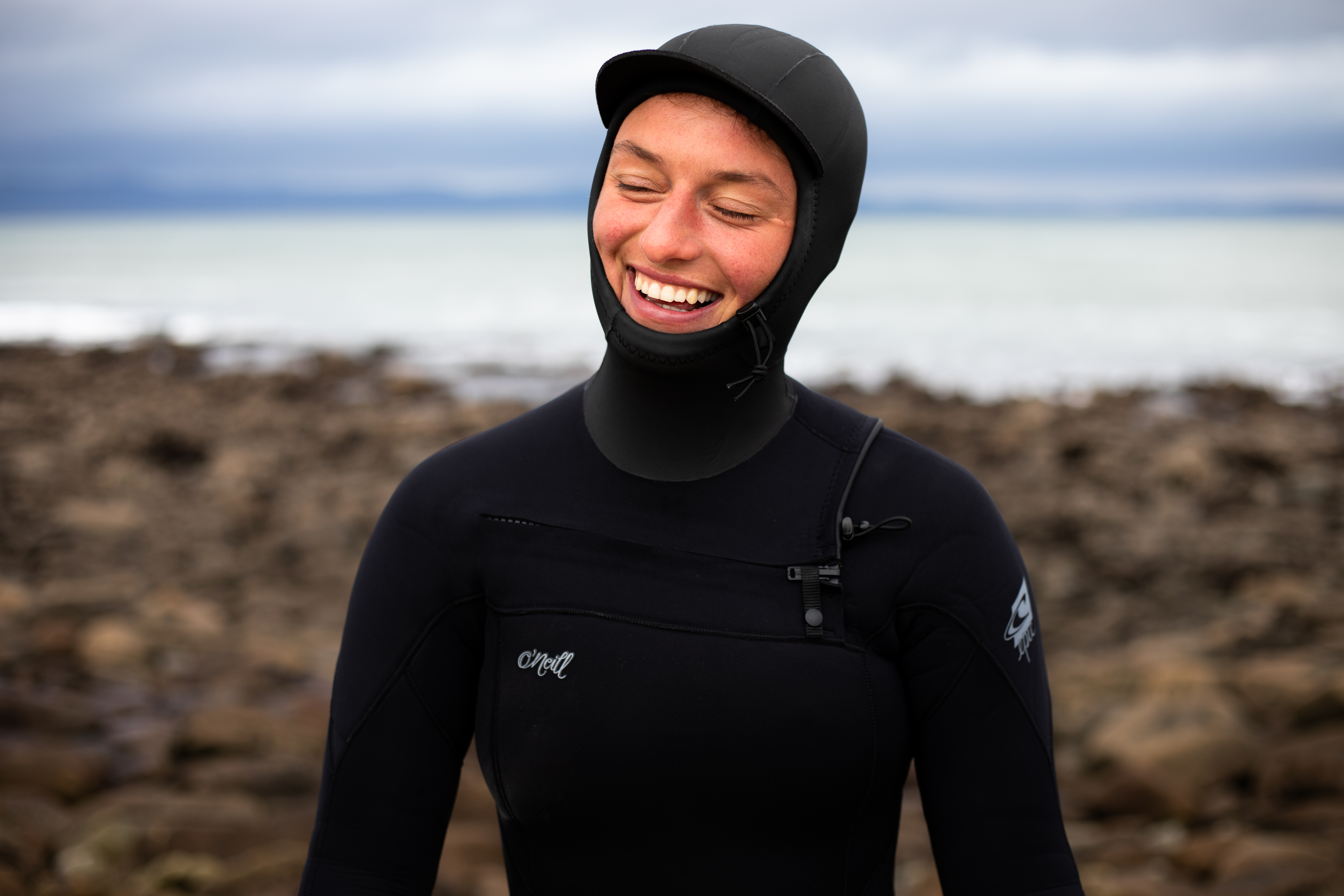
Why a snug fit always wins over a loose one
Is it better to have a tight or loose wetsuit? A snug fit wins every time. When your wetsuit fits properly, it traps a thin thermal layer that your body warms naturally. A loose suit allows continuous water flushing through gaps at the neck, wrists, ankles and crotch, cold water constantly enters and exits, preventing any stable warm layer from forming.
This flushing effect means your body works harder to compensate, draining energy faster and leaving you colder in the water. A properly fitting wetsuit eliminates that cycle entirely.
- Thermal insulation: A snug fit traps warm water against skin, maximizing body heat retention even in cold conditions.
- Water seal prevention: Gaps in a loose wetsuit create entry points for continuous cold water flushing, reducing warmth significantly.
- Reduced drag and weight: Tight suits conform to your body; loose suits create excess material that adds drag and weight in the water.
- Movement efficiency: A snug fit allows natural motion without bunching or binding, supporting paddling and maneuvering performance.
Many people assume that if a loose fit feels better on land, it must be correct, that logic fails completely. Neoprene behaves differently dry versus wet : sweat makes the material stick to your skin temporarily, and that stickiness disappears entirely once you're in the water. A suit that fits snugly on dry land will feel like a comfortable second skin when immersed, supporting your performance without restriction.
How to use a wetsuit size guide correctly
A wetsuit size guide is your first tool for getting wetsuit fit right. Most brands organise sizing by weight range rather than height alone, a size small might cover 61–70 kg, while a medium covers 70–80 kg. Always prioritise weight over height : how the suit hugs your torso and limbs matters far more than its length.
Check the specific brand's wetsuit size guide before purchasing, because sizing patterns vary significantly between manufacturers, a medium in one brand may fit like a large in another. When using a size guide, measure your chest circumference and cross-check it against the chart. If you fall between two sizes, choose the smaller one : you want that initial tight feeling.
High-end wetsuits have greater elasticity than budget models, making them easier to don while maintaining the tight seal required for warmth. That's why premium suits often feel less restrictive despite fitting equally snugly.
| Size category | Typical weight range (kg) | Chest circumference (cm) | Key fit principle |
| Extra small | 50–60 | 76–84 | Prioritize weight; torso length less critical than snug body fit |
| Small | 61–70 | 84–92 | Should feel almost too tight dry; neoprene will stretch when wet |
| Medium | 70–80 | 92–102 | Check for minimal gaps at neck and crotch; test arm mobility |
| Large | 80–90 | 102–112 | Verify no bunching at lower back; confirm collar sits high |
How neoprene behaves dry versus wet
Neoprene's behaviour explains why initial tightness is not a mistake. When dry, neoprene is stiff and compact, offering minimal stretch, the suit feels very tight and sometimes difficult to pull on. Once immersed, the material gains elasticity and conforms to your body shape, becoming noticeably more flexible within minutes of entering the water.
After a few uses, neoprene naturally settles and softens further, moulding itself like a custom-made suit. A wetsuit that feels almost too tight when new will gradually provide the stretch and comfort needed for extended sessions. High-end wetsuits with superior neoprene blends stretch more easily from the start, reducing the effort to put them on while maintaining superior sealing properties, budget wetsuits offer less initial stretch but achieve a similar fit once broken in.
During a dry try-on, sweat makes neoprene stick to your skin temporarily, sometimes making the suit feel tighter than it truly is. That sticky sensation vanishes immediately upon entering the water, replaced by a smooth, comfortable embrace against the body. Never reject a fitting wetsuit based purely on how it feels when dry : the real test of wetsuit size and fit happens in the water, where neoprene's true behaviour emerges.
Wetsuit too tight around chest and shoulders, key fit zones
A wetsuit should feel very tight and snug while dry, the neoprene stretches once wet, settling into that second-skin fit that traps a thin water layer against the body. This prevents flushing, maximizes warmth, and still allows full range of motion for paddling. A suit that feels loose right away is the wrong size; prioritize weight over height, and aim for a fit that feels almost overly tight dry.

Signs your wetsuit is too tight on the chest
A wetsuit too tight around chest creates immediate discomfort that only worsens in water. If you struggle to zip the suit closed, or if the material pulls visibly across your ribs, the suit is too small. Your chest should feel firmly compressed but still allow normal breathing, you must be able to take full, comfortable breaths without gasping.
Any sensation of choking or breathlessness confirms the sizing is off and a larger size is needed. When zipping up, the pull should be smooth and controllable; if the chest area bunches or wrinkles as you close the suit, the cut does not match your body shape. Forcing it risks tearing the material and reduces the paddling power you can generate with each stroke.
- Breathing restriction: Choking sensations or inability to take full breaths indicate excessive chest tightness and incorrect sizing.
- Difficult zipper closure: Struggling to zip the suit or visible material pulling across the torso signals the suit is too small.
- Reduced paddling power: Tight chest compression limits rib expansion, decreasing stroke power and tiring you faster in the water.
Test breathing capacity by taking several deep breaths while wearing the dry suit, this simple check reveals whether chest compression is acceptable. A correctly tight suit allows comfortably full breaths; an overly tight suit creates anxiety around breathing. Chest pressure eases slightly once neoprene relaxes in water, but persistent initial discomfort signals a sizing error that requires correction.
What a wetsuit too tight on shoulders causes
A wetsuit too tight on shoulders creates problems that cascade through your entire session. When you raise your arms or initiate a paddling stroke, the collar should not pull downward or dig into your armpits. If the suit yanks your shoulders down, restricts arm rotation, or creates sharp armpit pain, the torso length is incorrect or the overall size is too small, shoulder muscles fatigue rapidly under that tension.
Shoulder tightness also compromises blood circulation to the arms, leading to numbness, tingling, and early fatigue that undermines performance. Your shoulders must rotate and extend freely, without the wetsuit fit generating excessive pulling. The neck should sit high and comfortably against the skin, not create a choking sensation when you turn your head; if the suit pulls the collar below your natural neck line, the torso is too short for your proportions.
Lower back, crotch and underarm fit checks
The lower back requires specific attention because it protects your kidneys from cold exposure. A properly fitting suit hugs the lower back snugly, with minimal neoprene bunching, loose folds here allow cold water to flush through easily. During the dry try-on, bend forward and check that the back remains smooth and fitted against the body.
The crotch must be pulled as high as comfortably possible when donning the suit; if it sits noticeably low after a full pull, the torso length is off, which cascades directly into shoulder restriction and reduced range of motion. Underarms and the area behind the knees must have zero loose fabric, these gaps act as water entry points that undermine thermal protection and signal a good fit has not been achieved.
Should a wetsuit be tight around the neck and what happens if it is too tight
The neck is your water-tight seal, it must sit high and create a firm barrier against cold water entry. Should a wetsuit be tight around the neck? Yes, but tightness must never restrict swallowing, breathing, or head rotation. A proper neck fit feels snug and secure, preventing water from flushing down your torso with every duck-dive or wave impact.

Getting the neck fit and seal right
The neck collar should contact your skin all the way around, with no visible gaps where water could pour through. When you turn your head side to side, the collar should move with you smoothly, not restrict movement or cause pain. A contoured chin design helps distribute pressure evenly, reducing irritation while maintaining a snug seal.
For reference, wetsuit hood fit options like the Xcel Axis Hood show how fine-tuned neck systems work: the Ultrastretch neoprene and Glide Skin face seal create a water-tight fit without sacrificing mobility through cinch-and-barrel-lock adjustment. Gaps or a collar that sits too low indicate the suit is oversized; a collar that digs painfully or leaves deep red marks means it is too small.
- High collar placement: Neck should sit at the natural neck line; a collar sitting too low allows water to flush down the torso immediately.
- Gap-free seal: Run your finger around the inside of the neck after zipping, feel for any openings where cold water could enter.
- Swallowing comfort: You should swallow comfortably without the collar restricting your throat; if swallowing feels difficult, the suit is too tight.
- Head rotation freedom: Turn your head fully left and right; the collar should not dig into your neck or restrict movement.
A cold-water flush down the neck is devastating: it exposes your entire torso to sudden cold shock, making even thick suits ineffective. Test the seal by simulating duck-diving movements while wearing the dry suit; observe whether the collar stays high and secure or drops when you bend forward.
What happens if your wetsuit is too tight or too loose
What happens if my wetsuit is too tight? Consequences emerge quickly and accumulate during your session. Restricted movement causes rapid muscle fatigue, impaired blood circulation leads to numbness and tingling in limbs, and constrained breathing creates anxiety that escalates once you are immersed. Material may even crack at stress points under excessive tension.
In extreme cases, excessive tightness contributes to swim-induced pulmonary edema (SIPE), a serious condition where fluid builds up in the lungs. Difficulty getting into the suit despite correct donning technique is the clearest signal that wetsuit sizing is definitively off, the size is too small.
- Restricted movement and fatigue: Overly tight suits prevent full arm and leg extension, causing muscles to tire faster and reducing paddling efficiency.
- Circulation impairment: Excessive compression restricts blood flow, causing numbness, tingling, cold extremities, and reduced performance.
- Breathing difficulty: Chest compression creates choking sensations and anxiety that escalate once you are immersed in water.
A loose wetsuit creates opposite problems: water continuously flushes through neck, cuff, and ankle openings, preventing the warm-water layer from forming. The suit adds drag and weight in the water, slowing performance noticeably. A loose fit also creates visible creases and bunching, a reliable indicator of improper wetsuit fit from the start.
Final fit checks for wrists, ankles and full mobility
Wrist and ankle seals deserve equal attention to neck fit. Sleeves should end just above your wrists, and legs should end just above your ankles. When wearing gloves and boots, these seals must be snug enough to prevent water entry; boots should overlap the wetsuit opening slightly to create a continuous seal.
Before entering the water, perform a complete mobility test on dry land. Raise both arms overhead and simulate paddling strokes: the suit should move with you without excessive pulling or binding. Squat deeply, bend forward, and rotate your torso to verify full range of motion is possible. Tight wetsuit fit that allows complete mobility is what you want, any movement that feels painful or overly tight while dry indicates the suit requires a larger size.
If the suit passes all mobility tests but still feels uncertain, neoprene will loosen slightly once wet and after a few uses. A suit that feels almost too tight dry yet allows unrestricted movement is the correct size, that balance is what good wetsuit sizing looks like in practice.
Frequently asked questions
Should a wetsuit be tight around the entire body, or just specific areas?
A wetsuit should fit snugly across the entire body, torso, arms, and legs, to trap the insulating water layer effectively. Tightness is not uniform in sensation: the body feels firm compression, while shoulders and elbows need slightly more give for movement. Neck, wrists, and ankles must seal tight to prevent flushing, while the chest allows breathing room.
The perfect fit feels tight everywhere yet allows comfortable breathing and complete arm rotation. That balance, snug without overly tight, is what you're aiming for.
Does neoprene stretch after the first use, and should I account for this when sizing?
Yes, neoprene stretches noticeably after the first few uses. High-end wetsuits gain more elasticity due to superior material composition, while budget models gain less. A suit that feels almost too tight when new will become comfortably snug within two to three sessions.
C'est pour ça que you should choose the size that feels tight dry, not loose. A loose-fitting suit will end up permanently too large, ineffective at trapping warm water, and no amount of use will fix that.
What should I do if my wetsuit feels too tight in the chest but fits correctly everywhere else?
If only the chest feels overly tight, the suit's cut may not match your body shape, or you may need to move up a size despite fitting well elsewhere. Try the next size up and recheck all zones, the larger size may distribute the fit more evenly across the body. Some brands also offer different cut styles, such as anatomical or regular fits, that spread tightness differently.
Before sizing up, confirm you can breathe comfortably: slight chest compression is normal, and only genuine breathing restriction warrants a size change. For expert guidance on wetsuit fit and sizing, consult the wetsuit fit guide or contact specialists who can assess your specific proportions.
Recommended products

Share this article: